 Search


 English
 中文简体
 русский
 عربى






Specialty Adhesives Where Standard Panel Grades Do Not Fit
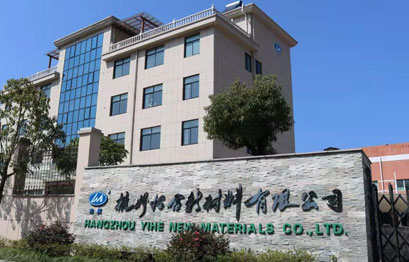
Hangzhou Yihe New Materials Co., Ltd. has formulated eco-friendly adhesives beside the Fuchun River in Tonglu, Hangzhou, China since 1997, and the Adhesive For Other Applications supplier range holds the grades that sit outside our PVC thermoforming, lamination, woodworking, hot melt and automotive interior lines. These bonds are defined by the joint rather than by a catalogue slot: metal to wood, plastic to melamine, film to flooring, board to carton. Each grade carries its own solids content, viscosity, mix ratio and press window, and we quote against those figures.
- LM2102 — two-component polyurethane for rigid assembly and composite panel lamination.
- LM755 — water-based adhesive for HPL, metal, glass and melamine bonded to wood and other absorbent boards, including whiteboard manufacture.
- LM305 — water-based PVC, fabric and paper lamination adhesive for MDF and engineered boards.
- LM301B — thick PVC film adhesive for film gauges that standard decorative grades cannot wet out reliably.
- LM811 — carton sealing adhesive for corrugated and carton board.
- LM3710 — PVC flooring adhesive for resilient sheet and tile bonding.
Range, Chemistry and Application Match
| Product | System | Substrates in scope | Where the grade fits | Figures we quote against |
|---|---|---|---|---|
| LM2102 | Two-component polyurethane, 4:1 | Wood, melamine board, metal, plastic | Fire door assembly, aluminium honeycomb panel lamination, mixed-material frames | 100% solids; 10,000–30,000 mPa·s; 1 h pot life |
| LM755 | Water-based emulsion | HPL, metal, glass, melamine to wood and absorbent boards | Whiteboard production, metal clamp and cabinet handle installation | ≥40% solids; 10,000–30,000 mPa·s; single-side coat >250 g/m² |
| LM305 | Water-based emulsion | PVC film, leather, PU paper, fabric to MDF and engineered boards | Flat lamination of board with PVC, fabric or paper facing | ≥51% solids; pH 5–7; 30,000–60,000 mPa·s; ≥80 g/m² mechanical coat |
| LM301B | Water-based, thick-film grade | Heavy PVC film to board substrates | Lamination and formed panels where film gauge is above standard decorative PVC | Film gauge, coat weight, line speed |
| LM811 | Water-based | Corrugated and carton board | Case sealing and carton forming on packaging lines | Board grade, line speed, open time |
| LM3710 | PVC flooring adhesive | PVC sheet and tile to prepared substrates | Resilient flooring installation and flooring panel assembly | Substrate condition, coverage, open time |
Two-Component Polyurethane for Rigid Assembly and Composite Panels
The LM2102 two-component polyurethane adhesive is a grey-white liquid at 100% solids, free of solvent and odour, formulated for rigid materials that cannot rely on a water carrier to dry. It is the grade we specify for fire door assembly and aluminium honeycomb panel lamination, where wood, melamine-faced board, metal skins and plastic components meet in the same joint.
- Mix ratio: 4 parts main agent to 1 part curing agent.
- Working life: mixed adhesive used within 1 hour.
- Cure window: completed within 6 hours in summer and 12 hours in winter.
- Viscosity: 10,000–30,000 mPa·s, suitable for trowel, roller and machine application.
- Packaging: 25 kg plastic drum or 1400 kg IBC tank.
Because the mixed system reacts rather than dries, batch size is set to the assembly rhythm: mix what a press cycle can consume inside the one-hour window, keep the two components separate until use, and hold the bonded stack under pressure through the cure interval before handling.
Water-Based Grades for Lamination, Whiteboard and Film Bonding
LM305 PVC, fabric and paper lamination
The LM305 PVC, fabric and paper lamination adhesive is a milky-white to slightly yellow emulsion at ≥51% solids and pH 5–7, recommended where PVC film, leather, PU paper or fabric is pressed onto MDF and other engineered boards. Initial tack and drying speed carry the bond, and the joint holds through the long service life of furniture and interior panels.
- Manual application: roller-coat to an even film, lay the facing, scrape out trapped air, then press in a cold press.
- Mechanical application: not less than 80 g/m², applied evenly, boards stacked and top-weighted.
- Curing: above 5 °C ambient; 3 hours initial cure with 24 hours to full handling strength.
- Packaging: 50 kg plastic drum or 1000 kg IBC drum; 6 months shelf life at room temperature.
LM755 whiteboard and mixed-material bonding
LM755 is a white emulsion at ≥40% solids and 10,000–30,000 mPa·s, built for quick-drying, high-strength bonds between metal, glass, melamine and wood-based board. It is used in HPL-to-wood and iron-to-wood whiteboard manufacture and for installing metal clamps and cabinet handles. Substrate moisture should stay below 12%, the surface free of oil and dust, and one-side coat weight above 250 g/m², with pressure applied within roughly 20 minutes of spreading. The film stays open long enough for manual assembly but sets fast enough to hold hardware without clamping. LM301B extends the same approach to heavier PVC film, where the adhesive demand rises with film gauge and the coat weight is set accordingly.
Packaging and Flooring Bonds
Two grades close out the range with very different open times and rheology. The LM811 carton sealing adhesive is formulated for corrugated and carton board, where the fibre tear of the board is the practical measure of a correct bond rather than a number on a data sheet. LM3710 serves PVC flooring, where the adhesive must wet a resilient sheet and hold it flat across a prepared substrate.
- Carton sealing: film thickness, machine speed and compression time in the case sealer govern the wet film we recommend.
- Flooring: substrate absorbency, levelling compound type and open time determine coverage and trowel notch.
- Both: supplied in drums or IBCs, with batch coding retained from raw material intake through filling.
Process Parameters That Decide Whether the Bond Holds
In these applications the adhesive is only half of the specification. The other half is how the line delivers it, and the parameters below are the ones we review with plant engineers before a grade is released for production.
- Coat weight: verified by weighing coated and uncoated board samples, not by visual appearance.
- Open time versus press timing: assembly must close the joint before the film skins over, particularly with water-based grades in dry, warm shops.
- Substrate condition: board moisture below 12% for LM755, no oil, release agent or floating dust on any bond face.
- Press and cure: temperature above 5 °C for water-based curing, with pressure held through the initial cure interval.
- Storage: 5–35 °C for water-based grades, 0–35 °C for LM755, with drums closed between draws to prevent skinning.
- Line speed: matched to drying capacity rather than to the fastest run the line has achieved.
Quality, Environmental Compliance and Batch Consistency
Hangzhou Yihe New Materials Co., Ltd. holds National High-Tech Enterprise qualification and operates under ISO 9001 quality management and ISO 14001 environmental management certification. Formulations are aligned with China's limits on volatile organic compounds in adhesives, including GB 18583-2008 and GB 33372-2020, and raw materials are tested before production so that a change in incoming supply does not reach the line as a change in bond behaviour.
- Laboratory facilities and independent R&D support grade development and batch release testing.
- Solids content, viscosity, appearance and pH are the routine release checks for the water-based grades.
- Technical data sheets state application method, coat weight and cure conditions for each product code.
- Documentation for incoming inspection and end-customer audits is issued with the shipment.
Information We Use to Configure Your Solution
A grade recommendation and quotation are prepared from the working point, the material pair and the production target. The list below is what our technical team works through with a project, and it is also the basis for trial quantities.
- Substrate pair, surface finish and board moisture content.
- Facing material: polymer type, film gauge, plasticiser content, print or coating.
- Joint design, bond area and the loads the assembly sees in service, including heat and humidity.
- Application method and available equipment: roller, curtain, spray, extrusion, trowel or manual.
- Target coat weight, line speed and press or clamp time.
- Plant ambient conditions and storage capacity for drums and IBCs.
- VOC, formaldehyde or odour restrictions imposed by your own market or customer.
- Packaging format, order volume, batch traceability requirements and the acceptance test used on your line.
Questions from Project and Procurement Teams
When should LM2102 be chosen over a water-based grade?
When the joint is rigid and at least one face is metal, plastic or a sealed melamine surface that gives a water-based carrier nothing to absorb into. LM2102 is 100% solids and cures by reaction, so it develops strength without drying and is odourless in the plant.
How do we decide between LM305 and LM301B for PVC film on MDF?
LM305 covers standard decorative PVC, leather, PU paper and fabric onto engineered board at 80 g/m² and above. When the film gauge rises, the same coat weight leaves the joint short of adhesive, and LM301B is selected with the coat weight recalculated against film thickness and line speed.
What coat weight is required for LM755?
One-side application above 250 g/m², on substrates dried to below 12% moisture and free of oil and dust, with pressure applied within about 20 minutes. If the adhesive thickens in the drum, up to 2% water can be stirred in before use.
How are the products packed for export?
LM2102 ships in 25 kg plastic drums or 1400 kg IBC tanks; LM305 in 50 kg plastic drums or 1000 kg IBC drums; LM755 in 50 kg plastic drums. Batch codes are retained on every package so that a production record can be traced back to the raw material lot.
Do you support a trial before a full order?
Yes. We supply trial quantities against the substrate samples and parameters agreed with your engineers, and review the result — coat weight, open time, bond strength and surface appearance — before a production grade and delivery schedule are fixed. The same data then forms the basis of the quotation.











