 Search


 English
 中文简体
 русский
 عربى





Hangzhou Yihe New Materials Co., Ltd. has formulated and produced eco-friendly adhesives in Tonglu, Hangzhou, China since 1997, supplying woodworking, door, furniture and panel plants under the Lima brand. The Wood Panel Joint Adhesive range is the joining end of that programme: water-based systems built for edge glue-ups, finger joints, frame assembly and timber lamination, where the glue line rather than a surface film carries the load.
Production sits on our own laboratory, independent R&D and a professional service team, backed by National High-Tech Enterprise qualification and ISO 9001 / ISO 14001 certification. Water-based joining and laminating adhesives from this plant have been in continuous market application for 29 years, and the customer base now covers countries and regions across the world.
One Platform, Several Joint Duties: LM155
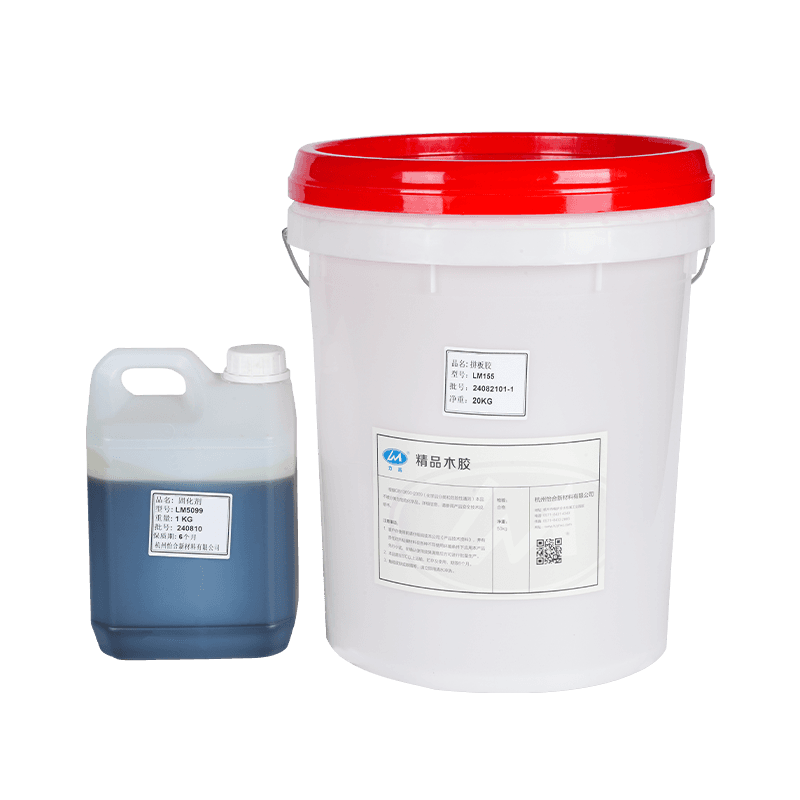
The category is built around LM155 Adhesive for Timber Lamination, a high-performance woodworking adhesive formulated for joining the edges and faces of boards into stable assemblies. It is a water-based system, so the carrier that wets out the wood is water rather than solvent, and the bond develops as that water leaves the joint and the polymer film coalesces under clamp pressure.
- Bond strength for structural assemblies: developed for board and lamella joints that must hold under load, not for decorative surfacing alone.
- Substrate breadth: solid timber, MDF, HDF, plywood and composite panel edges within one adhesive family.
- Quick setting: matched to clamp-carrier, cold-press and hot-press cycles so the joint is handled only after it can carry its own stress.
- Clean glue line: low residue squeeze-out keeps sanding and finishing to a minimum, which matters on visible joints in light species.
- Water resistance: formulated for joints exposed to humidity, wet cleaning and occasional water contact in furniture, cabinetry and joinery.
Joint Types and Where the Adhesive Fits
A single drum rarely serves every joint on a shop floor. The table below shows how the same adhesive family is applied across the joining operations we support, and which variables change from one joint to the next.
| Joint or assembly | Typical materials | Usual process route | What we match to your line |
|---|---|---|---|
| Edge-to-edge panel glue-up | Solid timber, MDF, HDF, plywood | Clamp carrier, cold press | Open time, spread rate, clamp time |
| Finger and end joints | Solid wood lamella, engineered timber | High-frequency press, hot press, finger-joint line | Viscosity, application rate, joint fit |
| Timber lamination | Planed lamella, stacked blanks | Cold press or hot press, stacked clamps | Assembly time, glue-line thickness, platen temperature |
| Frame and stile-and-rail assembly | Solid wood, MDF-core profiles | Pneumatic clamps, assembly jigs | Slip resistance, creep behaviour, open time |
| Oversize panel splicing | MDF, particleboard, plywood | Roller or hand application, batch press | Solids content, water resistance, sandability |
Substrate and Machining Conditions That Decide the Result
Adhesive performance on a joint is set as much by the wood and the cutter as by the formulation. These are the conditions we review before recommending a grade or a spread rate.
- Species density and extractives: dense tropical species and extractive-rich woods such as oak, teak and iroko can retard set and starve the glue line; where they appear in the mix, activation and press dwell are adjusted instead of accepting a nominal grade.
- Moisture content: 8–12% is the working window for most interior solid-timber joints. Above roughly 14%, free water in the wood dilutes the adhesive film and the joint loses strength.
- Machining quality: joints cut with sharp tooling and glued within the same shift hold far better than oxidised or burnished faces, which resist wetting.
- Joint fit: finger and edge joints need a close interference fit. Excessive clearance produces a thick, weak glue line regardless of adhesive quality.
- Panel edges: MDF and HDF absorb heavily at exposed edges, so spread rates usually rise compared with solid timber of the same thickness.
- Contamination: dust, release agent and oil must be removed from joint faces; a dry, blown-off edge is part of the process, not an extra step.
Specifications We Fix Before a Batch Is Made
Each quotation is tied to a defined working point. The table lists the parameters that are agreed in writing, because changing any one of them changes the joint.
| Parameter | Why it decides the bond | How we set it |
|---|---|---|
| Solids content | Controls glue-line thickness and how much water must leave the joint | Balanced against porous or dense substrates and press type |
| Viscosity | Governs pick-up on roller, extruder nozzle or spreader | Tuned to the applicator and the joint clearance |
| Open and assembly time | Must survive transfer, lay-up and clamping at shop temperature | Set to the longest realistic assembly window on the line |
| Press time and temperature | Drives water removal and film formation | Aligned to platen temperature, HF cycle or cold-press dwell |
| Spread rate | Decides coverage, squeeze-out and cost per joint | Quoted as a g/m² band for each joint type |
| Water resistance | Separates interior, humid-service and exterior duties | Selected against the durability class the project specifies |
| Glue-line colour and sandability | Affects visible joints and tool wear on light species | Adjusted where joints stay exposed after finishing |
| VOC and emissions profile | Supports indoor air quality and market declarations | Water-based carrier; batch documentation issued with each delivery |
Pressing, Curing and Line Integration
A water-based joint adhesive only performs when the water has somewhere to go. In a cold press, moisture migrates into the wood and escapes from the exposed edges of the joint; with thick stacks, dense species or short cycles, a hot press or high-frequency heating is the more reliable route because energy reaches the glue line directly.
We configure the adhesive around the hardware already on your floor: roller applicators and glue spreaders for lamella and panel edges, extruder nozzles on automatic finger-joint lines, and manual application for short runs and one-off assemblies. Viscosity and open time follow the applicator and the distance between the glue station and the clamp.
- Shop climate: 18–30 °C with moderate humidity keeps open time predictable; cold workshops lengthen set and should be reflected in clamp time.
- Film control: a uniform film at the agreed spread rate outperforms a heavy, uneven bead, which raises squeeze-out, water load and cleaning time.
- Clamp pressure: sufficient to close the joint fully without crushing the wood cells at the surface.
- Clean-up: tools and jigs are rinsed with water before the film sets; dried adhesive is removed mechanically rather than with solvent washing on the panel face.
Quality Assurance and Acceptance
Batches are produced under ISO 9001 quality management and ISO 14001 environmental management, with in-house laboratory control of solids, viscosity, pH, density and bond shear on representative substrates. Retained samples and batch records allow a joint problem to be traced back to a production lot rather than argued over.
For a new joint, acceptance normally follows three steps: a laboratory sample run on your actual substrate, a line trial at production speed, and a written criterion agreed before the trial starts. Where a numerical bond strength is required, that criterion is expressed through the test method the project specifies, such as a shear test to EN 205 or ASTM D 905, together with visual glue-line and soak-dry checks for the service class involved.
Customization and Supply Scope
Within the LM155 platform we adjust solids and viscosity for the applicator, extend or shorten open time for large panels and slow lay-ups, and shift glue-line colour where joints remain visible on light timber. Packaging format, net weight and pallet configuration are confirmed in the quotation, and each delivery carries batch identification, technical data and safety documentation.
Where a project needs more than joining, the same Premium Woodworking Adhesive Series covers veneer and laminate work, and dowel, tenon and mortise assemblies are served by Tenon Joint Assembly Adhesive.
Information We Use to Configure Your Solution
A proposal is prepared against the working point, material and production target of your plant. These are the inputs that let us specify a grade, a spread rate and a press window with confidence.
- Substrate list with species or panel grade, thickness and moisture content at gluing
- Joint drawing or sample: geometry, glue-line area, clearance and target strength
- Application method and equipment details, including nozzle or roller type
- Press data: type, platen temperature, pressure, cycle and clamp time
- Line output, shift pattern and the longest realistic assembly window
- Shop temperature and humidity range through the year
- Service environment — interior, humid or exterior — and any durability class named in the specification
- Compliance and documentation requirements for the destination market
- Packaging preference, labelling and delivery point
Frequently Asked Questions
Which boards can the adhesive join?
LM155 is formulated for edge and face joining of solid timber, MDF, HDF, plywood and composite panel edges. Within one plant it is common to run the same grade across several of these materials; where a very dense or extractive species enters the mix, we adjust activation and press dwell rather than leave the joint to chance.
Can it hold joints in humid or wet service?
The adhesive is built for joints that see humidity, wet cleaning and occasional water contact, which covers kitchen and bathroom cabinetry, garden and patio furniture, and joinery in damp climates. Where a project names a specific durability class, the grade and the soak-dry test regime are agreed before the trial.
Will we have to change our press or clamp cycle?
Usually the cycle stays as it is and the adhesive is matched to it. Viscosity, solids and open time are set around your platen temperature, HF cycle or clamp-carrier dwell, and the trial confirms that joints can be handled at the speed your line already runs.
How do you control the glue line on light-coloured timber?
Glue-line colour and sandability are part of the specification for visible joints. For pale species we adjust the formulation and confirm the spread rate that keeps squeeze-out minimal, so the finished joint sands level without a dark line telegraphing through the finish.
What support comes with a first production run?
We supply a laboratory sample on your substrate, review the trial plan with your process team, and support the line trial through our service team. Results, batch data and the agreed acceptance criterion are documented so the same specification can be repeated on later orders.
How is the adhesive supplied and stored?
Packaging format and net weight are confirmed per order, with batch identification, technical data and safety documentation on every delivery. Water-based adhesive should be kept sealed, out of direct sun and protected from frost; the storage conditions and shelf life for the delivered batch are stated on the label and certificate.











