 Search


 English
 中文简体
 русский
 عربى


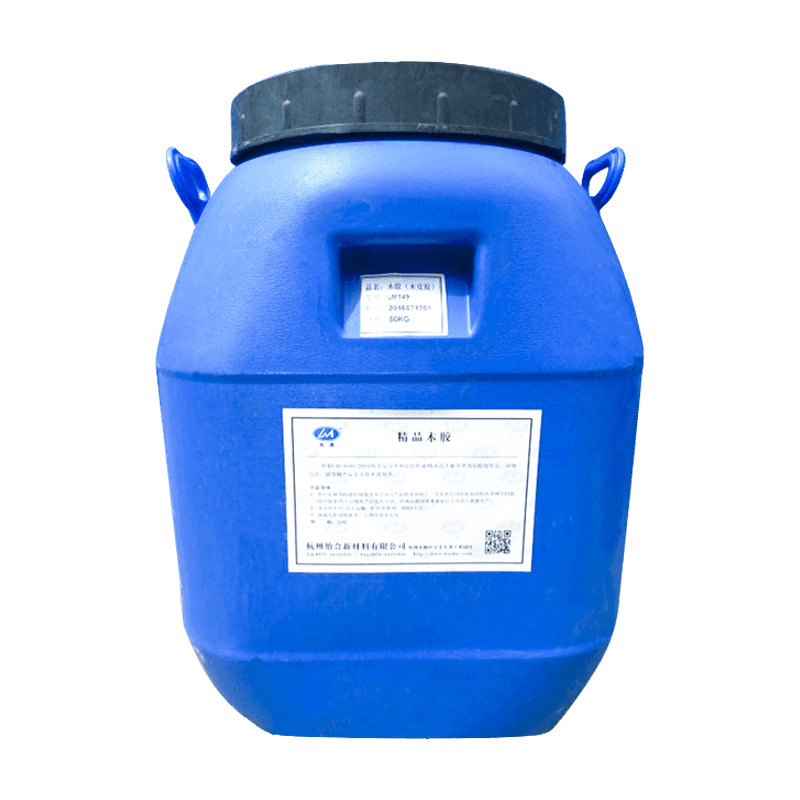
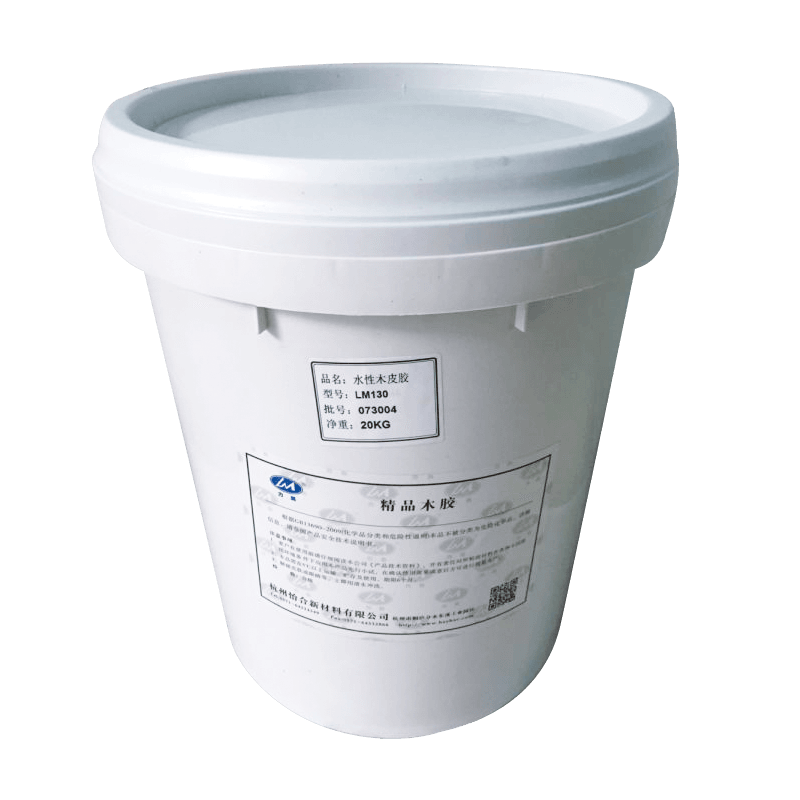
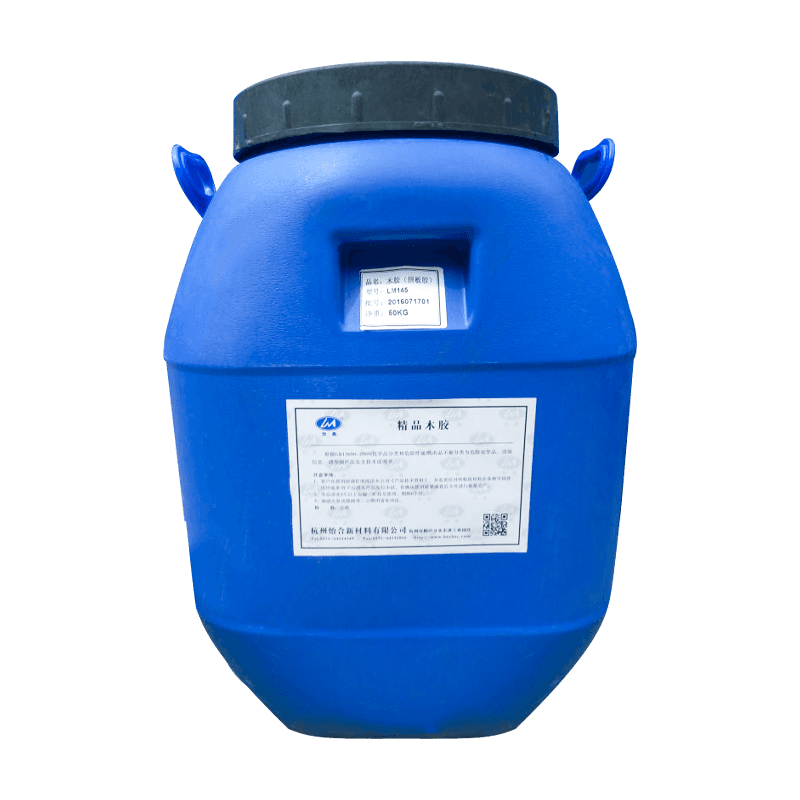


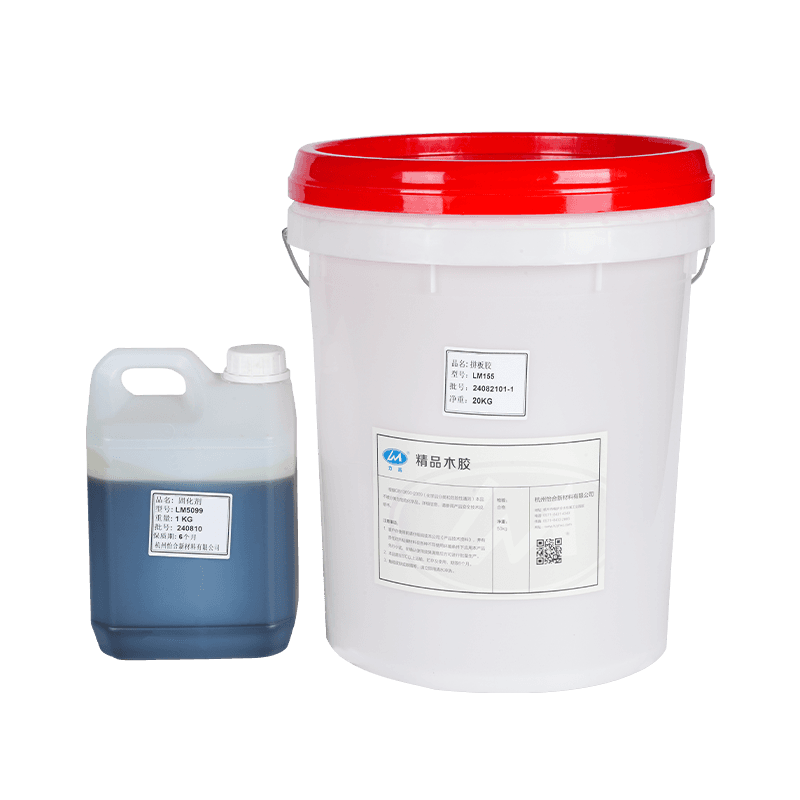
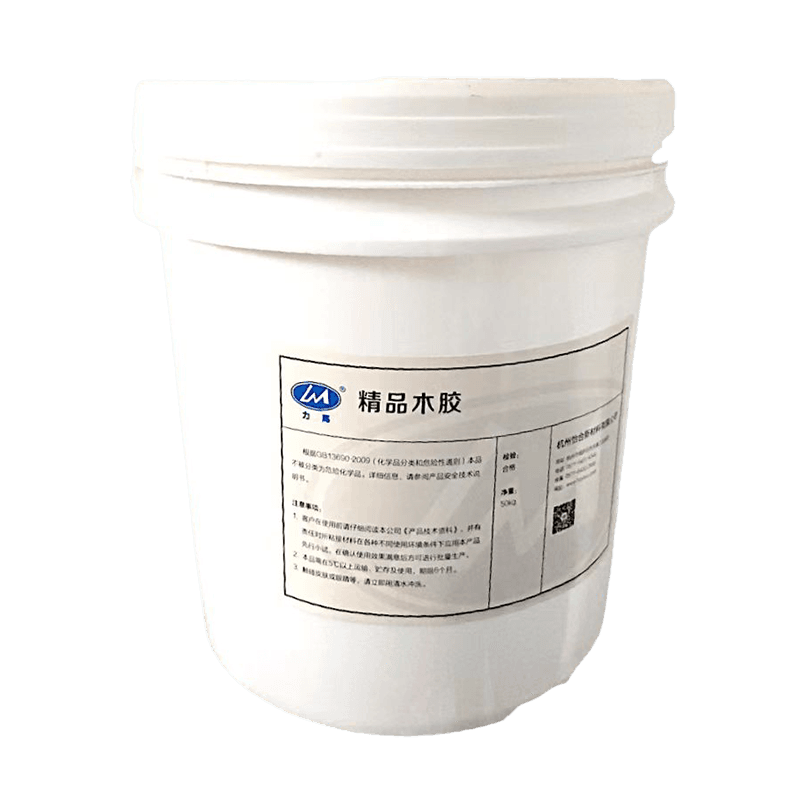



Hangzhou Yihe New Materials Co., Ltd. has produced eco-friendly adhesives since 1997, when the company operated as Hangzhou Tonglu Lima Specialty Adhesives Factory beside the Fuchun River in Tonglu. As a Premium Woodworking Adhesive manufacturer, we supply seven grades across five sub-series for veneer pressing, door-skin and laminate lamination, WPC board lamination, timber and panel jointing, and tenon assembly in door, panel and furniture plants.
Built for press-room conditions
- Water-based chemistry with low solvent content and low odour at the press.
- Formulated to the VOC limits of GB 18583-2008 and GB 33372-2020.
- Grades separated by substrate and process, not one adhesive stretched across every joint.
- In-house laboratory testing and batch records support incoming inspection and line trials.
Five sub-series, one production logic
The series is organised by what the bond has to do in the finished part. A veneer face, a WPC door skin, a laminated blank and a mortise-and-tenon joint each see different stress, heat and moisture, so spread rate, open time and press response differ from one grade to the next.
| Sub-series | Bond-line function | Typical substrates | Process route | Grades |
|---|---|---|---|---|
| Premium Wood Veneer Adhesive | Decorative veneer to door skins, panels and solid wood | Natural and reconstituted veneer, MDF/HDF, solid wood, painted faces | Hot press, cold press, hand lay-up | LM150, LM130 |
| Premium Laminate Adhesive | Door pressing, skin lamination and assembly | Wood and unpainted door panels, laminates, composite boards | Press lamination, manual and machine-assisted assembly | LM143, LM135 |
| High-Polymer WPC Lamination Adhesive For Wood Doors | WPC panel to wood board and door skins | Wood-plastic composite panels, wood boards | Press lamination with controlled cooling | LM216 |
| Wood Panel Joint Adhesive | Timber lamination and edge-to-edge panel jointing | Solid timber, engineered panel cores | Clamping, cold press, assembly bench | LM155 |
| Tenon Joint Assembly Adhesive | Door stile and rail tenon assembly | Door frame timber, MDF and engineered stiles | Assembly press, clamping frame | LM158 |
LM130, LM150, LM135, LM143, LM155, LM158 and LM216 share the same quality platform and the same laboratory support. They differ in working window, film behaviour and press response, which is why we qualify them against your line rather than against a catalogue page.
Premium Wood Veneer Adhesive: machine and hand routes
Premium Wood Veneer Adhesive covers two application routes. LM150 is the machine-applied grade for roller and press lines bonding veneer to solid wood door faces, lacquered door blanks and panel cores. LM130 is the hand-applied counterpart for short runs, repairs and shaped components where a roller coater cannot reach.
- Face material: thin sawn veneers and open-grain species draw adhesive quickly and telegraph grain if the spread is too heavy; dense closed species need a longer press dwell for the same bond.
- Substrate: MDF and HDF faces machine cleanly and wet out evenly; solid wood and painted faces need flatness and dust control before lay-up.
- Press route: hot press, cold press and vacuum bagging each impose a different combination of temperature, pressure and dwell.
- Finish: the bond line must not bleed through the face or raise grain under the subsequent sanding and coating schedule.
Premium Laminate Adhesive: door pressing and board lamination
Door plants run two different bonds under one roof: laminating a decorative surface onto a blank, and assembling stiles, rails and skins into a finished leaf. Our Premium Laminate Adhesive range splits along that line. LM143 is the quick-drying lamination grade, formulated so a pressed stack can be handled and moved on without a long curing buffer. LM135 is the press door adhesive for wooden door assembly, where the bond has to hold across joints and skins through clamping, trimming and finishing.
- Flat slab doors and framed doors load the adhesive differently; the assembly grade is selected accordingly.
- Unpainted door surfaces accept the adhesive directly, so surface cleanliness and open time decide the result.
- Quick setting shortens press occupancy but must not be pushed beyond the point where the film skins over before closure.
- Clamping pressure and caul flatness carry as much weight as the adhesive itself on door assembly.
High-Polymer WPC Lamination Adhesive For Wood Doors
Wood-plastic composite does not behave like wood. Its surface energy is low, it moves with heat, and it releases stress slowly after pressing. High-Polymer WPC Lamination Adhesive For Wood Doors is built around that behaviour, using a high-polymer formulation to wet out the composite face and hold the bond through the cooling and machining steps that follow the press.
- LM216 is the standard grade for WPC panel to wood board lamination on door leaves.
- Uniform film coverage matters more than a heavy coat; starved patches show up as blistering after trimming.
- Laminated stacks are kept flat and under load while they cool, so the panel does not cup before edge machining.
- Release agents, mould residues and dust on the WPC face are removed before application.
Joint and assembly grades for stiles, rails and panels
Structural joints fail for reasons that have little to do with adhesive strength. Poor fit, fresh machining, moisture imbalance and clamping time decide whether a tenon or an edge joint survives a dry winter and a humid summer. Wood Panel Joint Adhesive (LM155) handles timber lamination and edge-to-edge panel work, while Tenon Joint Assembly Adhesive (LM158) is formulated for door panel tenon joints where the bond line sits inside a closed joint with limited access to air.
- Joint fit is set before adhesive selection: a loose tenon cannot be rescued by a stronger glue line.
- Surfaces are machined shortly before assembly so the wood is open and free of oxidised fibre.
- Stile and rail moisture is equalised across components, otherwise the joint moves as it dries.
- Clamp time is matched to species, section size and shop temperature, then verified on a pull-apart sample.
Setting the working window on your line
Substrate and shop conditions
Interior joinery stock is normally conditioned to a moisture content that matches the service environment before bonding, and components are equalised with each other rather than with the room. Dust, extractor oil and handling marks on a veneer or WPC face are removed at the lay-up station, because the press cannot compensate for a contaminated interface.
Application and press
Spread rate, open assembly time, press temperature, specific pressure and dwell form one working window. Changing any one of them shifts the others, which is why we qualify a grade against your press rather than against a single recommended number.
Downstream processing
Sanding schedules, edge profiling and coating systems all interact with the cured film. A bond that passes a shear test but clogs paper or shows a glue line after lacquering is still not accepted on a door line, so finishing trials sit inside the qualification, not after it.
Quality assurance and acceptance testing
Hangzhou Yihe New Materials holds National High-Tech Enterprise qualification and operates under ISO 9001 quality management and ISO 14001 environmental management systems. Incoming raw materials and finished batches are checked in our own laboratory, and the Lima brand was featured on the CCTV programme Quality in 2018. Acceptance criteria for your project are agreed at qualification and repeated against production batches.
| Check | What it confirms | Condition agreed per project |
|---|---|---|
| Bond strength on prepared specimens | Strength at the specified substrate and spread | Specimen geometry, substrate batch and test standard fixed at qualification |
| Water resistance | Behaviour of the bond line after soaking and drying | Immersion and drying cycle matched to the declared service class |
| Heat resistance | Stability under press heat and in warm service | Temperature, load and duration set against the actual process |
| Surface appearance | No bleed-through, haze or telegraphing on the decorative face | Visual comparison against a signed reference panel |
| VOC content | Compliance with the declared environmental limits | GB 18583-2008 and GB 33372-2020 limits, or the destination-market equivalent |
Information We Use to Configure Your Solution
A proposal is only useful when it names the grade, the working window and the acceptance method for your part. These are the inputs that move a quotation from a price list to a configuration.
| Project input | What it determines |
|---|---|
| Substrate and face combination | Which sub-series and grade, plus the spread range to start from |
| Press or assembly method | Hot press, cold press, vacuum, roller or clamping route and the available temperature and pressure |
| Component geometry | Open time, clamp time and whether a machine or hand grade fits better |
| Performance target and test standard | Acceptance criteria, sample preparation and batch release checks |
| Climate of the destination market | Service class assumed in water and heat resistance testing |
| Consumption, pack format and storage | Pack size, rotation policy and handling equipment at the plant |
Packaging and technical support
Pack format is agreed against the consumption rate and storage conditions of the receiving plant, with batch identification on every unit. Product data and handling documentation travel with the order, and the same laboratory that releases the batch answers the technical questions that arise on site. When a new film, board or press line enters production, we review the working window with your process team and confirm it on a trial run before the grade is fixed into the specification.
Our motto, Focus all efforts on one target, deliver successful results promptly, describes how these projects are handled: one adhesive target, one accountable technical contact and a result that can be checked on the line.
Frequently asked questions
Which grades should we trial for veneer pressing on MDF door skins?
LM150 is the machine-applied starting point for roller and press lines, and LM130 covers hand application, shaped components and short runs. Both are qualified against the veneer species, face thickness and press route you actually use, because thin open-grain veneers and dense closed species behave differently at the same spread.
What makes the WPC grade different from a wood lamination adhesive?
LM216 is a high-polymer formulation aimed at the low surface energy and thermal movement of wood-plastic composite. On a door leaf, the bond also has to survive cooling under load and edge machining after pressing, so the working window is set around the whole sequence rather than the press alone.
What press data do you need before a line trial?
We ask for press type, platen temperature, specific pressure, press cycle, the spread method and the time between application and closure. Component build-up, substrate moisture and the finishing schedule complete the picture, and all of it is combined into a trial plan with defined acceptance checks.
How do your woodworking adhesives address VOC requirements?
The woodworking range is water-based and formulated to the VOC limits of GB 18583-2008 and GB 33372-2020. Where a destination market applies its own limit, the test method and reporting format are agreed at qualification so the batch data matches the regulation your customer audits against.
What should be included in a quotation request?
The bonded materials, the process route, the performance standard, the annual or monthly volume, the pack size your handling equipment accepts and the destination market are enough to start. From there we name the grade, the trial quantity and the acceptance method, and confirm the working window on your line before production quantities are released.











