 Search


 English
 中文简体
 русский
 عربى


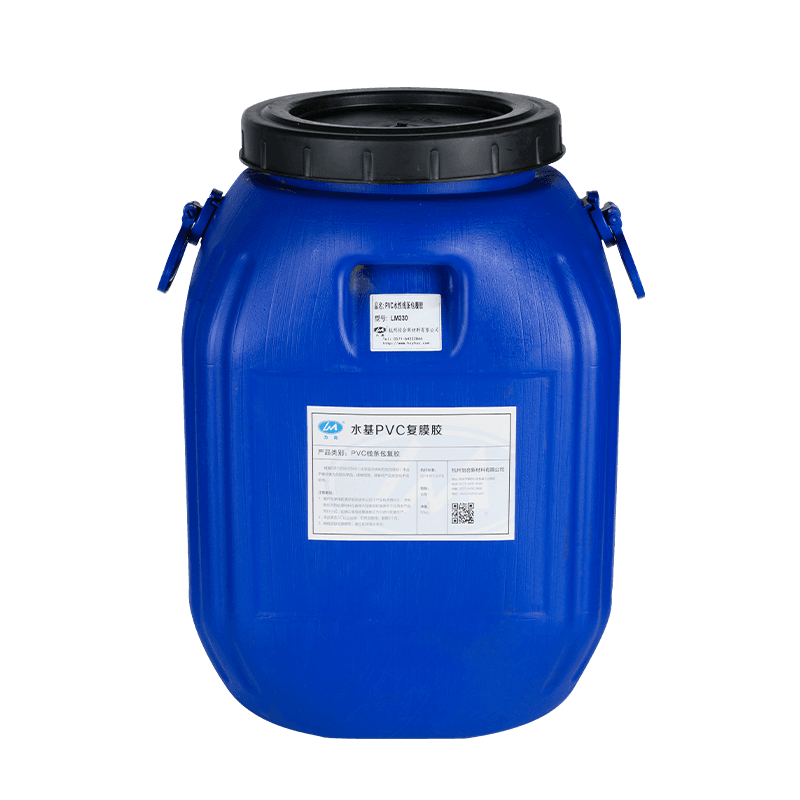
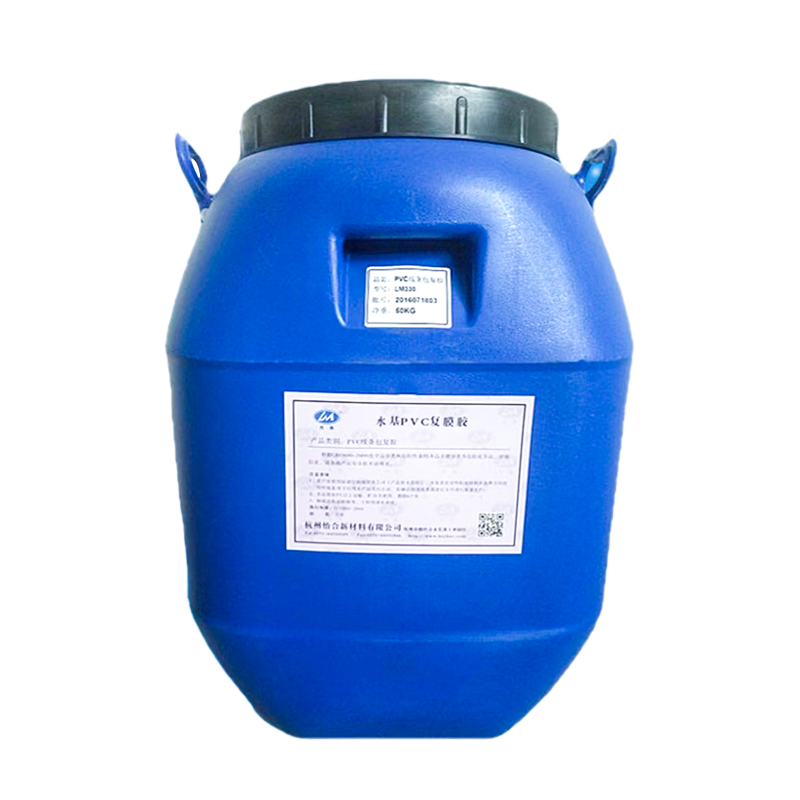




Hangzhou Yihe New Materials Co., Ltd. has formulated water-based adhesives since 1997 from its plant beside the Fuchun River in Tonglu, Hangzhou, China. As a Water-Based PVC Wrapping Adhesive (Profile Wrapping Adhesive) manufacturer, we supply the grades used on profile wrapping lines to bond PVC film to sanded MDF, particleboard and plywood profiles. The range serves furniture components, door and window casings, skirting, decorative trims and panel edges, where a clean wrap and stable line behaviour are judged together with final bond performance.
The Wrapping Range at a Glance
Three grades cover the usual split between standard PVC film, higher line speeds and mud-coated film. All are water-based systems, so the carrier water must be removed before the film reaches the nip; the grade sets how much drying load the oven and line speed can carry.
| Grade | Positioning | Application fit | What it changes on the line |
|---|---|---|---|
| LM330 Wrapping Adhesive | General-purpose grade for routine PVC film on sanded MDF and similar wood-based profiles. | Mixed furniture profiles, casings and trims run at standard oven settings. | A forgiving start-up window and straightforward changeover between profiles. |
| LM368 Quick-Dry Wrapping Adhesive | Quick-dry grade for lines where oven length, film thickness or output rate limits drying. | Thin PVC films and high-speed wrapping where the bond line must be dry at the nip. | Higher throughput, with tighter pan and roller hygiene to prevent skinning. |
| LM365 PVC Mud-Coated Profile Wrapping Adhesive | Grade for PVC film with a filled, mud-coated backing. | Profiles wrapped in coated PVC film that are trimmed soon after the nip. | Stable wet-out on the less absorbent coated face; coat weight and nip pressure need closer setting. |
Where the Adhesive Sits in the Wrapping Process
Profile wrapping is a continuous sequence, and a water-based adhesive has to be dry before it can be reactivated. The line, not the adhesive alone, determines whether the bond forms cleanly.
- Profile machining and sanding. The face must be flat, uniform and dust-free so the roller lays down an even adhesive film.
- Adhesive application. A controlled wet film is applied to the substrate, not to the PVC, with coat weight set by roller configuration and adhesive viscosity.
- Drying. Oven temperature, airflow and line speed remove the carrier water. Over-drying skins the film; under-drying traps water at the nip.
- Film preheat and nip. The PVC is heated to follow the profile and pressed into the dried adhesive film under controlled roller pressure.
- Edge wrapping, trimming and cooling. The wrap is formed, trimmed and allowed to stabilise before handling or stacking.
The adhesive film must stay thermoplastic enough to wet the PVC under the nip, then develop enough cohesive strength for trimming and later service. That balance is why one grade does not cover every film, oven and profile.
Substrate and Film Considerations
Wood-based substrates and PVC films vary more than grade names suggest. The same adhesive can behave differently on a dense, well-sanded MDF profile and on an open particleboard edge.
Wood-based profiles
- MDF gives predictable absorption when density is uniform and the face is properly sanded; dust left on the surface pulls adhesive away from the bond line.
- Particleboard needs a filled or sanded face and a consistent wet coat because exposed chips and density variation change absorbency.
- Plywood brings grain direction, moisture variation and core gaps that can telegraph through thin PVC film.
- Tight radii, deep grooves and sharp edges need film preheat and roller pressure that follow the shape without stretching the film.
PVC film and backing
- Plasticised PVC can migrate plasticiser into the adhesive layer; film grade and expected service temperature belong in the selection.
- Thin films follow tight radii but are less forgiving of substrate defects, while heavy films need more preheat to form the wrap.
- A coated or primed reverse face changes wetting and bond development compared with plain PVC.
- Mud-coated PVC presents a filled, less absorbent face, so the adhesive must hold a continuous film through wrapping and trimming.
Critical Specifications and the Working Window
Adhesive data is only one half of the working window. These are the line variables we review together before a grade and setting are fixed.
| Working variable | Why it decides the result |
|---|---|
| Substrate species, density and surface | Sets absorbency, coat weight and the risk of strike-through |
| Substrate moisture and temperature | Changes open time, penetration and early bond development |
| PVC film chemistry, thickness and backing | Governs wetting, preheat and plasticiser resistance |
| Wet coat weight | Balances adhesion against drying load and squeeze-out |
| Adhesive viscosity and solids | Controls roller pick-up, film build and flow on the profile |
| Oven temperature, airflow and residence time | Determines how much water leaves before the nip |
| Nip roller temperature, pressure and hardness | Forms contact without bubbles, streaks or film distortion |
| Ambient temperature and humidity | Shifts drying and open time through the shift |
Where the oven cannot be extended and the film is thin, LM368 is usually the first candidate. Where the film carries a filled backing, LM365 is the starting point. The final setting is confirmed by wrapping the customer's own profile.
Configuration, Trial and Line Integration
Grade selection starts with the film and profile, then moves to the line. A proposal sets out the adhesive, the recommended wet coat, oven and nip settings, and the points to check during the first trial.
- Grade shortlist based on film chemistry, backing, profile geometry and target output.
- Working-window proposal covering adhesive viscosity, wet coat weight, oven profile, nip pressure and cooling.
- Trial support on the customer's line: start-up settings, sample wrapping and adjustment before production.
- Scale-up review after the first run, covering edge quality, surface appearance and bond development.
- Laboratory review where a standard grade does not fit the film or the oven, working from customer samples and line records.
Quality Assurance and Acceptance
Hangzhou Yihe New Materials holds National High-Tech Enterprise qualification and operates under ISO 9001 quality management and ISO 14001 environmental management systems. Complete laboratory facilities support raw-material and finished-product testing, and the Lima brand has been built on consistent batch quality rather than one-off performance.
- Initial sample and first-article approval on the customer's substrate, film and profile.
- Line trial acceptance covering bond strength, edge lift, blistering, surface haze and heat resistance.
- Batch consistency supported by laboratory testing and retained reference samples.
Packing, Storage and Line Hygiene
Water-based adhesives are supplied in packaging agreed at order so that decanting, line-side storage and stock rotation fit the plant.
- Containers stay sealed and protected from frost, direct sun and prolonged heat.
- Shelf life and storage temperature come from the grade data sheet, with stock rotated first in, first out.
- Rollers, pans and pipework are rinsed before adhesive skins form; dried adhesive is harder to remove than wet material.
- Contaminated or dried material is not returned to the working container.
Information We Use to Configure Your Solution
A proposal is only as good as the line data behind it. These inputs let us recommend a grade and a working window instead of a generic adhesive.
| Project input | What it tells us |
|---|---|
| Substrate and profile | Species, density, moisture, surface preparation and geometry |
| PVC film | Chemistry, thickness, backing, primer and surface finish |
| Wrapping line | Machine type, glue roller arrangement, oven zones, cooling and maximum line speed |
| Application target | Wet coat weight, production rate and shift pattern |
| Performance requirements | Adhesion, heat resistance, moisture exposure, cold flex and appearance |
| Acceptance method | Test standard, sample size, first-article and routine check |
| Packaging and handling | Container size, decanting, storage conditions and shelf-life limit |
| Commercial scope | Annual volume, call-off pattern, destination and documentation needs |
Frequently Asked Questions
Which grade fits a standard PVC film on an MDF profile?
LM330 is the usual starting point for routine PVC film on sanded MDF and similar wood-based profiles. Where oven length or line speed constrains drying, LM368 gives a quicker release of carrier water. For PVC film with a filled, mud-coated backing, LM365 is the appropriate grade.
Can the same adhesive wrap particleboard and plywood?
Yes, provided the face is prepared for the substrate. Particleboard needs a filled or sanded surface and a consistent wet coat, while plywood requires attention to grain, moisture variation and core gaps. We review the substrate and profile together because absorbency changes the coat weight and drying balance.
What causes edge lift or blisters after wrapping?
Most cases trace to the balance between wet coat, drying and nip temperature. Too little adhesive, an over-dried skin, low film preheat, contaminated substrate or plasticiser from the PVC can all show up as edge lift or blistering. We review line records and wrapped samples before changing the grade.
How is performance confirmed before full production?
Sample wrapping on the customer's profile is followed by a line trial. Bond strength, edge lift, surface appearance, heat resistance and any required moisture test are checked against agreed acceptance criteria before the grade and settings are released for production.
Are these grades intended for exterior or wet-service profiles?
The standard grades are specified for interior decorative profiles. For humid or exterior service, the film, substrate, adhesive and edge sealing need to be reviewed as one system and tested under the expected conditions before a grade is selected.











