 Search


 English
 中文简体
 русский
 عربى


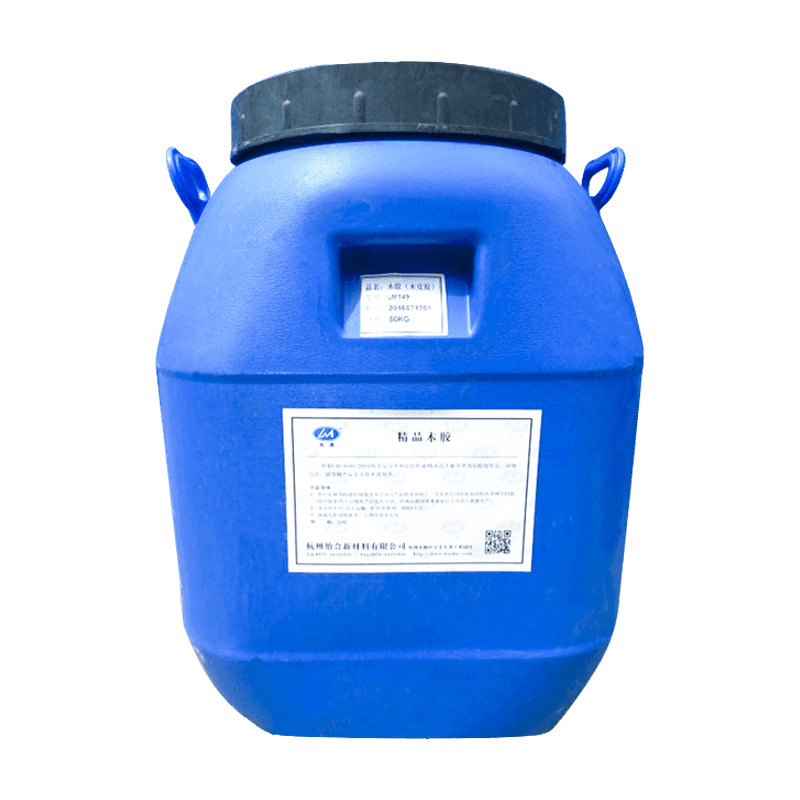
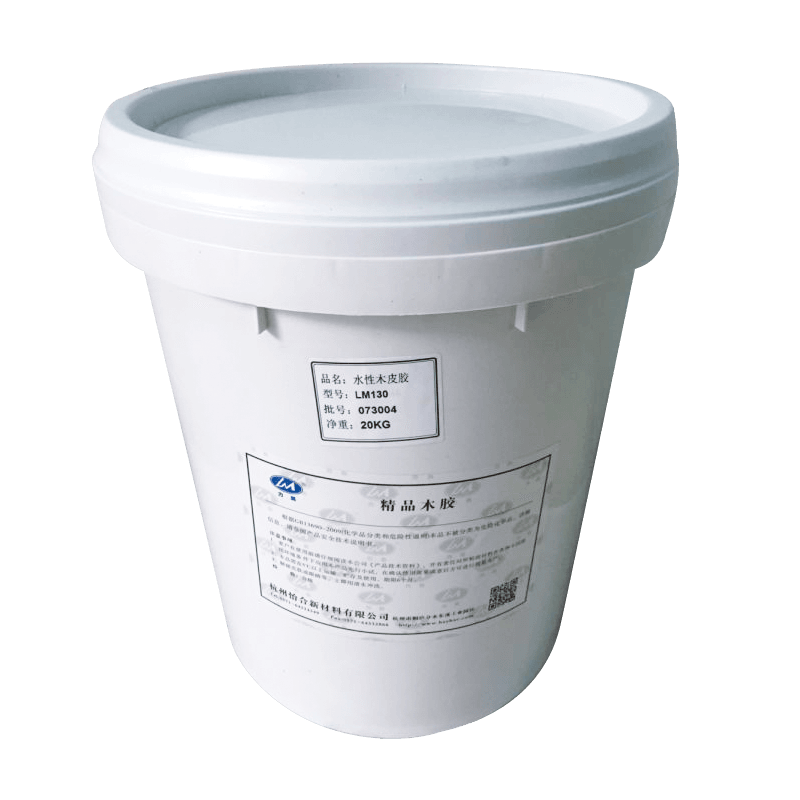



Hangzhou Yihe New Materials Co., Ltd. has formulated adhesives in Tonglu, Hangzhou, China since 1997, first as the Tonglu Lima specialty adhesive factory and today as an integrated research, production and sales operation with its own laboratory, R&D team and production workshops. Our Premium Woodworking Adhesive covers bonding work for doors, panels and furniture; the Premium Wood Veneer Adhesive Suppliers range inside it is built around one job — laying decorative face veneer onto solid wood, engineered cores and primed or painted surfaces so the face stays flat and clean through pressing, sanding and finishing.
Two grades carry that work. LM150 is formulated for machine application on flat-panel and door-skin lines, where coat weight and assembly time are governed by the equipment. LM130 is formulated for hand application, where the operator controls spread, open time and clamping on solid wood doors, lacquer doors, profiled parts and short runs.
Two Formats, One Bonding Platform
Keeping the range to two application formats lets a plant move between line work and bench work without changing bonding chemistry, cleaning practice or storage conditions.
LM150 Machine-Applied Wood Veneer Adhesive
Designed for continuous application, where veneer is laid on flat or gently shaped panels and pressed in a line press, membrane press or clamp carrier. A repeatable machine coat weight is what holds glue-line show-through and press time in check on large door skins and long furniture panels.
LM130 Hand-Applied Wood Veneer Adhesive
Formulated for brush, roller or trowel work. The operator judges the spread by eye and feel, so this grade tolerates the wider variation in coat weight and assembly time that hand veneering involves — solid wood doors, restored joinery, edges, profiles and one-off batches.
- Water-based systems with water as the main carrier rather than solvent.
- Bond strength that resists peeling, warping and delamination in service.
- Fast film formation that shortens handling time between pressing and sanding.
- Used across door production, cabinet fronts, furniture panels and decorative wall paneling.
Matching the Grade to the Workpiece
Surface geometry, batch size, available equipment and the finishing schedule usually decide the format more than the adhesive does. This is how the two grades map onto real production points.
| Workpiece and process | Grade and method | Why it fits | Confirmed before release |
|---|---|---|---|
| Flat door skins and large furniture panels, continuous runs | LM150, machine | Uniform coat weight at line speed; shorter handling cycles | Line speed, wet coat weight, press temperature and dwell |
| Solid wood doors and lacquer doors, batch or single-piece work | LM130, hand | Operator controls spread on uneven, shaped or repaired surfaces | Spread rate, assembly window, clamping method |
| Curved, profiled and edge veneer work | LM130, hand | Workable open time on shaped parts; adhesive stays where it is placed | Open time under shop climate, roller or brush type |
| Veneer over MDF or engineered core with primer or sealer | LM150 or LM130 | Determined by whether the line or the bench sets the coat weight | Primer cure, surface absorption, sanding grit |
| Painted or sealed substrates needing a clean face | LM130, hand with controlled spread | Lower coat weights limit strike-through on thin veneers | Veneer thickness, coat weight, test panel result |
| Sampling before a line change or a new veneer species | LM150 and LM130 trial quantities | Compares machine and hand results on the same veneer batch | Trial protocol and acceptance criteria |
Veneer is unforgiving of excess adhesive. On a 0.3–0.6 mm face, a heavy coat shows through the grain after finishing, while a starved edge lifts within weeks of installation. Both grades are therefore specified with a target wet coat weight, not a range to be judged by appearance alone.
Machine Application versus Hand Application
- Machine: the applicator fixes coat weight, line speed fixes open time, and the press schedule is locked to the panel program. Consistency between shifts depends on keeping the applicator setting and the adhesive temperature stable.
- Hand: spread is set by the operator, and open time shortens quickly in warm or moving air. Rollers and brushes are cleaned while the film is still wet, because water-based systems release easily before skinning and resist cleaning afterwards.
- Both: veneer is laid in one pass where possible; re-positioning a face that has already grabbed one area of the panel produces uneven bond lines that no press schedule can correct.
- Equipment: mixers, pumps and tanks used for the range stay dedicated to water-based work so that solvent residue does not contaminate a batch.
Veneer, Substrate and Surface Considerations
A grade that performs on one veneer can fail on another, so we treat the material pair as part of the specification.
- Species and porosity: open-pore veneers such as oak and ash draw adhesive away from the bond line, while dense closed species keep it at the surface. A species change is reason enough for a trial panel.
- Veneer thickness: thin faces telegraph every irregularity, including ridges left by a coarse roller.
- Core condition: MDF and solid wood cores are brought to equilibrium with the workshop before veneering; moisture gradients show up later as blistering or edge lift.
- Surface preparation: sanding dust is removed, primers and sealers are fully cured, and painted surfaces are hard enough not to be pulled by the adhesive film.
- Extractives: high-tannin species can discolour where the chemistry is mismatched, which is checked on a test panel before a production run.
- Climate: temperature and relative humidity drive open time and skinning far more than drum-to-drum variation does.
Process Variables We Set Before Release
Commissioning a veneer grade means agreeing the working point on your line, not simply delivering a drum.
- Target wet coat weight for the veneer and core combination in use.
- Open and assembly time at the actual shop temperature and humidity.
- Press pressure, platen temperature and dwell, or clamp time and clamp pressure for bench work.
- Conditioning time before sanding and finishing, so the face does not move after machining.
- Storage, shelf handling and cleaning routine for the workshop.
Quality, Environmental and Compliance Evidence
Hangzhou Yihe New Materials holds National High-Tech Enterprise qualification and operates ISO 9001 quality and ISO 14001 environmental management systems. Laboratory facilities and inspection equipment in Tonglu support raw material checks, in-process control and finished-product testing, and production runs under documented batch control so a delivered lot can be traced through the process.
Water as the main carrier lowers solvent emissions and shop-floor odour compared with solvent-based veneer adhesives. The water-based formulations are aligned with the Chinese adhesive emission standards GB 18583-2008 and GB 33372-2020, and the Lima brand was featured on the CCTV programme Quality in 2018. Trial acceptance is judged on the finished part: bond strength after conditioning, no lifting or blistering at edges, no telegraphing of the glue line through the veneer, and a surface that accepts the specified finish evenly.
Where the Range Sits in the Wider Woodworking Programme
Veneer work rarely stands alone in a plant. The same panels are laminated, wrapped, edge-banded and assembled, and the adhesive platform is organised so those steps can be sourced together: premium laminate adhesive, high-polymer WPC lamination adhesive for wood doors, wood panel joint and tenon joint assembly adhesives, water-based PVC lamination and vacuum thermoforming series, plus PUR and EVA hot melts for flat lamination, wrapping and edgebanding.
For a door plant this means one technical contact for the face veneer, the cross-band, the edge and the frame joint, with a consistent approach to substrate preparation and press settings across the whole panel.
Information We Use to Configure Your Solution
Our proposal is prepared from the working point rather than from a catalogue line. The following inputs let us select a grade, set the process window and quote accurately.
- Substrate and core: solid wood species, MDF, plywood or engineered door blank, plus primer or sealer type.
- Veneer: species, cut, thickness and whether faces are spliced or jointed.
- Application method and equipment: line press, membrane press, clamp carrier, roller, brush or trowel.
- Production target: batch size, panels per shift and changeover frequency between veneers.
- Finishing route: sanding sequence, stain, lacquer or water-based topcoat and the finish quality expected.
- Workshop conditions: seasonal temperature and humidity range, extraction and drying arrangements.
- Performance and compliance requirements: bond criteria, odour limits, emission standards and destination-market documentation.
- Packaging, order volume and delivery scope for the first order and the repeat schedule.
Supply, Documentation and Production Support
Volume, packaging format and delivery schedule are agreed per order, with batch identification carried on the supply so that workshop records can be matched to production. Technical data for the grade supplied and safety documentation for the destination market accompany the commercial documents, and trial support continues through the first production run rather than stopping at the sample stage.
When a defect appears — edge lift, blistering, strike-through or a glue line visible under lacquer — we work back through the working point in the order that usually explains it: coat weight, open time, press schedule, then material condition. That order reflects twenty-nine years of application experience across door, furniture and panel plants, and it is usually resolved without changing the grade.
Frequently Asked Questions
Which grade suits a solid wood door line?
Where veneer is pressed onto flat door skins in a line, LM150 is the usual starting point because machine coat weight stays repeatable across a shift. Where doors are veneered at a bench, have shaped areas or are produced in small batches, LM130 leaves spread and assembly time under the operator’s control.
Can both grades bond veneer to MDF and to painted surfaces?
Yes. The range is designed for veneer on solid wood, engineered cores and primed or painted substrates. What changes is the working point: on MDF the primer and sanding preparation determine how much adhesive the surface draws, while on painted doors the cure state of the paint matters more than the coat weight.
What causes veneer to lift or telegraph after pressing?
Most cases trace back to coat weight, open time or press schedule rather than to the grade itself. Excess adhesive under a thin face appears as a glue line after finishing; too little leaves edges starved; a long open time in warm air lets the film skin before the veneer is laid. We review trial data against those three variables first.
Is the veneer adhesive water-based and low in solvent emissions?
The veneer grades are water-based systems with water as the main carrier, which reduces solvent emissions and odour on the shop floor compared with solvent-based veneer adhesives. The formulations are aligned with GB 18583-2008 and GB 33372-2020, and production and waste handling are governed by our ISO 14001 environmental management system.
What information is needed for a quotation?
Substrate and core, veneer species and thickness, surface finish, application method and equipment, batch size, press or clamping arrangement, workshop climate, and the performance and documentation requirements of the destination market. Sending sample veneer and core material with the enquiry allows a trial before a commercial order.
Can the formulation be adjusted to a specific line?
Within the water-based platform, open time, film behaviour and solids balance can be reviewed against a particular line and climate, followed by a trial on your own materials. Requests that fall outside the platform are directed to the laminate, WPC or hot melt series instead of forcing a veneer grade into the wrong job.











