English
 中文简体
 русский
 عربى
News
Home / News / Industry News / Environmentally Friendly Glue: A Practical Guide for Industrial Bonding
 Search
 +86 178 5710 2305


Walk through almost any woodworking, furniture or automotive interior plant today and sooner or later someone raises the question of environmentally friendly glue. Sometimes it comes from a customer audit, sometimes from the operator who spends a full shift beside the laminating line, and quite often from a purchasing team asked to reduce the factory's solvent footprint without slowing output.
The encouraging part is that eco-friendly adhesives are no longer a niche category that trades performance for a clean conscience. Water-based systems, solvent-free hot melts and polyurethane chemistry have spent the last two decades catching up with — and in several applications overtaking — the solvent-borne products they replace. The less encouraging part is that "environmentally friendly" can mean five or six different things, and picking the wrong one for your substrate or press is an expensive way to find out.
This guide is written from the shop floor up: what the label actually covers, which chemistries deliver it, where they fit in real production, and how to switch over without stopping the line.
Content
An adhesive usually earns the description through one or more of the following routes:
Note that none of these is a single measurable number. A 100% solids product applied at 180 °C is not automatically greener than a water-based grade drying at 60 °C; the honest comparison usually needs a lifecycle view. In practice most buyers narrow the question down to VOC content, odour, and whether the local regulator or the customer's specification sheet will accept the material. That is a workable shortcut, as long as everyone understands it is a shortcut.
Five chemistries cover most of the industrial demand. They are not interchangeable, but they overlap enough that a short comparison helps narrow the field before samples are requested.
| Family | What carries the environmental claim | Typical factory use |
|---|---|---|
| Water-based emulsions | Water replaces solvent as the carrier; low VOC and low odour | PVC vacuum forming, MDF lamination, profile wrapping, carton sealing |
| PUR hot melt (moisture-curing) | 100% solids, no solvent, very thin glue line and low application weight | Flat lamination, profile wrapping, edgebanding |
| EVA hot melt | Solvent-free, sets on cooling, low odour in the workshop | Edgebanding, veneer and CPL wrapping |
| Liquid PUR | Solvent-free, cold press operation, strong heat and moisture resistance | Door assembly, timber lamination, automotive trim |
| Bio-based and partially bio-based | Renewable carbon replaces part of the fossil feedstock | Where a tender or customer specification asks for it |
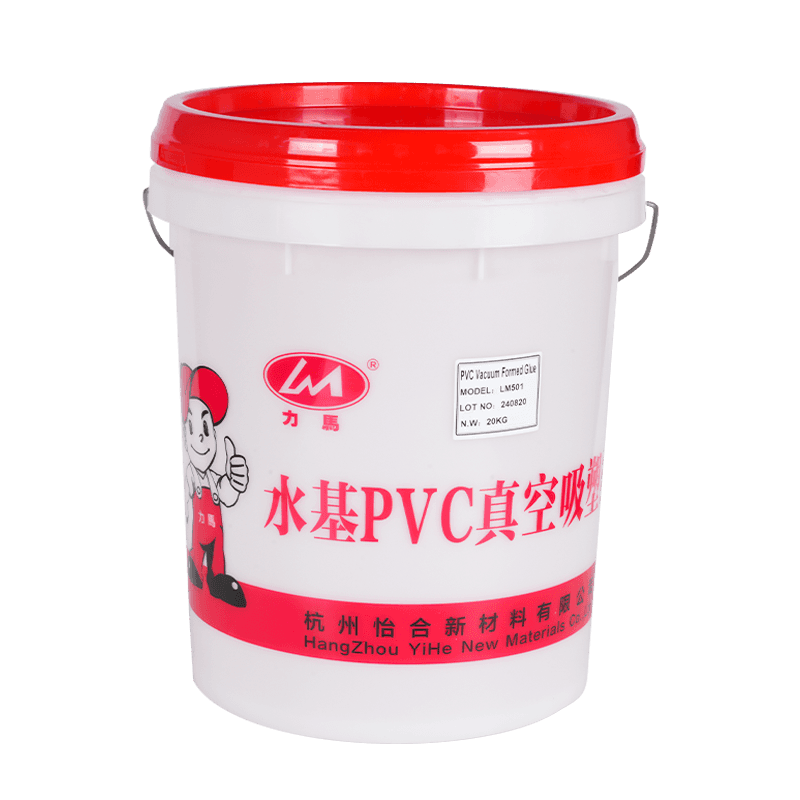
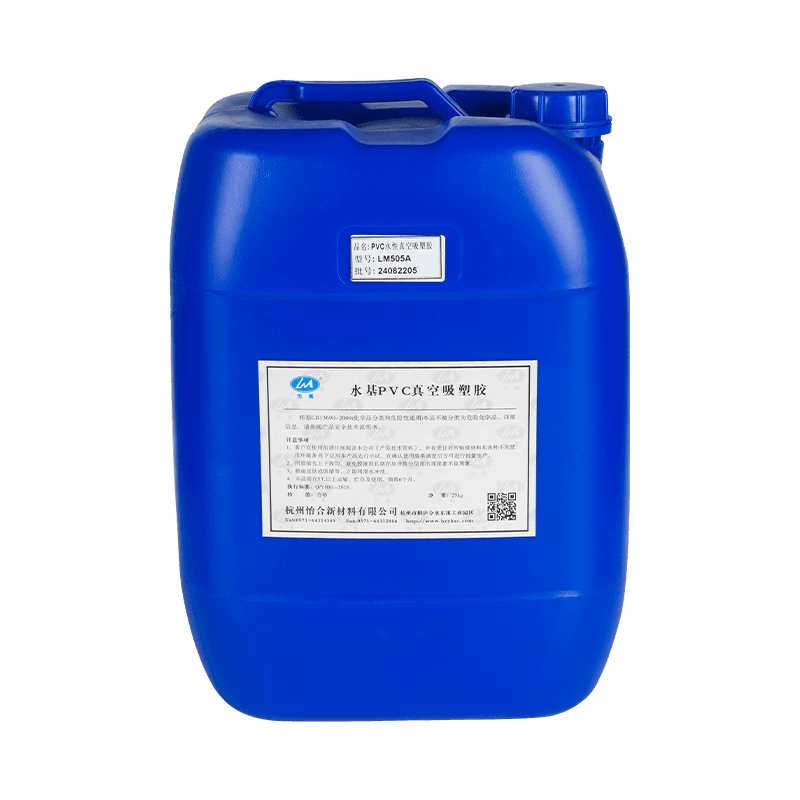
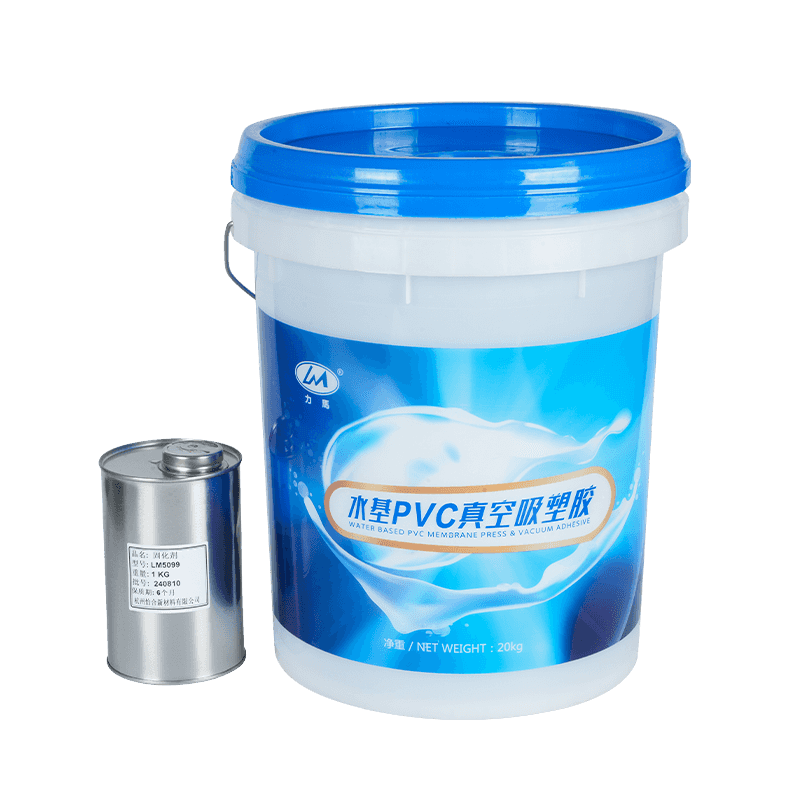
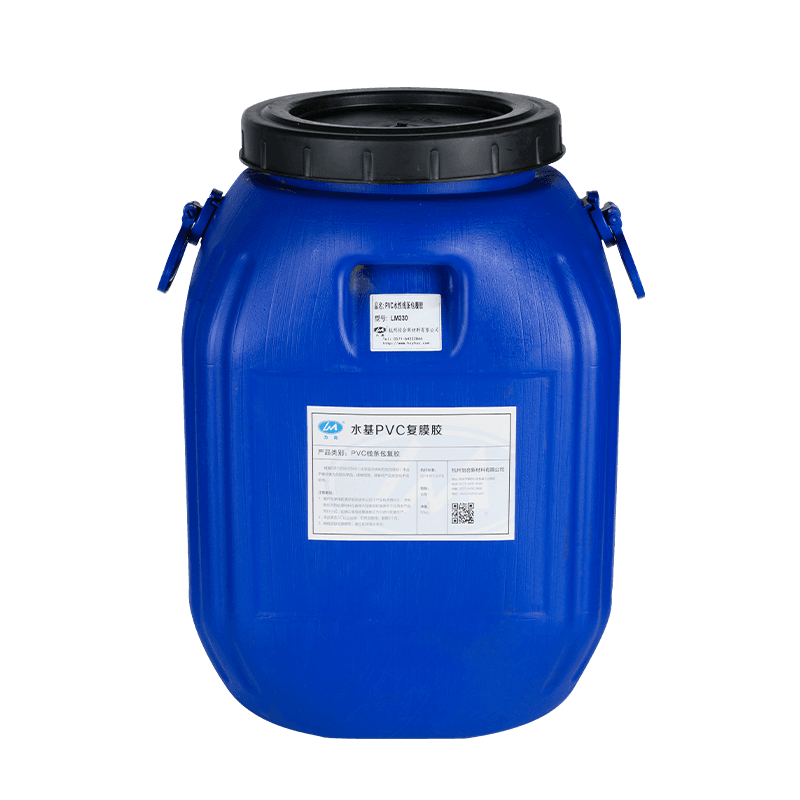
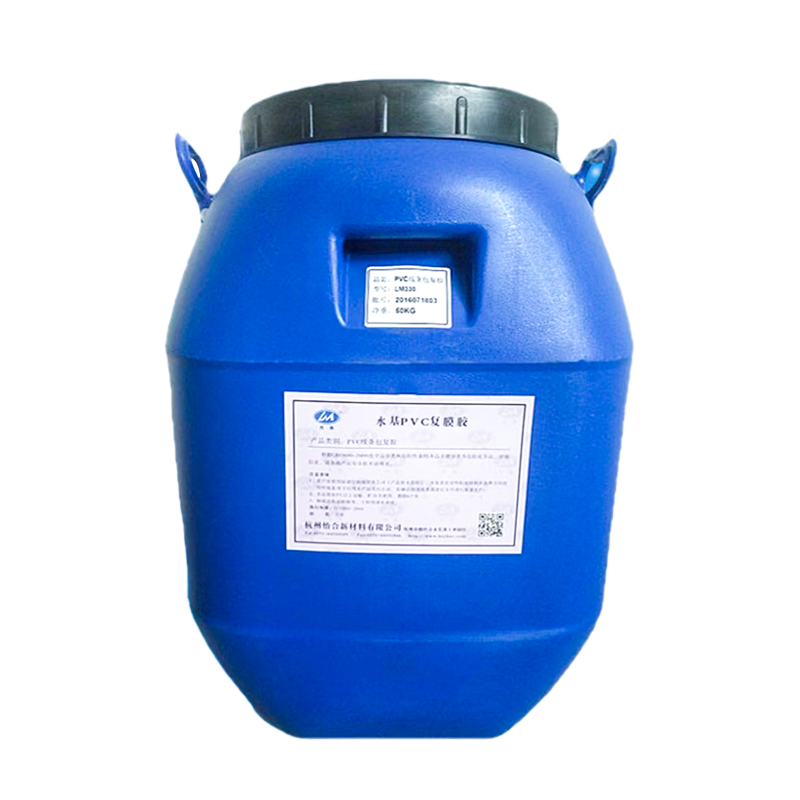
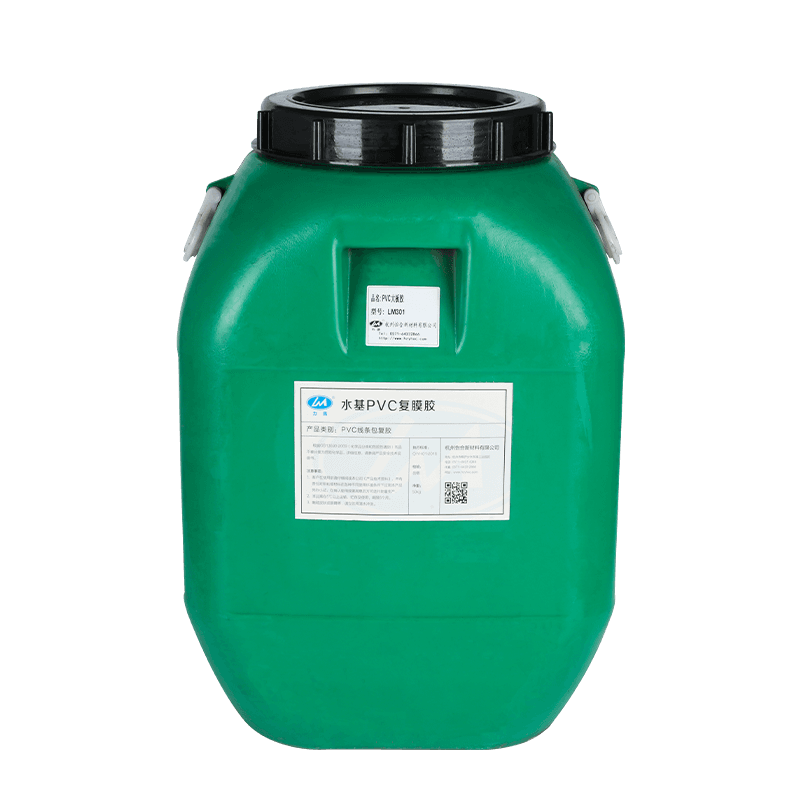
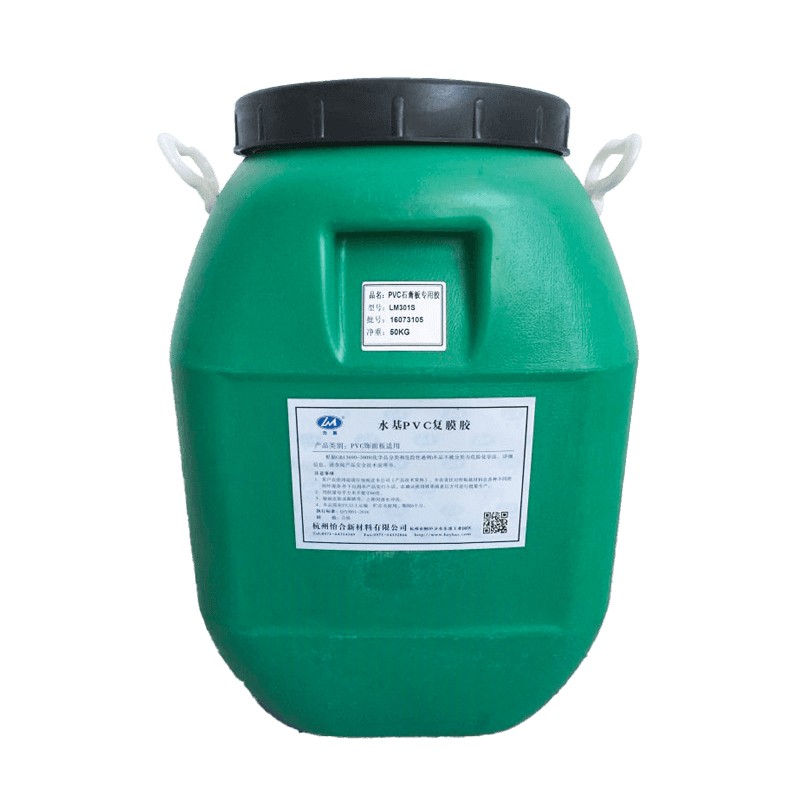
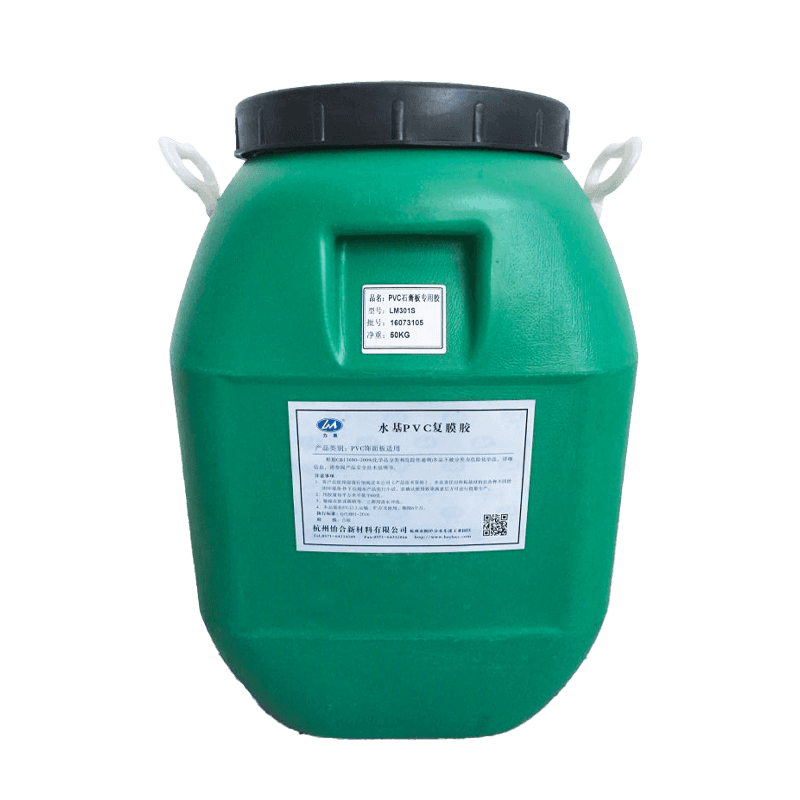
Water-based chemistry deserves a special mention because it is where most furniture and panel producers start. Our own water-based PVC laminating adhesives were developed around exactly that migration path — solvent-borne contact adhesives out, water-borne systems in — and the format now covers vacuum forming, flat lamination, profile wrapping and gypsum board facing.
Vacuum forming is one of the clearest places where water-based chemistry has taken over. The adhesive bonds decorative PVC film to an MDF or particleboard core, flashes off in the oven, and the forming station no longer carries that solvent smell through the whole shift. High-gloss and skin-feel films used to be a headache because dust and coagulated particles showed up as imprints under the light — formulators have since addressed this with particle-free grades designed specifically for those surfaces.
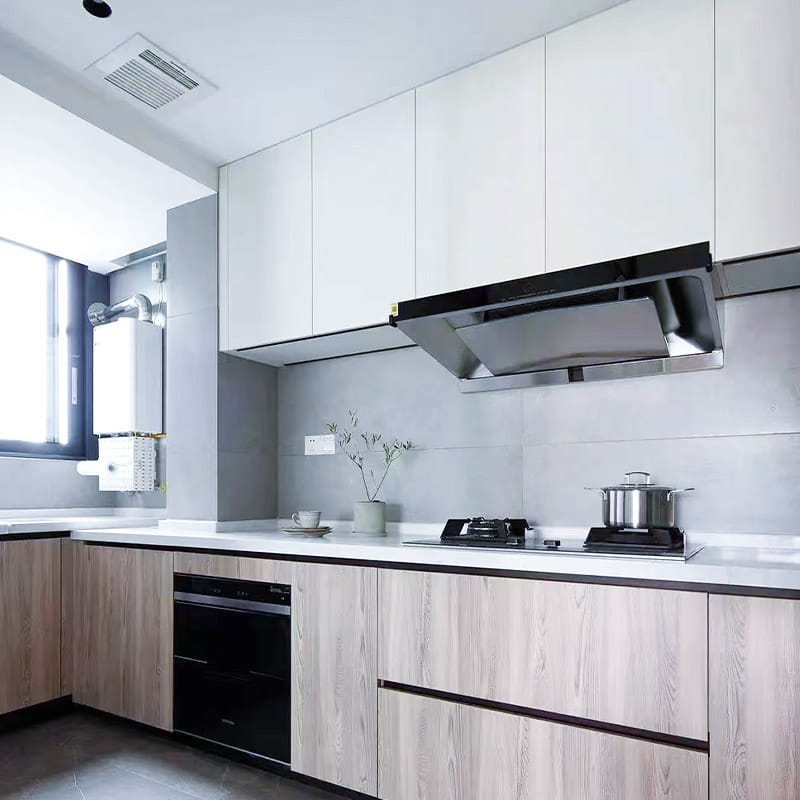 LM501W Water-Based PVC Vacuum Thermoforming Adhesive for CabinetsWater-based grade for bonding PVC film to MDF in cabinet doors and thick-sheet vacuum forming, with high solids, anti-sagging behavior, and edge sealing.View Product →
Edgebanding and assembly follow a different logic. Here EVA and PUR hot melts dominate, because they set on cooling and allow a line to run without a drying tunnel. A universal edgebanding grade such as LM8701 covers wood doors and furniture panels, while a PUR edgebanding adhesive like LM6019 adds heat resistance where a panel will sit close to a heat source. For door assembly, a press adhesive such as LM135 and a tenon joint grade like LM158 handle the structural side.
Flat lamination of decorative film onto MDF is one of the highest-volume uses of environmentally friendly glue in the furniture supply chain. Water-based systems handle PVC decorative film very well, and PET or PP surfaces are possible with the right primer or a dedicated grade. Where the finished panel will face heat — kitchen worktops, radiator covers, shop fitting — a moisture-curing PUR flat lamination adhesive offers a thinner line and better temperature resistance.
 LM301 Water-Based PVC Decorative MDF Lamination AdhesiveWater-based adhesive for flat bonding PVC decorative film to MDF, offering strong initial tack and lasting adhesion for high-volume lamination work.View Product →
Profile wrapping runs on similar principles but tighter tolerances. The adhesive has to grab quickly on a narrow profile, tolerate the line speed, and still release cleanly at the trimming station. Quick-drying water-based wrapping grades and PUR wrapping hot melts both do the job; the decision usually comes down to whether the plant already has drying capacity and how much heat resistance the finished profile needs.
Interior trim has its own priorities: odour and fogging limits, heat resistance inside a closed cabin, and consistent strength on curved, contoured parts. Solvent-free heat-press adhesives and liquid PUR are the usual answers, and the testing regime is stricter than in furniture — often a full environmental cycle before a part is signed off. Trunk panel wrapping and interior heat-press bonding are two very different processes that happen to sit in the same vehicle, which is why a single generic grade rarely satisfies both.
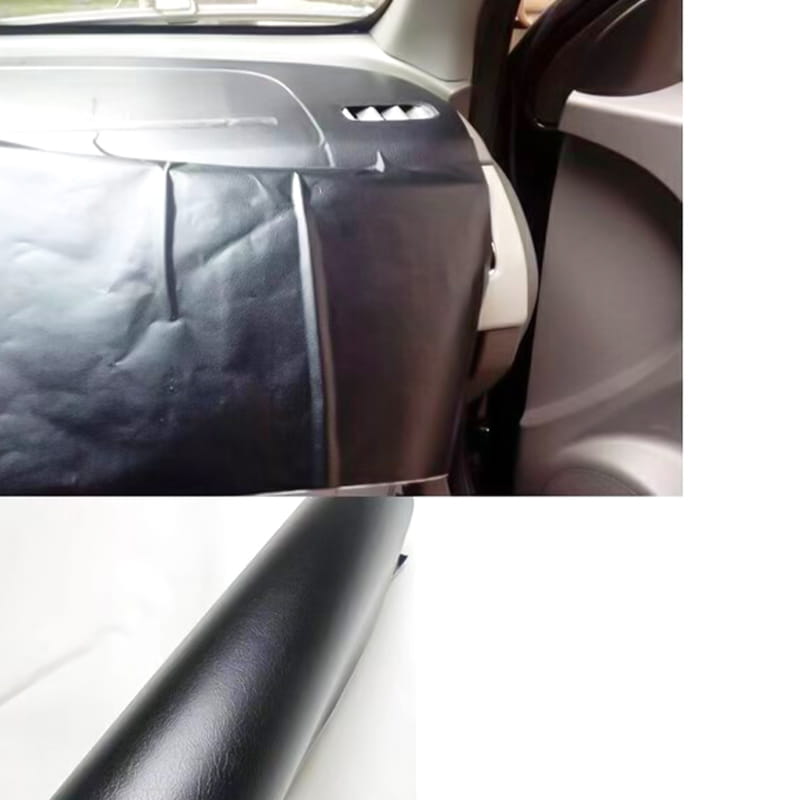 LM578 Automotive Interior Heat Press Adhesive for Hand WrappingHeat-press adhesive for hand-wrapping steering wheels and gearshifts, with low activation temperature and extended open time for interior trim bonding.View Product →
Not every eco-friendly adhesive ends up in furniture. Water-based carton sealing adhesives replace starch and solvent systems on many packaging lines, PVC flooring adhesives have moved towards low-emission formulations, and even whiteboard production uses a dedicated water-based grade. These are small-volume applications individually, but together they account for a meaningful share of the solvent reduction in a typical industrial estate.
A conversion that goes badly is usually one that skipped a step, not one that chose the wrong chemistry. The sequence below has worked well across woodworking, panel and automotive projects:
If you want a broader view of how regulations and buyer expectations are shifting, our practical guide to eco-friendly adhesives for industrial bonding covers the regulatory background in more depth.
Adhesive selection is rarely a catalogue exercise. The same grade behaves differently on a 90 °C oven and a 130 °C oven, on a cold-press line and a hot-press line, on a fresh MDF board and one that has been sitting in a humid warehouse for a month. Having someone who has seen those variations before — and who can say "we tried that in a door plant in 2019 and here is what happened" — shortens the trial cycle considerably.
We have been formulating adhesives since 1997, when the company started out as a specialty adhesive factory beside the Fuchun River in Tonglu, and the product range has grown alongside the industries we serve: water-based PVC vacuum forming and lamination systems, woodworking adhesives, PUR and EVA hot melts, and automotive interior grades. The laboratory and application team spend most of their time on exactly the questions above — which grade, at what weight, under which press conditions — because that is where an environmentally friendly adhesive either works or does not.
Environmentally friendly glue is ultimately a production decision rather than a slogan. Choose the chemistry that matches your substrate and your curing equipment, check the numbers on the data sheet instead of the label on the drum, and trial it properly before the full run. Do those three things and the environmental gain tends to arrive together with a cleaner plant, a simpler ventilation setup and, more often than not, a lower cost per square metre bonded.






Copyright © Hangzhou Yihe New Materials Co., Ltd. Rights Reserved.
Eco Friendly Glue Suppliers