 Search


 English
 中文简体
 русский
 عربى



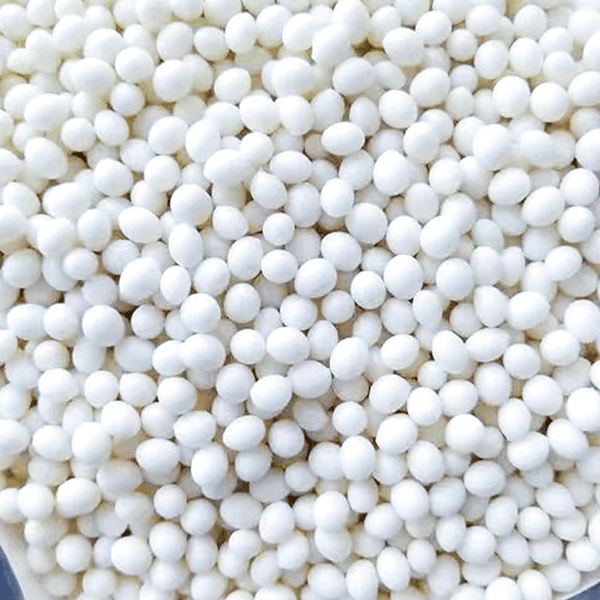



Hangzhou Yihe New Materials Co., Ltd. has formulated and produced adhesives since 1997, and the EVA Hot Melt Adhesive Series is our solvent-free thermoplastic line for edge and surface bonding in furniture, door and panel manufacturing. Both grades in the series are 100% solids: there is no water or solvent to evaporate, the bond forms as the melt cools, and the product is supplied as granules for conventional hot melt equipment. As an EVA Hot Melt Adhesive manufacturer working from our Tonglu plant in Hangzhou, China, we build each supply around three fixed points — the machine, the substrate and the service condition the joint has to survive.
Where the series fits: straight-line and contour edgebanding of furniture panels and door blanks; profile wrapping of veneer, CPL and paper foil onto MDF and solid wood mouldings; and wood-product assembly where a fast, solvent-free bond is wanted and the working temperature stays inside the EVA envelope.
Two Grades, Two Distinct Bonding Jobs
The range in this series is deliberately narrow. One grade covers bonding an edge to a panel; the other covers bonding a decorative web to a machined profile. Both run in standard melters, both are free of solvent and water, and both are supported by application data rather than by a generic label.
| Grade | Chemistry and form | Bonding job | Typical substrates | Selection focus |
|---|---|---|---|---|
| LM8705 EVA Wrapping Hot Melt Adhesive |
100% solids EVA, granular | Profile wrapping and coating with veneer, CPL and paper foil | MDF, particleboard, finger-jointed and solid wood profiles; veneer and CPL webs | Open time against line speed, wetting on porous veneer, heat resistance of the finished profile |
| LM8701 EVA Edgebanding Hot Melt Adhesive |
100% solids EVA, granular | Straight-line and contour edgebanding of panels, door blanks and furniture parts | PVC, ABS, veneer and melamine edgeband on MDF, particleboard, plywood and solid wood | Melt flow and stringing behaviour, setting speed, glue-line visibility and colour |
| Beyond EVA | Reactive polyurethane hot melt | Where sustained heat or moisture exposure sits outside what a thermoplastic EVA joint can hold | Same panel and edge materials, higher service demand | Chemical crosslinking instead of reversible cooling |
EVA Wrapping Hot Melt Adhesive
EVA Wrapping Hot Melt Adhesive is formulated for lines that carry a veneer, CPL or paper web around a machined profile. The transfer distance from applicator to nip is longer than on an edgebander, so open time and film continuity matter as much as raw bond strength. Controlled melt flow keeps the coat weight even across a radius and avoids the heavy glue pockets that show through thin veneer.
EVA Edgebanding Hot Melt Adhesive
EVA Edgebanding Hot Melt Adhesive works on a short, fast cycle: the melt leaves the pot, crosses a narrow bond line and must develop handling strength before the part reaches the trimming station. LM8701 is built for that rhythm — clean cut-off at the nozzle, minimal stringing, and a glue line that stays visually tight on thin light-coloured edges as well as on dark veneer.
How a 100% Solids EVA Grade Behaves in the Joint
An EVA hot melt is a thermoplastic. It is applied molten, wets the two surfaces under pressure, and gains strength as it cools — no drying, no chemical cure, no water to drive off. That behaviour gives the process its speed and its limits, and both are decided at the formulation stage.
- Open time sets how far the melt can travel before it loses tack — the limiting factor on wrapping lines with long web paths.
- Setting speed sets how quickly the joint can be trimmed, stacked or machined, and therefore the practical line speed.
- Softening point sets the reversible upper limit of the bond; a thermoplastic re-softens when the service temperature rises, so heat resistance is a formulation property, not an application habit.
- Thermal stability sets how long the melt tolerates the pot: overheating degrades the polymer, produces char, odour and colour drift, and quietly costs adhesion.
Application Fit and Workpiece Considerations
Edgebanding and wrapping put different demands on the same chemistry. On edgebanding, the variables that decide success are the edge material, its thickness and the freshness of the machined panel edge. On wrapping, the web itself dominates: veneer is porous and variable, CPL is dense and dimensionally stable, paper foil is thin and heat-sensitive.
- Panel moisture and surface temperature at the moment of bonding influence wetting more than most operators expect; cold boards in an unheated plant shorten effective open time.
- Dust, sanding residue and release agents on the edge or profile act as a bond-line barrier and should be removed before the applicator, not after.
- Low-surface-energy edge materials such as PP and some coated foils behave differently from PVC and ABS and are confirmed against the specific grade before a run.
- Where a wrapped profile will sit in a hot vehicle, a sunlit façade or a hot-climate warehouse, the service temperature is stated at the enquiry stage so the grade can be selected for it.
Critical Specifications We Fix Before a Batch Is Made
- Softening point by ring-and-ball, matched to the highest sustained service temperature of the finished part.
- Melt viscosity at the declared application temperature, which governs pumpability, wetting and the stringing behaviour at the nozzle or roller.
- Open time and setting speed as a pair, balanced against line speed, transfer distance and shop ambient temperature.
- Adhesion spectrum across the declared substrates, with the reference substrate and test method written into the specification.
- Colour and glue-line appearance, particularly for light edges and transparent or thin banding where any excess reads as a defect.
- Granule form, bulk behaviour in the tank and low-odour formulation where the plant is enclosed or the part is an interior component.
Running Conditions and Line Integration
A grade only performs when the machine is set for it. We work from the melter's melt rate and tank geometry, the hose and roller lengths, the applicator type and the production speed, then define a temperature window rather than a single setpoint. A typical edgebanding pot runs in the region of 160–190 °C, but the usable band for a given grade and machine is confirmed on site or in trial, because hose length, standby time and throughput all shift it.
Pressure and nip gap on the edgebander, feed rate and web tension on the wrapper, and the cooling distance before trimming all interact with the adhesive rather than sitting outside it. Where a line is being commissioned or a product changed, we review those settings together with the customer's process team so the adhesive is not the only variable left moving.
Quality Assurance and Batch Acceptance
Hangzhou Yihe New Materials Co., Ltd. holds National High-Tech Enterprise qualification and operates under ISO 9001 quality management and ISO 14001 environmental management certification, with in-house laboratory facilities and independent R&D. Production batches of the EVA series are checked against the agreed specification — softening point, viscosity at application temperature, colour and adhesion on the reference substrate — and retained for traceability.
Acceptance is agreed with the customer before the first delivery: which property is measured, on which substrate, and what result constitutes a pass. For edgebanding that is usually a peel assessment with fibre tear on the panel side plus an elevated-temperature hold on the finished part; for wrapping it is bond continuity across the profile and surface appearance after trimming. The certificate of analysis issued with each batch reports the values actually measured.
Packaging, Customization and Delivery Scope
- Granular product in moisture-protected bags or cartons, palletized and secured for export; pack size and labelling are fixed with the order.
- Formulation adjustments for colour, heat resistance and open time are developed against a stated process target, not offered as a catalogue of options.
- Trial quantities, technical data sheets and safety documentation travel with the first shipment so the line can be validated before volume supply begins.
- Storage guidance covers dry conditions below the softening range and away from direct heat, which keeps the granule free-flowing and the melt consistent.
Information We Use to Configure Your Solution
A proposal that holds up on the line starts from the actual job, not from a product list. These are the inputs that move an EVA recommendation one way or the other.
| Project input | Why it changes the recommendation |
|---|---|
| Edge material, thickness and colour | Determines wetting, coat weight and whether the glue line stays invisible |
| Panel or profile substrate and density | Sets absorption, penetration and the reference substrate for acceptance |
| Machine make, applicator type and line speed | Fixes the open time and setting speed window that will actually run |
| Melter capacity, melt rate and hose length | Defines the usable viscosity band and the temperature window |
| Highest service temperature of the finished part | Selects softening point, or points the project toward a reactive PUR system |
| Annual volume and pack format | Drives batch size, packaging and delivery planning |
| Agreed acceptance test and sample size | Sets the certificate of analysis values and the trial pass criteria |
Frequently Asked Questions
What separates the wrapping grade from the edgebanding grade?
The geometry of the bonding operation. An edgebander applies a small bead onto a narrow bond line and needs instant green strength, clean cut-off and no stringing. A wrapping line lays a continuous film across a wider web over a longer distance, so it needs a longer open time, uniform flow and reliable wetting on porous veneer. Both are 100% solids EVA, but the open-time and flow behaviour are formulated for different machines.
Can the series bond PVC, ABS and PP edgeband?
PVC, ABS, melamine and veneer edgeband are routine on LM8701. PP and other low-surface-energy edges are confirmed case by case, because surface energy, not adhesive strength alone, decides whether a thermoplastic bond holds; where PP is specified we review the joint design and, if needed, an alternative chemistry before the trial rather than after it.
What melter temperature should we set?
Each grade has an application window defined by its viscosity curve. Edgebanding pots commonly sit between roughly 160 °C and 190 °C, but the correct setpoint for a given plant depends on melt rate, hose length, standby practice and line speed. We supply the recommended window with the data sheet and confirm it against your equipment during the trial, instead of copying a setting from another factory.
How much heat can an EVA joint take?
A thermoplastic bond softens as temperature rises, so the answer is a property of the grade and the joint design, not a single figure. State the highest sustained temperature the part will see — transport in a sealed container, a hot-climate interior, a sun-exposed façade — and we select within the series accordingly. When that requirement sits outside the EVA envelope, our PUR edgebanding hot melt adhesive is the appropriate route.
What documentation accompanies a batch?
Every delivery is accompanied by a certificate of analysis reporting the tested values for that batch, together with the technical data sheet and safety documentation. Production runs under ISO 9001 and ISO 14001 certified systems in our Tonglu facility, and batch records are retained so that a later question about a specific delivery can be traced back to its measured data.
How is the product packed and stored?
The EVA series is supplied as granules in moisture-protected bags or cartons, palletized for export. Because the product is non-reactive and contains no water or solvent, storage is straightforward: keep it dry, below the softening range and away from direct heat sources, and the granule stays free-flowing with consistent melting in the tank.











