 Search


 English
 中文简体
 русский
 عربى


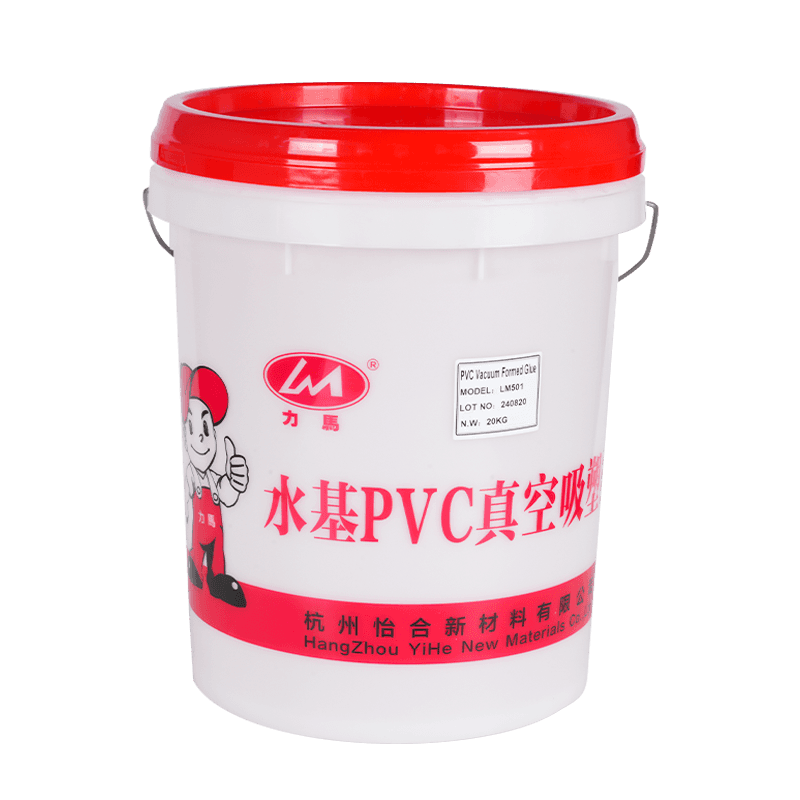
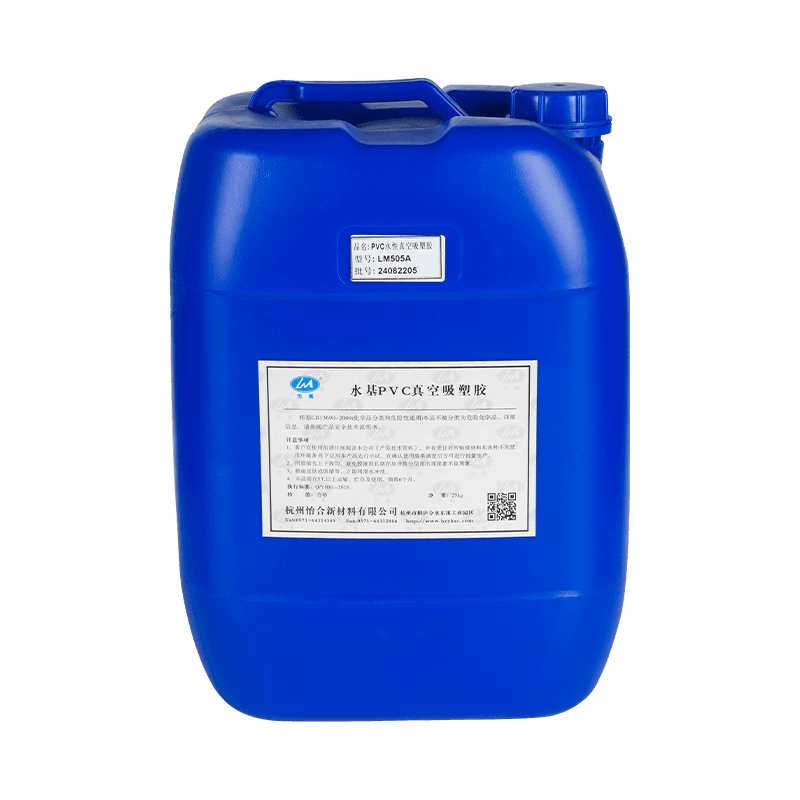
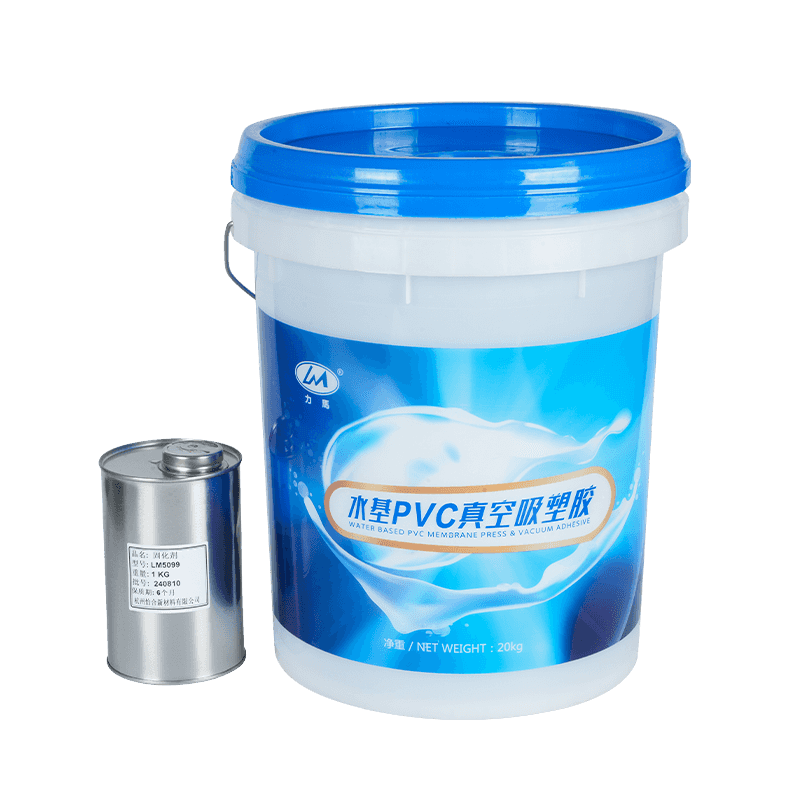
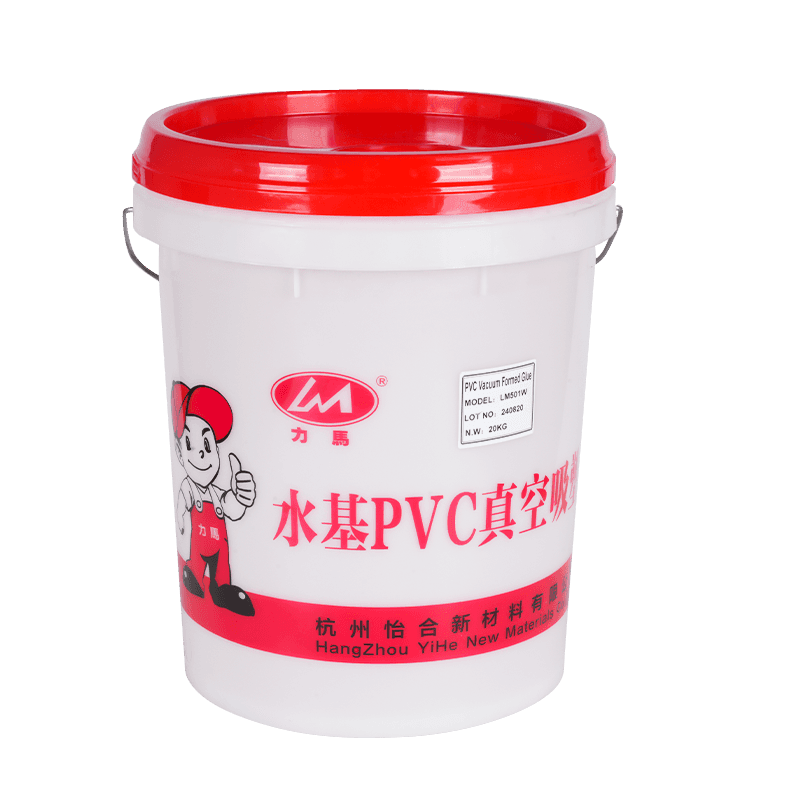
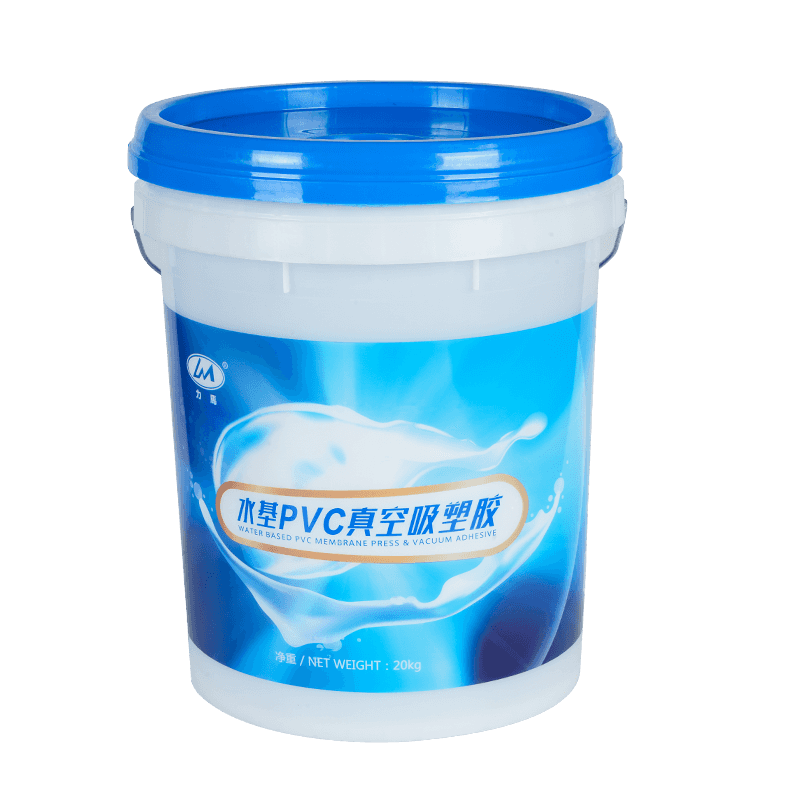
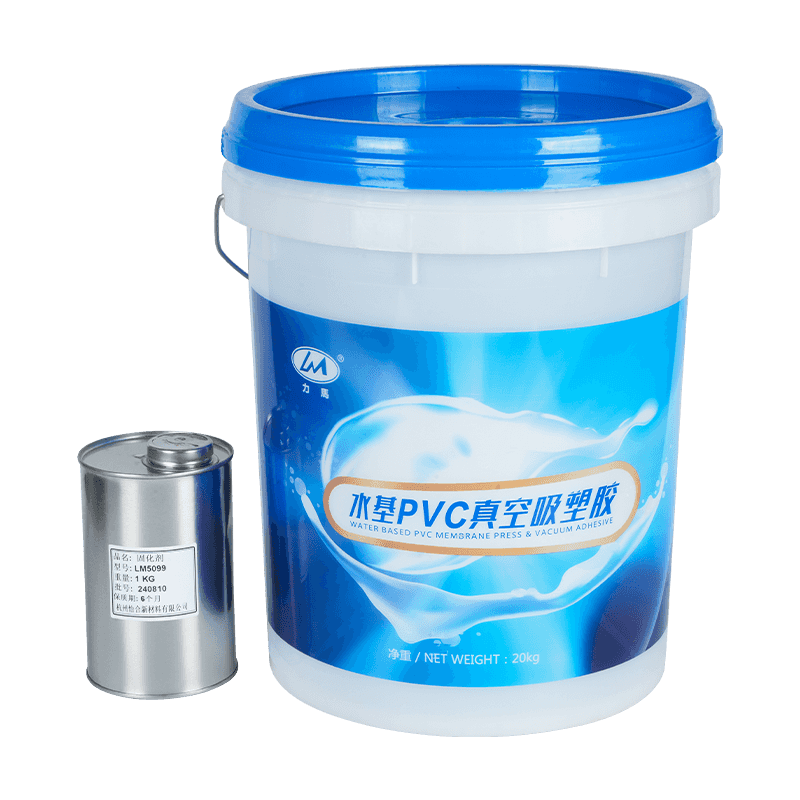



Since 1997, Hangzhou Yihe New Materials Co., Ltd. has built its woodworking business around one production step: bonding decorative film to a wood-based panel under vacuum. As a Water Based PVC Vacuum Thermoforming Adhesive manufacturer, we supply solvent-free polymer dispersion grades to cabinet, wardrobe and door plants, together with the process support that keeps bond strength, surface appearance and cycle time stable from batch to batch.
The series is made at our factory in Tonglu, Hangzhou, under ISO 9001 quality and ISO 14001 environmental management systems, and it carries 29 years of market application in membrane press shops.
Series at a glance
- Water-based polymer dispersion, no organic solvent carrier
- Substrates: MDF, particleboard, plywood and WPC door skins
- Films: PVC decorative film, high-gloss and skin-feel film, PP and PET
- Process: vacuum membrane press and vacuum thermoforming lines
- Six grades across two application families
Two Application Families, Six Grades
The range is organised by the part being made rather than by chemistry alone, because a flat wardrobe front and a profiled door skin seldom run on the same press cycle or accept the same wet coat weight. Both families share the same water-based dispersion platform, so a plant running cabinets and doors together keeps one drying philosophy, one waste stream and one odour profile across the shop floor.
| Grade | Application family | Substrate and film | Where it earns its place |
|---|---|---|---|
| LM501W | Cabinets and wardrobe | MDF and particleboard panels with PVC film | Anti-penetration build for light, white and pale films where plasticizer strike-through would show |
| LM507 | Cabinets and wardrobe | High-gloss and skin-feel PVC film on MDF | Particle-free formulation for surfaces where a speck or grain reads as a defect |
| LM501 | Doors | Wooden door faces and skins with PVC film | Door-grade bonding for flat and shaped wooden door panels |
| LM505A | Doors | Wooden doors pressed on vacuum press lines | Formulated for thicker assemblies and longer press cycles |
| LM567 (LM5067) | Doors | Wood-plastic composite door skins with PVC film | WPC substrates, whose absorption and surface energy differ from MDF |
| LM5188 | Doors | PP and PET films on door substrates | Polyolefin films whose low surface energy needs a dedicated grade |
Grades are not freely interchangeable between the two families. A door skin with a deep profile and a long vacuum dwell pulls on the adhesive differently from a flat wardrobe front, and the film chemistry differs too, so selection starts with the panel and the film rather than with the press alone.
Vacuum Thermoforming Adhesive For Cabinets And Wardrobe
Flat and lightly shaped cabinet fronts, wardrobe doors and drawer faces are the highest-volume work in most vacuum shops, and this family is built for that duty. Our Vacuum Thermoforming Adhesive For Cabinets And Wardrobe range pairs fast drying with water resistance and heat resistance suited to kitchens and bathrooms.
- LM501W for anti-penetration performance on white, cream and other pale films.
- LM507 for high-gloss and skin-feel films where particles and haze are visible in raking light.
- Both grades support high daily panel counts, with flow behaviour that wets out a routed face without pooling in corners.
Vacuum Thermoforming Adhesive For Doors
Door work brings thicker assemblies, larger panel faces, deeper profiles and more handling after pressing. The Vacuum Thermoforming Adhesive For Doors family covers wooden doors, wood-plastic doors and polyolefin film combinations, with elasticity that accommodates the natural expansion and contraction of door components.
- LM501 for general wooden door faces, flat and shaped.
- LM505A for vacuum press lines running wooden doors on longer cycles.
- LM567 for wood-plastic composite door skins, where a standard MDF grade would over- or under-wet the surface.
- LM5188 for PP and PET films, extending the series beyond PVC.
Process Fit in a Vacuum Membrane Press
A membrane press closes a heated membrane over a panel that already carries a wet or partly dried adhesive film, then holds vacuum while the film softens, stretches and follows the profile. Every stage of that sequence interacts with the adhesive, which is why we treat the working point as a set of linked variables rather than a single press temperature.
- Glue spread: roller or spray setting determines wet coat weight, coverage at panel edges and the drying load carried into the press.
- Flash-off and drying: water is the carrier, so tunnel temperature, airflow and line speed must remove it before the membrane closes.
- Film tension and bridging: profile depth and film gauge decide how much the film stretches, and how much the adhesive must flow before gel.
- Press temperature and dwell: activation must wet out the film without softening it enough to mark or thin at corners.
- Demould and trimming: a bond that is still plastic at demould will creep during edge trimming and CNC work.
Because the carrier is water, shop climate matters as much as press settings. High ambient humidity or damp panel stock slows water release, and the same recipe that runs clean in winter can show blisters in a wet season. Line trials therefore record ambient conditions alongside machine parameters.
Film and Substrate Factors That Drive Grade Selection
- Plasticizer migration: soft PVC film releases plasticizer into the adhesive layer, which can appear as haze or a greasy patch under pale or glossy film; anti-penetration and particle-free grades address this.
- Surface finish: high-gloss and skin-feel films show every particle and every uneven adhesive film, so the grade and the coating method are chosen together.
- Substrate density and sanding: open, lightly sanded MDF drinks adhesive at the edges; dense or sealed board keeps it on the surface.
- WPC and composite skins: low absorption and different surface energy change wetting and open time, which is why LM567 exists as a separate grade.
- PP and PET films: low surface energy requires a dedicated formulation such as LM5188 rather than a PVC grade run harder.
- Panel moisture content: board that arrives above the shop equilibrium releases water into the bond line during pressing.
Critical Specifications and How We Confirm Them
The parameters below decide whether a grade works on a given line. Product data is issued per grade, and the working range is agreed against the customer's own press, film and acceptance test.
| Parameter | Why it decides the outcome | What we confirm with you |
|---|---|---|
| Solids content and viscosity | Sets wet film thickness, flow and levelling on the panel | Grade data plus a recommended spread setting for your roller or spray equipment |
| Coat weight | Balances bond strength, penetration risk and drying load | Working range, checked by coat weight measurement or visual coverage at trial |
| Drying window | Residual water turns into blisters and weak bonds after pressing | Tunnel temperature profile and line speed against your shop climate |
| Activation temperature | Controls wetting of the film and the final bond line | Press set-point matched to film type, film gauge and panel thickness |
| Water and heat resistance | Determines suitability for kitchens, bathrooms and exterior door service | Test method and acceptance level agreed before serial supply |
| Appearance under gloss film | Migration and particles show as haze, specks or shadowing | Grade selection with panel inspection criteria for gloss and skin-feel surfaces |
Quality Assurance and Compliance Evidence
Our laboratory facilities and independent R&D function sit behind every grade in the series, and raw materials are tested before they enter production. The enterprise holds National High-Tech Enterprise qualification and operates under ISO 9001 and ISO 14001 certification; the Lima brand was featured on the CCTV programme Quality in 2018.
- Batch-to-batch consistency of solids, viscosity and bond performance, which is what keeps a press line from drifting.
- Solvent-free formulation, lowering volatile organic compound emissions and shop-floor odour compared with solvent-based systems.
- Verification of each new film and substrate combination against an agreed acceptance test before it enters serial production.
Information We Use to Configure Your Solution
Our proposal is built from the working point of your line rather than from a catalogue number. The details below let us name a grade, a coat weight range and a press window before a drum is opened.
- Substrate type, density, thickness, sanding state and incoming moisture content
- Film type, gauge, gloss level, soft or rigid PVC, and whether PP or PET is involved
- Part geometry: flat panel, routed profile, door skin depth, edge detail
- Press make, working width, membrane type, heating method and typical cycle time
- Adhesive application method: roller spreader, spray or curtain
- Drying tunnel or flash-off arrangement, line speed and shop climate
- Acceptance tests for bond strength, water resistance, heat resistance and surface appearance
- Expected monthly volume, packaging format and labelling requirements
Trials, Process Support and Adjacent Lines
Our service team works with customer engineers on bonding and process problems, from the first evaluation of a film and substrate pairing through to stable serial running. When a bond fails or a surface clouds, the answer usually sits in the interaction between coat weight, drying and press temperature, and we work through those variables with your line data rather than replacing the adhesive by default.
Where a plant also laminates PVC onto MDF outside the vacuum press, our Water-Based PVC Lamination Adhesive Series covers flat lamination, profile wrapping and gypsum board facing on the same water-based platform. Packaging format, unit size and labelling are confirmed when the quotation is prepared.
Frequently Asked Questions
Which substrates and films does the series bond?
MDF, particleboard and plywood panels with PVC decorative film form the core of the range, and LM567 extends it to wood-plastic composite door skins. LM5188 covers PP and PET films, which behave differently from PVC because of their lower surface energy.
How do we choose between a cabinet grade and a door grade?
Panel geometry, film type, press cycle and surface appearance requirements decide it. Cabinet fronts are usually flat and run short cycles, while door skins are thicker, often profiled, and put more sustained load on the bond line; the two families are formulated around those differences.
Are these adhesives suitable for kitchens and bathrooms?
The series is formulated for water resistance, which is why it is used on cabinet and wardrobe components in humid rooms. Final performance still depends on coat weight, drying and press settings, so the acceptance test is agreed against the actual service conditions rather than assumed from the product name.
What causes plasticizer migration, and how does the range handle it?
Soft PVC film releases plasticizer over time, and a standard adhesive can absorb it until haze or a greasy patch appears under pale or glossy film. LM501W is built as an anti-penetration grade for that risk, and LM507 is the particle-free option for high-gloss and skin-feel surfaces where any speck is visible.
What information does Hangzhou Yihe need to quote?
Substrate and film details, part geometry, press and application equipment, drying arrangement, acceptance tests, expected volume and packaging preference. With those inputs we can name a grade and a working range instead of leaving the match to a trial-and-error start on the line.
Can the series run on existing vacuum presses without equipment changes?
Water-based adhesives run on standard roller spreaders, spray equipment and membrane presses. What usually changes is the drying discipline: water has to leave the film before the membrane closes, so tunnel settings, line speed and shop ventilation are reviewed alongside the adhesive choice.











