 Search


 English
 中文简体
 русский
 عربى


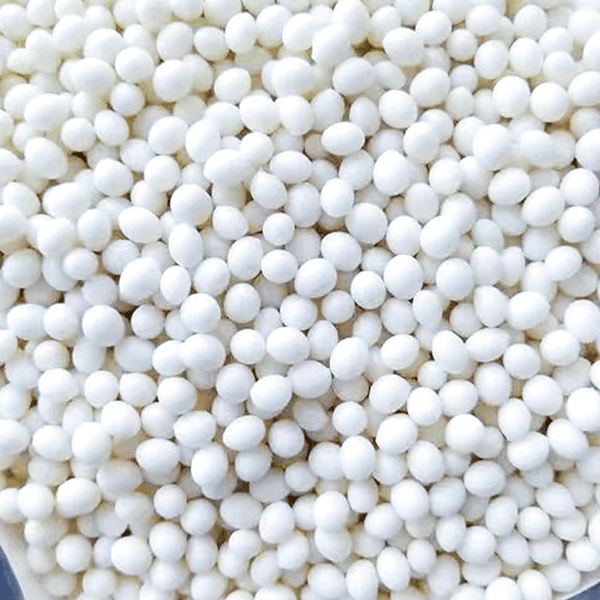



Hangzhou Yihe New Materials Co., Ltd. is an EVA Edgebanding Hot Melt Adhesive manufacturer working from Tonglu, Hangzhou, China since 1997. This family is built for furniture, cabinet, door and panel plants that need a closed, clean glue line at line speed, on PVC, ABS and veneer edges over MDF, particleboard, plywood and solid wood cores.
The adhesive is a solvent-free, 100% solids thermoplastic. Granulate melts in the edgebander pot, wets both the panel edge and the edge material, and sets as it cools under the pressure roller. Nothing has to dry off and no solvent evaporates at the glue station, so the whole working window lives in four machine settings: melt temperature, coat weight, roller pressure and feed speed.
What This Range Covers
The range is focused rather than broad. LM8701 Universal Edgebanding Adhesive For Wooden Doors And Furniture carries this category, formulated for wooden doors, furniture panels and cabinet components. It bonds PVC, ABS and veneer edges, runs with a good melt flow for uniform film application, and sets quickly enough to follow automatic line speeds.
- Solvent-free thermoplastic. No water carrier, no drying tunnel, no solvent vapour at the glue pot.
- Clean glue line. Melt flow and film uniformity are aimed at an edge that reads as closed after trimming and scraping.
- Production rhythm. Fast setting supports single-sided and double-sided straight-line machines.
- Granulate form. Suited to pot melting and automatic feeding, with free-flowing behaviour across a long shift.
Two adjacent families sit alongside this one. The EVA Wrapping Hot Melt Adhesive covers profile wrapping and 3D foil lamination, where the adhesive meets a shaped profile instead of a straight panel edge. For high service temperatures or low-energy edge materials, the PUR Edgebanding Hot Melt Adhesive covers the reactive route.
Machine Configurations in This Application
- Automatic straight-line edgebanders. Single or double sided, pot or granulate feed, handling PVC, ABS and veneer edges from roughly 0.4 mm to 3 mm.
- Contour and curve banders. Lower feed rates and tighter radii, where coat weight and roller pressure are adjusted to the geometry rather than the line speed.
- Softforming lines. Profiled edges need a heavier, tack-retaining film through the transfer from glue station to roller.
- Manual and portable banders. Small pots running cooler, with short open times for one-off door and furniture work.
- Post-processing. End trimming, radius scraping, flat scraping and buffing are where glue-line quality is proven; filler level and toughness matter as much as raw adhesion.
Matching Edge Material to Grade and Setting
Edge material, more often than panel type, decides which grade and which working point a line needs.
| Edge material | Common thickness | Fit with EVA edgebanding | What decides the result |
|---|---|---|---|
| Rigid PVC | 0.4–3 mm | Core application | Plasticiser migration on high-gloss films; glue-line colour; pre-milled edge squareness |
| Soft and foil PVC | 0.4–1.0 mm | Good, with reduced roller pressure | Edge deformation under the pressure roller; sharp, well-set trimmers |
| ABS | 0.8–2 mm | Good | Stable pot temperature for full wetting; consistent film across the edge height |
| PP and acrylic (PMMA) | 0.8–2 mm | Limited | Low surface energy; a reactive PUR system or pre-treated edge is the more reliable route |
| Melamine and paper laminate | 0.5–1.0 mm | Good | Paper dust on the edge; absorbency drawing adhesive away from the joint |
| Veneer | 0.4–1.0 mm | Good | Veneer moisture content and grain direction; avoiding strike-through |
| CPL and HPL | 0.5–1.5 mm | Good at a heavier coat weight | Rigid edge needs complete film coverage before the roller closes the joint |
| Solid wood lipping | 3–10 mm | Workable with adjusted settings | Wood moisture content, coat weight and the time available before the film skins over |
Veneer and paper edges behave in the opposite way to PP and acrylic. They are absorbent and can pull adhesive into the pore structure, so film thickness and roller pressure count for more than open time. A heavier film on an absorbent edge is cheaper than a rejected door.
Critical Specifications
Each grade is defined by a set of parameters that translate directly into machine settings and joint performance.
- Softening point (ring and ball). Sets the balance between heat resistance in service and the open time available at the roller.
- Melt viscosity at application temperature. Controls flow into the edge, wetting of the substrate and the resulting glue-line thickness.
- Open time and setting time. Matched to feed speed and the distance between the glue station and the pressure roller.
- Density and filler content. Affects coverage per kilogram, shrinkage on cooling and how the trimmed edge machines.
- Colour and opacity. Natural, white, black and tinted options used to hide the joint on light or dark edges.
- Granule size and free-flow behaviour. Determines melting rate in the pot and thermal stability during long runs.
- Heat resistance under static load. Read against the real service condition: sun-exposed doors, warming drawers, transport in closed containers.
- Odour during melting. Relevant in closed workshops and where interior air quality targets apply to the finished panel.
Setting the Working Point on the Line
Typical starting windows for EVA edgebanding are shown below. They are confirmed against the actual machine, edge and panel during a first run rather than copied from a generic setting sheet.
| Parameter | Typical window | Effect on the joint |
|---|---|---|
| Melt temperature at pot and applicator | 150–180 °C | Too low gives a starved, stringy film; sustained overheating chars the polymer and darkens the glue line |
| Coat weight on the edge | 150–300 g/m² | Rises with edge thickness, absorbent edges and softforming profiles |
| Feed speed, straight-line machines | 12–25 m/min | Sets the time between application and roller; contour work runs lower |
| Pressure roller | 3–5 bar, parallel to the panel | Spreads the film and closes the joint; over-pressure squeezes adhesive out and starves the edge |
| Panel and workshop temperature | Above 15 °C | Cold boards pull heat out of the film and shorten the usable open time |
| Cooling before trimming | Sufficient to avoid smearing | Trimming a soft glue line produces torn edges, stringing and dirty cutters |
Panel Preparation and Substrate Condition
- Pre-milled edge. A square, torn-free edge is the base of a straight glue line; cutter condition shows up as glue-line variation later.
- Dust extraction. Residual dust on the edge blocks wetting and creates visible voids after trimming.
- Panel moisture. Wood-based panels are normally run at a stable, moderate moisture content; wet cores drive steam and bond failure at the glue line.
- Glue-line thickness. A controlled film of roughly 0.1–0.2 mm is what a pressure roller can close; a thick, uncontrolled film is a weak joint with squeeze-out.
- Edge storage. Coiled PVC and ABS absorb heat and dust; edges stored in a cold store should reach room temperature before the machine.
Quality, Consistency and Acceptance
Consistency matters more in edgebanding than peak performance on a data sheet. A grade that runs the same way in January and July protects line speed, scrap rate and the appearance of every panel that leaves the plant.
- Formulation and batch control are supported by our own laboratory facilities and independent R&D capability, built up since 1997.
- The enterprise holds National High-Tech Enterprise qualification and is certified to ISO 9001 for quality management and ISO 14001 for environmental management.
- Product development, technical support and environmental upgrading are aligned with the new materials and processes arriving on customer lines.
Acceptance on a new line is normally agreed as a first-article check on the real edge and substrate pair: bond strength after conditioning, visual glue line before and after trimming, scrape and buff quality, and heat resistance at the temperature the finished product will actually see. Where the joint has to survive a specific test regime, that regime is written into the trial plan from the start.
Handling in the Plant
- Keep sacks sealed and dry until the pot is filled; open granulate near a trimmer collects dust and chips that end up in the melt.
- Run stock on a first-in, first-out basis and keep the oldest material at the front of the rack.
- Avoid long residence times at high pot temperature; charred polymer and carbon specks transfer straight to light-coloured glue lines.
- Purge the pot with fresh granulate rather than leaving a skin to build up on the walls and the applicator roller.
Information We Use to Configure Your Solution
A practical recommendation depends on the line as much as on the adhesive. These are the inputs that change the grade, the setting or both.
| Project input | Why it matters |
|---|---|
| Edge material, thickness and colour | Sets wetting behaviour, coat weight, and the colour and opacity needed for an invisible joint |
| Substrate type and density | Controls heat draw from the film, absorbency and achievable bond strength |
| Edgebander make and model, glue system type | Pot volume, melt rate, roller or nozzle application and temperature control all shift the working point |
| Line speed and glue-station-to-roller distance | Defines the open time the grade has to deliver at production speed |
| Panel temperature and workshop climate | Cold or humid conditions change wetting and setting, especially at shift start in winter |
| Finish requirement and post-processing | Zero-glue-line targets, CNC nesting and sanding all load the joint differently |
| Service heat and load on the finished part | Balances softening point against open time, or points the project towards a reactive PUR system |
| Packing format and pot refill routine | Determines granule form and how the material is handled between warehouse and machine |
Trial panels are the fastest confirmation. A short run on your own panel, edge and machine settles melt temperature, coat weight and roller pressure faster than any calculation, and shows the trimmed glue line the way your customers will see it.
Frequently Asked Questions
Which grade should we run for 0.8 mm PVC edge on MDF cabinet doors?
LM8701 Universal Edgebanding Adhesive For Wooden Doors And Furniture is the standard choice for that combination. It wets rigid PVC reliably, flows into a uniform film at normal pot temperatures and sets quickly enough for cabinet-door line speeds. The working point is then trimmed to your machine, edge colour and the surface finish of the film.
Can EVA bond PP or acrylic edges?
PP and acrylic have low surface energy, and a thermoplastic EVA bond on those materials is rarely durable under load and temperature change. For those edges, a reactive PUR edgebanding adhesive or a pre-treated edge is the dependable route. We would rather point a project to the right chemistry than force an EVA grade onto a joint it cannot hold.
What melt temperature and coat weight should the line run?
Most EVA edgebanding runs between 150 °C and 180 °C at the pot and applicator, with 150–300 g/m² on the edge depending on edge thickness, absorbency and whether the profile is softformed. Higher temperature improves flow but shortens the life of the polymer; heavier film covers a rough edge but risks squeeze-out. Both are confirmed on the machine during the first run.
How does EVA compare with PUR for heat resistance?
EVA is a thermoplastic, so the bond softens again as temperature rises. That is acceptable for most interior furniture and door work, and it is the reason EVA is so easy to run and rework. Where a joint faces sustained heat, direct sun on dark edges, or a moisture-rich environment, a moisture-curing PUR adhesive holds its strength further up the temperature range.
Is an EVA hot melt a low-emission choice for furniture production?
The adhesive is 100% solids with no solvent and no water carrier, so nothing evaporates at the glue station during bonding and no drying energy is consumed afterwards. The wider environmental profile depends on the polymer and additive package, which is why the formulation and the technical data behind it are discussed at the start of a project rather than left to the end. Our laboratory and R&D team work on exactly that balance between performance, machine behaviour and environmental upgrading.











