Search


 English
 中文简体
 русский
 عربى


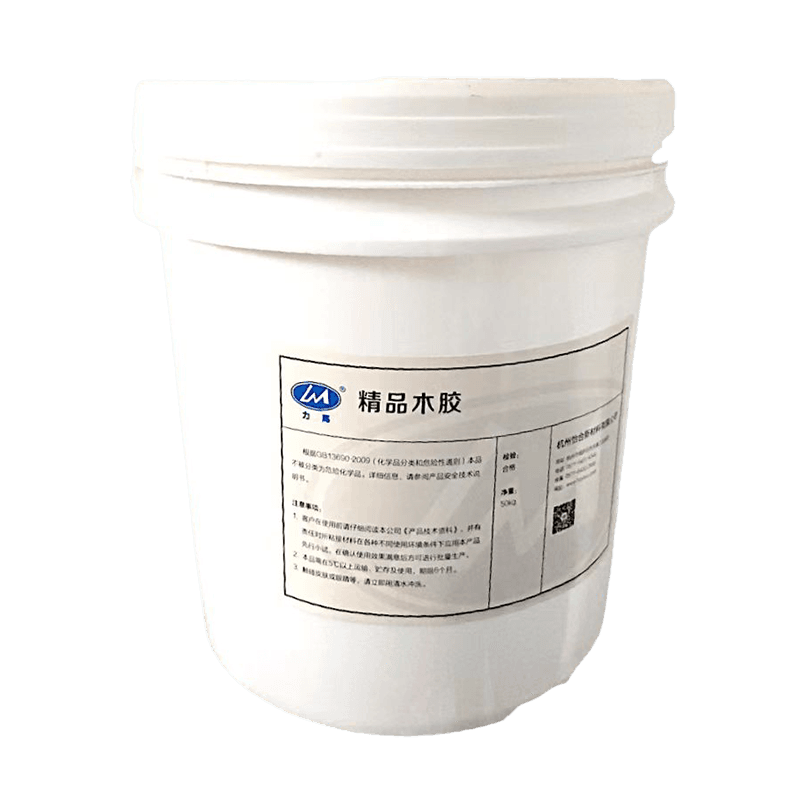



As a Tenon Joint Assembly Adhesive manufacturer, we formulate and supply the water-based system used to lock mortise-and-tenon, dowel and loose-tenon joints in door panels, cabinet frames, furniture frames and structural joinery. Hangzhou Yihe New Materials Co., Ltd. has produced adhesives in Tonglu, Hangzhou since 1997, and the Lima brand has carried water-based woodworking chemistry through 29 years of plant-floor application in China and abroad.
The grade at the centre of this range is LM158 Door Panel Tenon Joint Adhesive: a smooth, water-borne assembly adhesive designed for close-fitting joinery, quick clamp release and joints that stay tight through seasonal moisture movement. It is supplied to door plants, contract furniture factories and cabinet manufacturers as a solvent-free alternative to mechanical fasteners in load-bearing frames.
What the Adhesive Does Inside the Joint
A mortise-and-tenon joint is already a mechanical connection; the adhesive decides whether it stays that way. Our formulation wets out the tenon cheeks and the mortise walls, fills the machining tolerances left by the cutter, and cures to a film that resists the shear and withdrawal loads a door leaf or chair frame imposes. Because the bond line is thin and confined, penetration into end grain and open pores matters as much as the strength figure on a data sheet.
- Gap tolerance. The adhesive flows into the 0.1–0.3 mm clearance typical of well-machined joinery without starving the bond line during clamp-up.
- Fast set for assembly flow. A quicker tack shortens press or clamp dwell, so a frame can move to the next station without spring-back.
- Clean squeeze-out. Water-based chemistry wipes off while wet, protecting sanding and finishing operations downstream.
- No steel or screws. Hidden joints stay hidden, which matters for stain-grade oak, ash and walnut door faces.
Product Range and Application Fit
The Tenon Joint Assembly Adhesive sits inside the Premium Woodworking Adhesive, alongside the veneer, laminate, WPC lamination and panel joint systems our woodworking customers order together. The table below sets out how the family divides by joint type and process stage.
| Product | System | Joint or assembly role | Typical fit |
|---|---|---|---|
| LM158 Door Panel Tenon Joint Adhesive | Water-based dispersion | Mortise-and-tenon, dowel and loose-tenon assembly | Door panels, frames, cabinet joinery |
| Wood Panel Joint Adhesive | Water-based dispersion | Edge-to-edge and face jointing of panels | Glue-ready panels, stiles and rails |
| Premium Wood Veneer Adhesive | Water-based dispersion | Veneer pressing on skins and cores | Door skins, flat panels before joinery |
| Premium Laminate Adhesive | Water-based dispersion | Decorative surface bonding | Post-assembly lamination and facing |
| High-Polymer WPC Lamination Adhesive for Wood Doors | High-polymer water-based | WPC and film lamination on door components | Door skins where film meets the joint line |
| Liquid PUR (LM2260) | 100% solids reactive polyurethane | Assembly and lamination with higher moisture demand | Joinery exposed to wetting or exterior service |
Where a project combines frame assembly with panel glue-up, the Wood Panel Joint Adhesive is specified to run on the same clamping schedule, so one workshop standard covers both operations and colour matching between bond lines is easier to control.
Joint Types and Process Fit
The same adhesive covers the joint variations that appear on a door or furniture drawing, provided the fit and the application method are matched to it.
- Through and stub mortise-and-tenon. Apply to the tenon cheeks and the mortise floor; the tenon should slide in with light hand pressure and hold without a mallet.
- Loose tenon (domino) and dowel joints. Higher glue volume per joint, so open time and clamp dwell rather than strength usually set the line speed.
- Mitre-and-tenon and haunched frames. Short closed corners reward a thixotropic, non-running consistency that stays where it is placed.
- Curved and profiled components. Consistent viscosity across batches keeps spread and slip behaviour predictable on shaped sections.
Workpiece and Material Considerations
Wood movement, not adhesive strength, causes most tenon failures in service. We work through the substrate with the customer before a grade is fixed.
- Species and density. Dense tropical hardwoods and high-extractive species such as teak and rosewood wet out differently from pine, poplar and rubberwood; end-grain absorption drives the required spread rate.
- Moisture content. Joints bonded at 8–12% moisture content behave predictably; stock outside that window changes the fit after clamping and can starve or stress the bond line.
- Machining quality. A sharp, consistent mortise and a tenon with even clearance matter more than any formulation change; burnished or crushed grain blocks penetration.
- Engineered substrates. MDF, HPL-faced panels and WPC components need the bond evaluated with the actual face material, since resin and release agents affect adhesion at the joint shoulder.
Critical Specifications We Confirm Before Supply
For each project we agree the working values that govern the joint, then issue them on the technical data sheet for the supplied batch. The LM158 Door Panel Tenon Joint Adhesive is documented against the same framework.
- Consistency and solids. Controlled to keep spread weight and squeeze-out stable between drums.
- Open and assembly time. Stated at the workshop temperature and humidity the line actually runs at.
- Clamp dwell and press time. Set against the customer's jigs, RF clamps or frame presses.
- Bond performance. Shear and withdrawal behaviour evaluated on the customer's own wood species and joint geometry.
- Environmental profile. Formulated to the volatile organic compound limits of GB 18583-2008 and GB 33372-2020 for adhesive products.
- Storage and service life. Shelf life and frost sensitivity confirmed for the destination climate and transit route.
Application Methods and Line Integration
A water-based assembly adhesive has to suit the dispensing method already on the floor. We match the grade to the way the joint is filled rather than asking a plant to rebuild its stations.
- Manual application. Bottle, brush or cartridge for batch and custom joinery, with a consistency that stays on the tenon cheeks during handling.
- Machine dispensing. Roller, nozzle or dosing head on CNC tenoners, dowel insertion machines and frame presses, including recirculation and cleaning routines.
- Contact materials. Pumps, hoses and nozzles selected for a water-based product; stainless or coated parts where corrosion would affect flow.
- Shop conditions. Temperature and humidity ranges at the station, plus the interval between glue application and clamp-up, define the practical working window.
Quality Assurance and Acceptance
Yihe holds National High-Tech Enterprise status and operates under ISO 9001 quality management and ISO 14001 environmental management certification, with in-house laboratory facilities supporting raw material checks, production control and finished-product testing. The Lima brand was featured on the CCTV programme Quality in 2018.
Acceptance follows a defined route: a laboratory-matched sample, a plant trial on representative wood and jigs, an agreed test method (shear to failure on the customer's species, plus visual assessment of bond-line fill and squeeze-out), then batch release against the frozen reference. Certificates of analysis and retained samples travel with each shipment so a later comparison does not depend on memory.
Information We Use to Configure Your Solution
A usable proposal needs the joint, not just the product name. These are the inputs that let us fix a grade, a working value set and a trial plan:
- Joint type and geometry: tenon thickness and width, mortise depth, clearance, loose-tenon or dowel diameter.
- Substrate: species or panel type, density, moisture content, surface treatment or film facing.
- Component and service conditions: interior door, exterior door, cabinetry, furniture frame; expected humidity and load.
- Process: application method, glue quantity per joint, open time available, clamp or press time, station temperature and humidity.
- Output target: units per shift, batch size, seasonal peaks and how the adhesive is stored on site.
- Acceptance: test method, sample size, documentation and labelling language required for incoming inspection.
Documentation, Supply and Technical Support
Each order is accompanied by the technical data sheet and safety data sheet for the grade supplied, batch identification and certificates of analysis, with packaging and labelling agreed against the receiving plant's handling and storage arrangements. Our laboratory and service team stay involved after delivery: application trials, troubleshooting on bond-line defects, and reformulation discussions when a new film, veneer or wood species enters production.
Frequently Asked Questions
Is LM158 a water-based adhesive?
Yes. The Tenon Joint Assembly Adhesive is a water-borne dispersion with no solvent carrier, which keeps odour and volatile organic compound release low in the assembly hall and allows wet squeeze-out to be wiped from the workpiece before it sets.
Which woods can be bonded in mortise-and-tenon joints?
Hardwood, softwood and engineered wood such as MDF, plywood and WPC components. Dense or extractive species and resin-rich panels are assessed with the actual material during the trial, because absorption and surface chemistry change the required spread rate.
How is the correct grade selected for a door or furniture programme?
We start from the joint drawing, the substrate and the plant's clamp or press schedule. Where a frame is bonded and then laminated or wrapped, the choice is made across the whole build sequence so the assembly adhesive and the surface adhesive cure without interfering with each other.
Can the adhesive be run on automatic glue application equipment?
It can be dispensed through nozzles, rollers and dosing heads on tenoners, dowel inserters and frame presses. We confirm pump and hose materials, recirculation and cleaning intervals, and the working window between application and clamp-up for the temperature at the station.
What documentation is supplied with a shipment?
Technical data sheet, safety data sheet, batch number, certificate of analysis and retained reference sample. Where a customer's incoming inspection requires a specific test method or report format, it is agreed before the first production batch is released.
How does Yihe support a first production run?
A trial plan is agreed in advance: representative wood, the production jigs, the clamp time to be used and the acceptance criteria. Our technical team reviews the results with the plant and adjusts the working values or the grade before the line is committed to volume.