Search


 English
 中文简体
 русский
 عربى


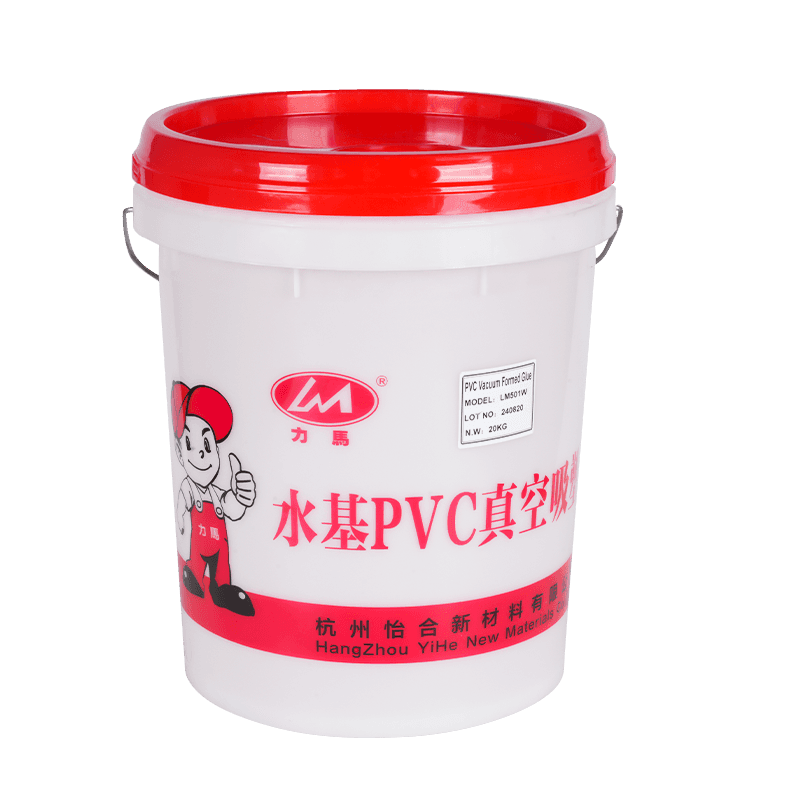
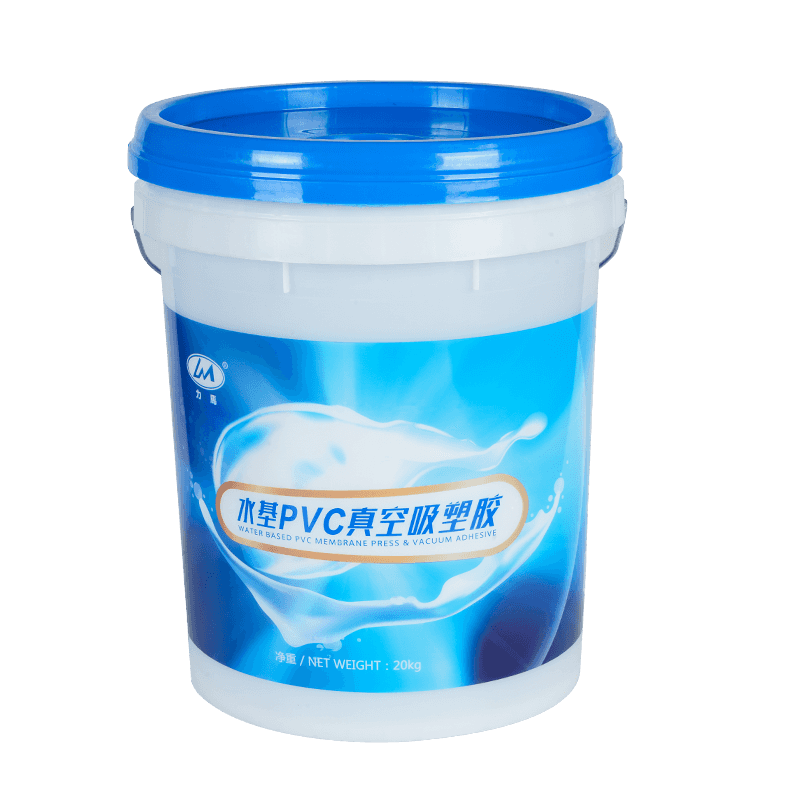



Hangzhou Yihe New Materials Co., Ltd. is a water-based adhesive manufacturer based in Tonglu, Hangzhou, China, supplying the woodworking and panel industry since 1997. Within our Water Based PVC Vacuum Thermoforming Adhesive, the Vacuum Thermoforming Adhesive For Cabinets And Wardrobe group covers the grades used to bond PVC film to MDF and particleboard panels in membrane press lines: cabinet doors, wardrobe fronts, carcass panels, drawer fronts and routed decorative components. The two grades in this group are built around the two failures that decide whether a pressed panel leaves the line as first quality — adhesive strike-through on light and pigmented films, and surface haze or defect on high-gloss and skin-feel films.
Where the range fits: water-based PVC vacuum membrane press adhesives for flat and shaped panel faces, supplied as a Vacuum Thermoforming Adhesive For Cabinets And Wardrobe supplier platform that has been in continuous market application for 29 years under the Lima brand.
Two Grades, Two Different Surface Problems
A cabinet door and a wardrobe front are usually the same construction: a machined MDF or HDF substrate, an adhesive film, and a PVC face that has to look flawless under raking light. What changes is the film. A white or pastel rigid PVC shows any adhesive that migrates into the face as a shadow or a ring; a high-gloss or soft-touch film shows every particle, every brush mark and every trace of plasticizer haze. The two products in this group are formulated against those two outcomes rather than against a single generic specification.
- LM501W anti-penetration PVC vacuum thermoforming adhesive — formulated to hold the bond while limiting adhesive penetration into the film face, keeping light, pigmented and woodgrain PVC clean in appearance.
- LM507 high-gloss and skin-feel film specialty particle-free vacuum thermoforming adhesive — a particle-free grade for demanding visible faces where gloss level, depth of image and tactile finish are part of the acceptance criteria.
Matching Film, Substrate and Grade
Selection follows the face material first and the substrate second. Most cabinet and wardrobe work uses rigid PVC film in the 0.30–0.50 mm range over MDF, HDF or MDF-faced particleboard, with edges routed to a radius before pressing. Substrate condition matters as much as the adhesive: face sanding in the 120–180 grit band, consistent board moisture, and dust extraction immediately before coating all influence how much adhesive the face absorbs and how evenly the film draws down over a profile.
| Panel face / finish | Grade | What drives the choice |
|---|---|---|
| White, ivory and light-colored PVC film | LM501W | Strike-through and shadowing are visible immediately on pale faces; anti-penetration behavior is the primary requirement. |
| Embossed woodgrain PVC on cabinet doors and wardrobe fronts | LM501W | Deep texture over routed edges needs uniform draw-down without adhesive pooling in the grain valleys. |
| High-gloss PVC on slab doors and wardrobe fronts | LM507 | Reflected light exposes hazing and gel particles; a particle-free formulation protects depth of image. |
| Super-matt, soft-touch and skin-feel PVC | LM507 | Tactile finishes show plasticizer migration and surface contamination that a gloss face would hide. |
| Routed, chamfered and radiused MDF edges on door frames | LM501W or LM507 | Confirmed against pressed samples: edge density, film elongation and vacuum bridging decide which grade holds the radius without bridging. |
Coating, Flash-Off and Press Cycle
Water-based thermoforming is a drying process as much as a bonding process. The film must be dry to the touch before the panel enters the press, with the residual moisture low enough that steam does not form under vacuum and lift the film at the edges. Our technical support works on the whole window rather than the adhesive alone.
- Substrate preparation and dust removal, with board moisture checked before coating.
- Adhesive application by spray or roller, with wet coat weight set against the face porosity of the board and the thickness of the film.
- Flash-off and drying, balancing line speed against the risk of a skin forming over wet adhesive.
- Film loading and membrane pressing, where vacuum level, membrane pressure, temperature and dwell are matched to the film and the profile depth.
- Demoulding and conditioning, allowing the panel to stabilize flat before trimming or edgebanding.
Anti-penetration behavior on light and pigmented films
Penetration is driven by film plasticizer, coat weight and press temperature together. LM501W is formulated to keep the adhesive film at the interface on absorbent MDF faces, which is what preserves the even appearance of a white or pastel door after pressing and through later heat exposure in a finished kitchen.
Particle-free finish on high-gloss and skin-feel films
On a gloss face, a single gel particle reads as a raised dot. LM507 is manufactured as a particle-free system, and the line discipline around it matters too: filtered shop air at the spray station, clean rollers, and static control on the film roll before it reaches the membrane press.
Quality Evidence and Acceptance
Hangzhou Yihe New Materials Co., Ltd. holds National High-Tech Enterprise qualification and operates under ISO 9001 quality management and ISO 14001 environmental management system certification. Complete laboratory facilities and independent R&D sit behind both grades in this group, from raw material evaluation through to the pressed-sample work that supports a line trial.
- Raw material and finished batch control in our own laboratory, supporting the batch-to-batch consistency that a membrane press depends on.
- Pressed-sample evaluation with the customer's own film and board before a grade is released to production.
- Acceptance criteria agreed per project: 180° peel strength, cross-hatch adhesion, heat and moisture exposure on the finished panel, plus visual assessment of gloss, haze and strike-through.
- Environmental documentation aligned with the low-VOC direction of water-based chemistry, in line with the regulatory pressure now reaching furniture and door manufacturers.
Line Support and Adjustment
Not every line runs inside the standard window. Where a customer presses an unusual film, a high-density HDF face, a deep profile or a fast cycle, we adjust the grade within the water-based PVC thermoforming platform — solids, rheology, open time and wetting behavior — and confirm the change on pressed panels before it goes to the line. Our service team works alongside the customer's process engineers on coat weight, drying profile and press settings, because most bonding faults in thermoforming are process faults rather than product faults.
Information We Use to Configure Your Solution
A workable proposal needs the working point, the material stack and the production target. The points below are what we confirm with a cabinet or wardrobe manufacturer before recommending a grade and a starting process window.
| Project input | Why it changes the recommendation |
|---|---|
| Films used, with finish and thickness | Determines anti-penetration versus particle-free requirement and the press window. |
| Substrate type, density and face preparation | Controls absorption, coat weight and how the film draws over machined edges. |
| Component geometry and profile radius | Deep routs and tight radii test elongation and vacuum bridging. |
| Application method and wet coat weight target | Spray and roller setups need different rheology at the same solids. |
| Drying capacity, line speed and press cycle | Sets the balance between residual moisture, output and edge bonding. |
| End-use environment (kitchen, bathroom, wardrobe interior) | Heat and humidity exposure inform the acceptance test protocol. |
| Annual volume, pack size and delivery destination | Shapes batch planning, packaging and shipment scope. |
Packaging, Storage and Delivery
Packaging and shipment scope are agreed per order and stated on the quotation, together with the delivery terms for the destination. Water-based dispersions are sensitive to freezing and to prolonged high temperature, so storage and transport conditions are confirmed with each customer for their climate and warehouse arrangement, and containers are kept sealed and rotated on a first-in, first-out basis. Technical data sheets and safety data sheets for the supplied grades are issued with the commercial documents.
Frequently Asked Questions
What is the difference between LM501W and LM507?
Both are water-based PVC vacuum thermoforming adhesives for cabinet and wardrobe panels. LM501W is built for anti-penetration on light, pigmented and woodgrain films, where adhesive striking through the face would show. LM507 is a particle-free grade for high-gloss and skin-feel films, where reflected light and tactile quality expose haze and gel particles.
Can these grades be used on routed and profiled MDF doors?
Yes, where the radius and the film allow it. Edge density, film elongation and vacuum bridging decide the outcome, so we confirm the profile against pressed samples before the grade and process window are finalized for a production line.
How is the correct wet coat weight set?
Coat weight follows the porosity of the board face, the thickness of the film and the application method. We start from a recommended window for the grade, then adjust against pressed panels produced on the customer's own line, so the figure on the process sheet reflects the material actually running.
Are the adhesives suitable for kitchens and bathroom cabinetry?
The grades are formulated for water resistance and heat resistance in normal furniture service, which is what kitchen and bathroom cabinetry demands. For unusually severe exposure, we agree the acceptance test conditions with the customer and evaluate the finished panel rather than the adhesive alone.
What support comes with a first order?
We provide the grade recommendation, a starting process window for coating, drying and pressing, technical and safety documentation, and support from our service team during line trials. Where a line differs from the standard window, our R&D group adjusts the formulation and re-confirms it on pressed samples.