 Search


 English
 中文简体
 русский
 عربى


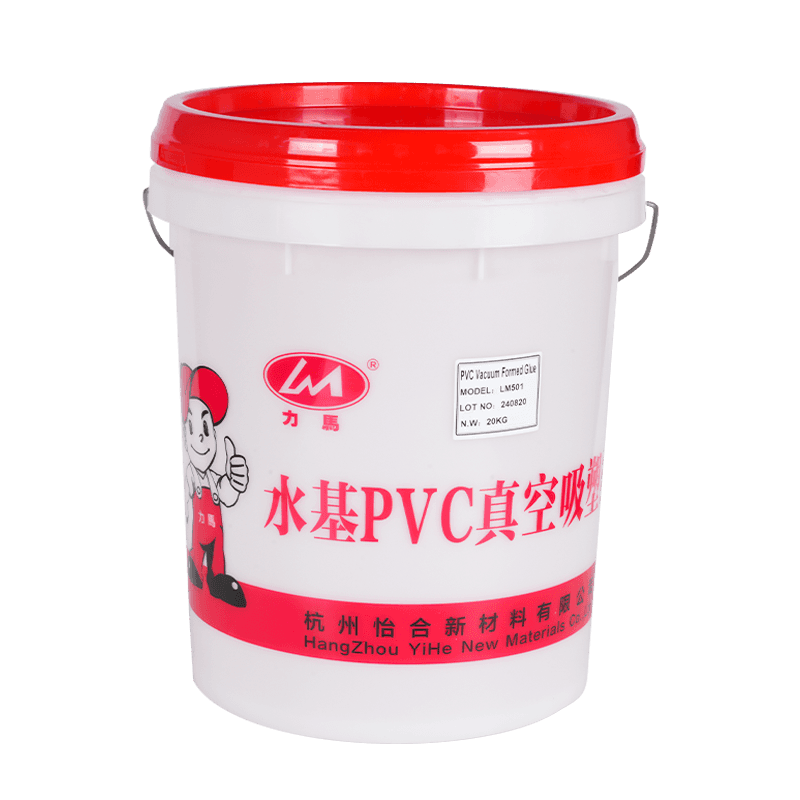
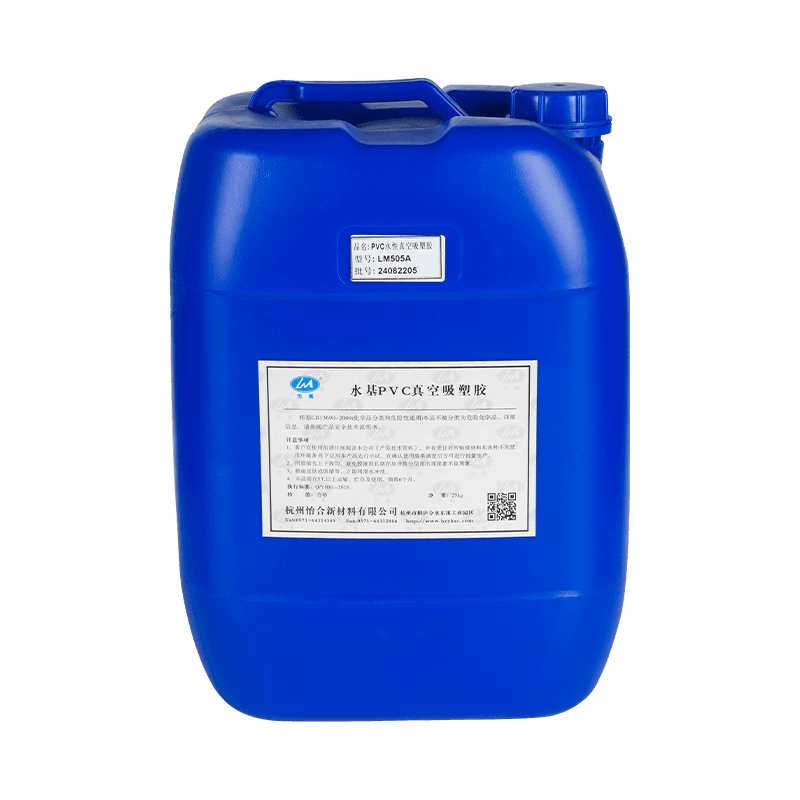
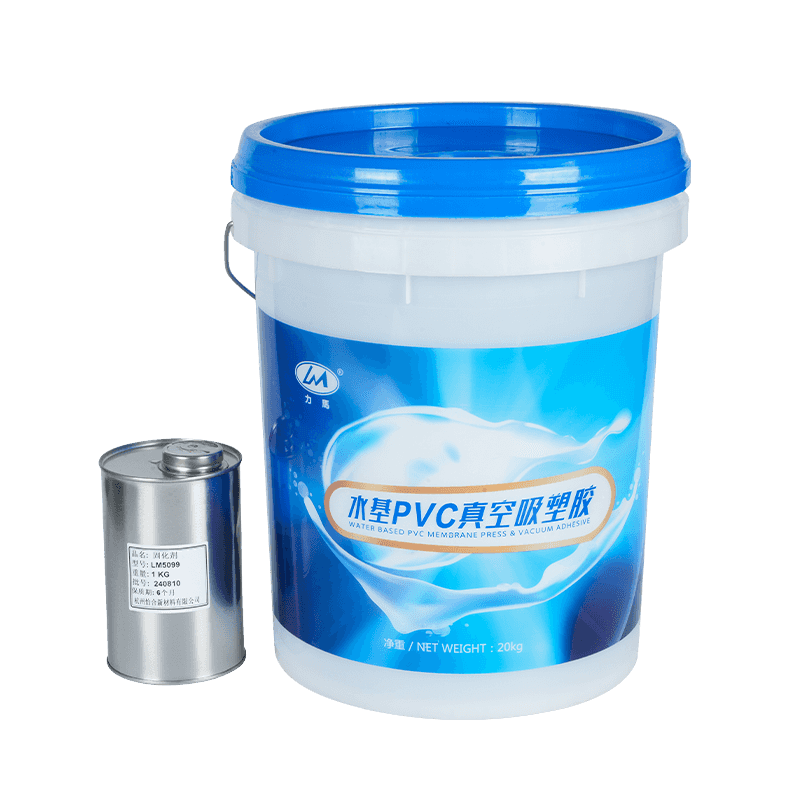
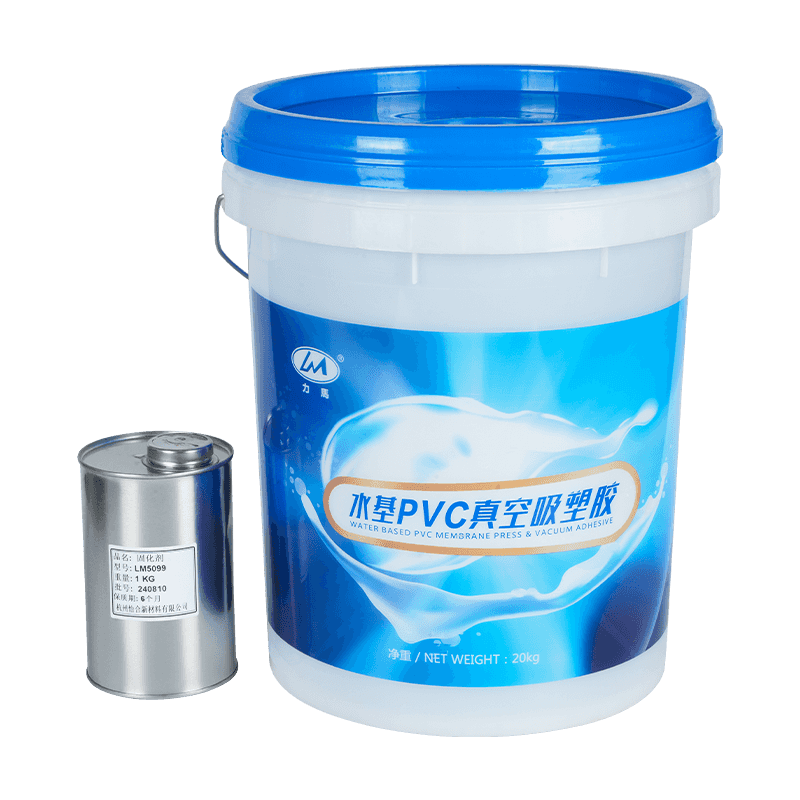



Hangzhou Yihe New Materials Co., Ltd. has produced water-based vacuum thermoforming adhesives beside the Fuchun River in Tonglu since 1997, and the door range is the part of that platform closest to a single, unforgiving test: a formed door skin that must stay tight, flat and clean through years of humidity cycling, handling and daylight. Our Vacuum Thermoforming Adhesive For Doors Suppliers range covers PVC film on MDF and particleboard door skins, PVC press bonding on wooden door faces, PVC on wood-plastic composite doors, and PP/PET facing where a PVC-free surface is specified.
A Door-Focused Range Inside the Water-Based Platform
Every grade in this family is built on a water-borne polymer dispersion rather than a solvent carrier, which keeps workshop odour low and simplifies cleanup while still delivering the green strength and heat resistance a formed door skin needs. The four products below share that chemistry but diverge on substrate absorption, film type and press behaviour — the three variables that decide whether a door leaves the press flat or with a lifted edge.
| Grade | Door construction | Facing material | Primary selection driver |
|---|---|---|---|
| LM501 | Wooden doors, formed skins on MDF and similar wood-based cores | PVC decorative film | General high-performance door forming; bond strength on machined profiles |
| LM505A | Wooden door panels bonded in a vacuum press | PVC film on flat or lightly profiled faces | Press-cycle bonding where flatness and uniform glue spread matter |
| LM5067 | Wood-plastic composite (WPC) doors and panels | PVC film | Low-absorption, low-surface-energy substrates that resist ordinary wood glues |
| LM5188 | Wooden and composite door skins | PP and PET films | PVC-free facing specifications and non-plasticised film surfaces |
The wider Water Based PVC Vacuum Thermoforming Adhesive Series sits alongside our lamination, wrapping, PUR hot melt, EVA hot melt and woodworking ranges, so a door plant sourcing several bonding steps can keep one technical contact across the line.
Matching the Grade to Door Construction and Facing Film
- Wooden doors with PVC film. LM501 is our standard starting point for formed door skins, where the adhesive has to hold a sharp radius, a deep reveal or a moulded panel edge without thinning out at the draw.
- Wood-plastic composite doors. WPC absorbs almost nothing, so a wood-optimised glue can sit on the surface instead of anchoring. LM5067 is formulated for that substrate behaviour and for the thermal expansion a composite door shows outdoors.
- PP and PET facing. Non-plasticised films behave differently in the press and in service. LM5188 is the grade we propose when the specification calls for PP or PET rather than PVC.
- Flat-panel press bonding. LM505A is aimed at door panels bonded under vacuum pressure rather than drawn over a three-dimensional profile, where consistent spread and a clean face are the priorities.
Process Fit on Vacuum Membrane and Vacuum Press Lines
A water-based thermoforming adhesive is only half the bond; the other half is the working point. Coat weight, flash-off before the membrane closes, platen temperature, vacuum level and dwell time all interact, and a door that blisters on one line may run cleanly on another with the same drum of adhesive. We set that working point with you during a trial rather than leaving it to a data sheet alone.
- Substrate preparation. MDF faces are sanded and dust-extracted; moisture content is checked before coating, because a damp core drives steam through the glue line when the platen heats.
- Coating uniformity. Roller or spray application needs an even film across the whole face and into the profile; dry edges show up later as lift.
- Drying and open time. Water has to leave the film before the membrane seals, so flash-off time and air movement are part of the recipe, not an afterthought.
- Press parameters. Temperature ramp, vacuum pull-down and dwell are tuned to film thickness and profile depth; thin films reach temperature quickly and over-cook if the cycle is borrowed from a heavier gauge.
- Tooling and jigs. Membrane tension, frame sealing and jig support at the edges determine whether a radius forms tightly or bridges.
Surface Quality: The Failure Modes We Formulate Against
Door skins fail visibly long before they fail structurally, so a large part of our formulation work targets appearance rather than raw peel strength alone. These are the defects we test against when a grade is matched to a film.
- Plasticiser migration and haze. On high-gloss and skin-feel PVC films, plasticiser can travel into the glue line and dull the surface; anti-penetration formulations address that specific mechanism.
- Blistering and pinholes. Trapped moisture or solvent burst through the film during pressing, most often traced to core moisture or insufficient flash-off.
- Telegraphing. Fibre texture or machining marks print through a soft film when the glue line is too thin or the substrate is under-filled.
- Edge lift and corner bridging. The bond has to survive handling, hinge fitting and seasonal movement at the most highly stressed point of the door.
Quality Assurance and Acceptance Evidence
Our laboratory facilities and independent R&D capability support raw-material checks, in-process control and comparative trials on customer substrates. The company holds National High-Tech Enterprise qualification and operates under ISO 9001 quality management and ISO 14001 environmental management certification, with the Lima brand featured on the CCTV programme Quality in 2018.
Acceptance is normally agreed before the first production order and written into the trial report. Typical checks on a formed door panel include peel strength after conditioning, heat resistance under load, cold-flex behaviour, a visual pass for blisters, pinholes and haze, and a water-spot test on the finished face. Where a project carries its own standard — formaldehyde limits, VOC limits or an internal door specification — that standard becomes the reference for the trial rather than a generic datasheet value.
Information We Use to Configure Your Solution
A proposal is prepared around your working point, not a catalogue number. The inputs below are what allow us to recommend a grade, estimate consumption and define a trial protocol.
- Door construction: core material, density, thickness and moisture content at coating.
- Facing film: polymer type (PVC, PP, PET), gauge, gloss level, colour and whether a PVC-free face is required.
- Geometry: flat panel or profiled skin, draw depth, minimum radius, edge-wrap detail.
- Equipment: membrane press or vacuum press, platen heating method, vacuum level, jig and frame arrangement.
- Cycle target: current coat weight, flash-off time, temperature and dwell, plus the throughput you need to hold.
- Ambient conditions in the plant: temperature, relative humidity and seasonal variation.
- Compliance and documentation requirements, including regulated substance limits and labelling language.
- Order planning: pack format, batch traceability expectations and the volume pattern across the year.
Supply, Documentation and Technical Support
As a China-based manufacturer of eco-friendly adhesives, we align product development, technical support and environmental upgrading with what the market asks for, and we have done so across 29 years of application in woodworking, automotive, packaging, textile and sporting goods production. Door plants typically draw on this range for forming and on our woodworking and hot melt series for edgebanding and assembly, keeping specification language and technical contacts consistent.
Each delivery carries batch identification so the production history behind a drum can be traced, and the technical and safety documentation set is agreed when the order is placed. Support continues past commissioning: when a film supplier changes formulation, a press is re-jigged or a new profile is introduced, we re-check the working point rather than assuming the previous setting still holds. Our motto — focus all efforts on one target, deliver successful results promptly — describes how those requests are handled.
Frequently Asked Questions
Which grade should we start with for PVC film on an MDF door skin?
LM501 is our default recommendation for formed PVC skins on wood-based cores. If the panel is flat and bonded in a vacuum press rather than drawn over a profile, LM505A is the more suitable starting point.
Can we run your adhesives on our existing membrane press cycle?
In most cases yes, with adjustment. We recommend a grade against your current coat weight, flash-off, temperature and dwell, then confirm the working point on your press during a trial before production quantities are committed.
Do you supply an adhesive for PP and PET door films, not just PVC?
LM5188 is formulated for PP and PET facing. Non-plasticised films need a different balance of adhesion and press behaviour from PVC, so we treat a switch to PP or PET as a new trial rather than a straight substitution.
How do you prevent haze or dulling on high-gloss door faces?
Haze on glossy PVC usually comes from plasticiser migrating into the glue line. We address it through formulation and by controlling coat weight and drying, and on demanding surfaces we recommend an anti-penetration grade rather than a general-purpose one.
What documentation comes with a door adhesive order?
Product technical data and safety information are issued with the supply, batch coding allows a delivery to be traced through production, and the ISO 9001 and ISO 14001 certification position supports customer audits and specification submissions.
What do you need from us to prepare a quotation?
Core material and density, film polymer and gauge, panel geometry, press type and cycle, plant climate, compliance targets and expected annual volume. With those inputs we can propose a grade, estimate consumption and define the trial conditions.











