 Search


 English
 中文简体
 русский
 عربى


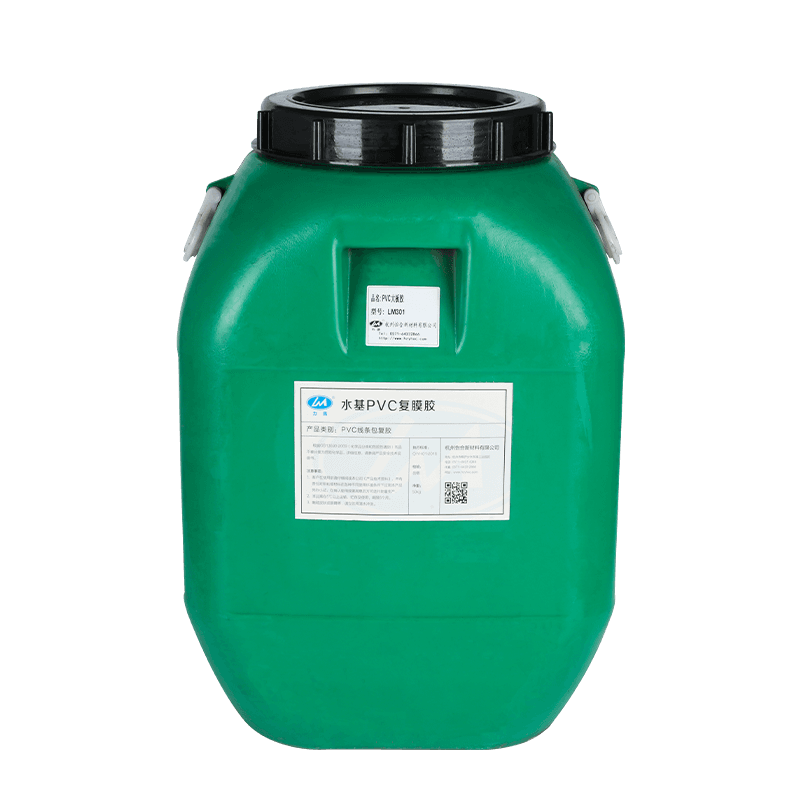




Water-Based PVC Adhesive For MDF Lamination From Hangzhou Yihe
As a Water-Based PVC Adhesive For MDF Lamination manufacturer, we match product configuration to the application, operating limits, interfaces and acceptance criteria defined for each project.
Hangzhou Yihe New Materials Co., Ltd. has formulated water-based adhesives since 1997, when the company began as the Tonglu Lima specialty adhesive factory beside the Fuchun River in Tonglu, Hangzhou, China. Within our Water-Based PVC Lamination Adhesive, this category covers the flat lamination grades that bond decorative PVC, PET, PP and similar surfacing films to MDF and wood-based panel faces. The range carries two production adhesives: LM301 for PVC, leather and PU paper decorative surfaces, and LM3466 for PET and PP decorative surfaces.
- Carrier: water rather than organic solvent, which lowers odour on the line and simplifies clean-up.
- Grades: LM301 (PVC, leather, PU paper) and LM3466 (PET/PP decorative surfaces).
- Substrate: MDF and wood-based panel faces for flat lamination.
- Process fit: roller coater or glue spreader coating, drying, then platen or roller pressing.
- Systems: ISO 9001 and ISO 14001 certified; National High-Tech Enterprise qualification.
The Range At A Glance
The two grades share a water-based chemistry and a flat-surface application profile, but they are not interchangeable. Film chemistry decides which one goes on the line, and the choice is usually settled in a trial rather than on paper alone.
| Decision point | LM301 | LM3466 |
|---|---|---|
| Decorative surface | PVC film, leather, PU paper and similar flexible overlays | PET and PP decorative surfaces |
| Substrate | MDF, paper, fabric and wood-based panel faces | Flat panel faces finished with PET or PP surfacing film |
| Process fit | Flat lamination lines with glue spreader or roller coater and platen pressing | Flat lamination where a PET or PP surface appearance must stay clean and uniform |
| Selection drivers | Plasticizer level in the film, gloss, film thickness, heat exposure in service | Surface energy of the film, any primer or pre-treatment, press temperature |
| Position in the range | The established grade for PVC decorative MDF | The extension of the range to PET and PP surfaces |
Application Fit For Flat Lamination
These adhesives belong on flat surfaces: furniture door skins, cabinet and wardrobe panels, wall panels, shopfitting components, panel fabrication and interior fit-out work where a decorative film is pressed onto a wood-based core. Profiled and three-dimensional work such as membrane-pressed door faces sits in our separate vacuum thermoforming series, because the film has to stretch and the adhesive has to hold through that stretch.
- Furniture manufacturing: PVC-clad MDF doors and panels that need a clean face for edge banding and assembly.
- Interior panels: decorative wall and partition surfaces where colour consistency across batches matters.
- Contract fit-out: repeated panel sizes produced to a fixed bond specification across a project.
- PET and PP surfacing: panels where the film chemistry has moved away from PVC for regulatory or design reasons.
Substrate And Film Variables We Work Through
Most bonding complaints on laminated MDF trace back to the panel face or the film, not to the adhesive drum. Our technical review starts there, before any grade is proposed.
- Face quality: fibre tear, sanding marks and density variation on the MDF face telegraph through thin films.
- Dust and contamination: sanding dust, release agents and handling marks block wet-out and create local bond failures.
- Moisture condition: panels that have not equilibrated in the plant move after pressing and stress the glue line.
- Film plasticizer: highly plasticised PVC film can migrate into a water-based glue line and dull a high-gloss surface.
- Surface energy: PET and PP films are harder to wet out than PVC, so the formulation and any pre-treatment are matched to the film.
- Panel temperature: cold panels slow water release and pull down platen temperature at the glue line.
Process Window: Coating, Drying And Pressing
A water-based adhesive only performs when the water has left the film before the press closes. The settings below are agreed with each customer against their own line, film and panel, then fixed in a trial report.
- Panel preparation: calibrate and sand the face, extract dust, and keep panels dry and free of handling contamination.
- Adhesive handling: stir before use, keep containers closed, and avoid uncontrolled dilution that changes solids and open time.
- Coating: apply a uniform film by roller coater or glue spreader, with coat weight set for the film and the press cycle.
- Drying: oven temperature, airflow and line speed must remove the water without skinning the surface.
- Pressing: platen temperature, pressure and dwell are matched to the film so the glue line reaches full bond.
- Cooling and stacking: press laminated panels flat and let them stabilise before trimming or further machining.
Line Integration, Utilities And Operator Safety
Water-based systems are forgiving to run, but they bring their own requirements: stainless or coated surfaces in the adhesive circuit, clean water for flushing before the product dries, and protection against frost in cold plants.
- Coating equipment: roller coaters, glue spreaders and their pumps, hoses and filters must suit a water-based dispersion.
- Drying and extraction: zoned oven temperature, air velocity and extraction at the oven exit keep the line stable and the workplace comfortable.
- Press: platen flatness, pressure distribution and temperature recovery between cycles decide face uniformity.
- Clean-up: flush coaters and lines with water before residue dries; dried adhesive is far harder to remove than wet adhesive.
- Operator safety: water-based chemistry reduces solvent vapour but does not remove the need for gloves, eye protection, spill control and slip-resistant floors.
Quality Assurance And Compliance Evidence
Hangzhou Yihe holds ISO 9001 Quality Management System and ISO 14001 Environmental Management System certification, along with National High-Tech Enterprise qualification. Formulation and release testing are carried out in our own laboratory, supported by independent R&D capability built over 29 years of water-based PVC application.
- Incoming raw material checks and batch traceability from drum to delivered lot.
- In-process control of solids, viscosity and pH, followed by finished-product release testing.
- Bond testing on production-representative MDF and film, including heat and moisture exposure where the end use calls for it.
- Technical data sheets and safety data sheets issued with each grade, with retained samples for reference.
- Environmental and regulatory documentation confirmed for the specific grade a project requires.
Information We Use to Configure Your Solution
A grade recommendation is only as good as the process data behind it. This is the information that lets us propose a starting product, a coat weight and a press window instead of a generic answer.
- Decorative film: chemistry (PVC, PET, PP, PU paper, leather), thickness, gloss level, plasticizer content and film supplier.
- Substrate: MDF grade and density, panel thickness, face preparation and moisture condition.
- End use: door skin, cabinet panel, wall panel or contract fit-out, including heat and humidity exposure in service.
- Line data: coater type, line speed, oven zones, press type, platen temperature, pressure and cycle time.
- Acceptance criteria: peel strength method, heat resistance, surface appearance under raking light and any customer-specific test.
- Commercial scope: order volume, container size, packing format, destination and storage conditions at your plant.
Trials, Customization And Documentation
LM301 and LM3466 are the starting point for most projects rather than the final answer. Solids, viscosity and open time can be adjusted around your coater and oven, and anti-penetration behaviour can be tuned where a high-gloss or skin-feel film is involved. Trials typically move from a laboratory sample to a line trial on your panels, with the agreed coat weight, drying conditions and press settings recorded so the result can be repeated on shift.
For PET and PP work we review the film grade and any pre-treatment before the trial, because low-surface-energy films behave differently from PVC and a formulation that suits one will not automatically suit the other. LM301 PVC Decorative MDF Lamination Adhesive covers the PVC side of the range, while LM3466 PET/PP Decorative Surface Flat Lamination Adhesive covers PET and PP surfaces.
Packaging, Storage And Handling
Water-based adhesives stay stable when they are kept sealed, frost-free and out of direct sunlight. Packing format, net weight and pallet configuration are confirmed with the quotation so that drums or containers match your handling and dosing arrangements.
- Store in the original closed container in a cool, dry warehouse with stable temperature.
- Protect from frost and from prolonged high heat, both of which change viscosity and film formation.
- Follow first-in, first-out rotation, and confirm shelf life for the delivered batch on its certificate of analysis.
- Keep containers clean and closed between shifts to prevent skinning and contamination.
Frequently Asked Questions
Which grade should we use for PVC film on MDF?
LM301 is the standard choice for PVC film, leather and PU paper bonded to MDF, paper, fabric and similar panel faces. Where the PVC is heavily plasticised or the surface is high-gloss, we review the film before the trial, because plasticizer migration can affect the finished face.
Can the same adhesive be used on PET and PP decorative surfaces?
No. LM3466 is formulated for PET and PP decorative surfaces, which wet out differently from PVC because of their lower surface energy. We confirm the film grade and any primer or pre-treatment as part of the trial, then set the press window around that film.
Does this adhesive work on vacuum membrane presses?
This category is built for flat lamination, where a decorative film is pressed onto a flat panel face with a platen or roller press. Three-dimensional forming over profiled doors and cabinet components uses our vacuum thermoforming adhesives, which are formulated for the stretch and heat profile of that process.
What most affects bond strength on MDF?
Panel face quality, dust removal, panel moisture condition and the amount of water left in the glue line when the press closes. A well-calibrated face, a clean panel and a drying profile matched to line speed solve more bond failures than changing adhesive grade.
Can the formulation be adjusted for our line and film?
Yes. We adjust around LM301 or LM3466 for coater type, oven performance, line speed, coat weight and film behaviour, then confirm the result in a line trial on your own panels. The agreed settings are documented so that production can repeat them shift after shift.











