 Search


 English
 中文简体
 русский
 عربى


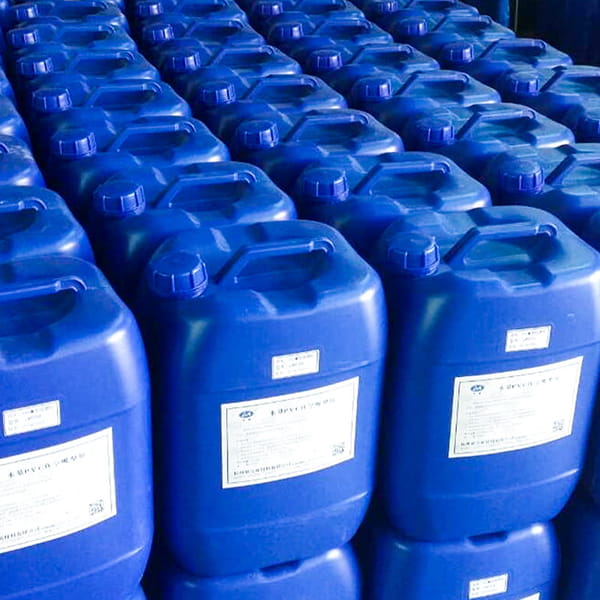
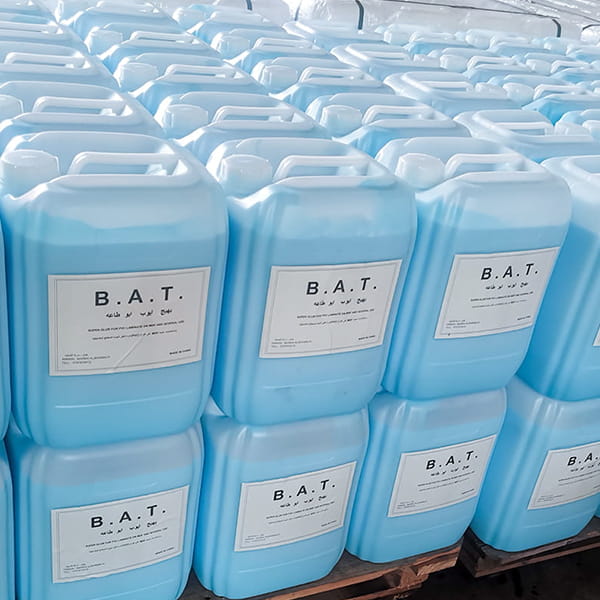



Hangzhou Yihe New Materials Co., Ltd. is a manufacturer of eco-friendly adhesives, established in 1997 beside the Fuchun River in Tonglu, Hangzhou, China. For vehicle interiors, our Automotive Interior Adhesive range covers the two production routes that dominate trim manufacturing: cold-press bonding of flat faced panels with a water-based contact adhesive, and heat-activated bonding of leather, PVC and foam to moulded carriers.
The parts built with these grades include trunk back-box bottom plates, trunk partitions, RV cabin panels, steering wheel and gearshift wrapping, and soft-touch laminations onto ABS, IXPP and felt board. Both platforms are supplied as ready-to-use liquids, blended in our own plant under ISO 9001 quality management and ISO 14001 environmental management systems.
Two Bonding Platforms, One Objective
The difference between the grades is less about strength than about how the bond is triggered. A water-based contact adhesive develops strength as the carrier leaves the film; a heat-press adhesive stays dormant until the press or moulding tool delivers the activation temperature.
| Platform | Grade | Key parameters | Substrate and component fit | Application and cure |
|---|---|---|---|---|
| Water-based contact adhesive | LM3817 | Solids ≥51 %; viscosity 30,000–60,000 mPa·s; pH 5–7; milky white to slightly yellow | PVC film, leather and PU paper bonded to XPE/IXPE, PU honeycomb board and felt (fibreboard); flat pasting of trunk and back-box bottom plates | Roller or machine application at roughly 80 g/m², cold press, cure above 5 °C; 3 h to initial handling, 24 h to full strength |
| Heat-activated heat-press adhesive | LM578 | Solids ≥47 %; viscosity 6000 ± 1000 mPa·s; pH 7–8; activation 48–53 °C; blue lotion | Leather, PVC and PU soft foam onto ABS, IXPP and felt board; hand wrapping of steering wheel and gearshift surfaces | Spray onto the substrate, dry in a drying tunnel, activate at 48–53 °C, then mould or injection-overmould; heat resistance above 80 °C with 5 % hardener |
| Supporting lamination and wrapping grades | Water-based PVC lamination series | Aqueous polymer dispersions; grade-dependent solids and viscosity | Film or foil facing on wood-based and composite trim carriers, profile wrapping and panel lamination | Roller, curtain or spray application; vacuum membrane press, flat press or profile wrapping machine |
Component and Substrate Fit
Interior trim rarely fails on the adhesive alone; it fails where the adhesive met the wrong surface. These are the pairings the two grades are formulated around.
- Trunk floor and back-box bottom plates. Large flat panels faced with PVC film, leather or PU paper over XPE foam or PU honeycomb board, bonded with LM3817 trunk panel wrapping adhesive and cold-pressed in stacks.
- Trunk partitions and side trim. Film or fabric over felt board, where high initial tack matters because the part is handled before the bond has fully matured.
- Steering wheels, gearshift knobs and grab handles. Leather, PVC or PU foam wrapped by hand over ABS or PU carriers, activated at 48–53 °C so thin vinyl and foam are not scorched by the tooling.
- Soft-touch and foam-backed laminations. Substrate sprayed, dried in a tunnel and moulded, or bonded during direct injection overmoulding where the adhesive must hold through melt contact.
- Film-faced interior panels on wood-based or composite carriers. Bonded with our water-based PVC lamination adhesive series when the trim carrier is a board rather than a moulding.
Process Windows We Set Before a Trial
Every grade leaves our plant with an application window rather than a single recommended number, because line speed, tunnel length and part geometry move the working point.
LM3817, water-based cold press
- Stir before use. If the drum thickens in storage, up to 2 % clean water can be mixed in and the viscosity re-checked.
- Manual route: hair roller, even coverage, film laid back, air squeezed out with a squeegee, then cold press.
- Machine route: approximately 80 g/m², uniform coat, panels stacked and weighted on top.
- Cure above 5 °C; 3 h to initial cure, 24 h to full bond. Use and store between 5 °C and 35 °C; shelf life 6 months at room temperature.
LM578, heat press and wrapping
- Spray the substrate, dry in the tunnel, then activate at 48–53 °C before moulding or overmoulding.
- The low activation range gives a longer operable time, which helps when wrapping complex geometry by hand.
- Dosing 5 % hardener lifts heat resistance above 80 °C for parts exposed to sunlight or close to heat sources.
- Supplied in 20 kg plastic drums; see the LM578 interior heat-press adhesive specification for the full parameter set.
Heat, Humidity, Vibration and Fogging
A vehicle interior asks the bond to survive cyclic heat, absorbed moisture, continuous vibration and the slow chemistry of plasticiser migration. Elasticity is the working property here: a flexible adhesive film absorbs vibration and thermal expansion instead of transferring it to the joint line, which is why a bond that passes a peel test on day one can still open up after a summer of service.
Plasticiser movement from soft PVC is the other practical risk. On high-gloss or skin-feel films it can show as haze or a colour shift in the facing, and on windscreen-adjacent parts it contributes to fogging. Our formulating work targets a stable bond line with low volatility, and we review the film grade with the customer when the surface finish is demanding.
Configuration Choices Reflected in a Quotation
- Grade and viscosity band. Solids and viscosity are held inside the published window, and the target is set against your applicator — roller, spray or curtain — rather than against a catalogue figure.
- Hardener package. LM578 is quoted with or without the 5 % hardener route, depending on the service temperature your part has to hold.
- Coat weight and open time. The 80 g/m² reference for LM3817 is adjusted where the substrate is porous felt or a dense honeycomb core.
- Packaging and traceability. LM3817 in 50 kg plastic drums or 1000 kg IBC containers; LM578 in 20 kg plastic drums; batch marking for line-side records and COA matching.
- Documentation set. Technical data sheet, batch certificate of analysis, safety data and application instructions issued with the commercial offer.
Quality Assurance and Acceptance Testing
Hangzhou Yihe New Materials Co., Ltd. holds National High-Tech Enterprise qualification and operates under ISO 9001 and ISO 14001 certification. Raw materials are tested in our own laboratory before release to production, and each batch is checked against the appearance, solids, pH and viscosity values published for its grade.
- Water-based formulations are developed against the volatile organic compound limits of GB 33372-2020 and GB 18583-2008, and the relevant declarations are issued with the batch documents.
- Acceptance on a production part is normally settled on your own substrate: 180° peel after 24 h cure, the same peel after heat ageing, a heat resistance hold at the service temperature, and a visual check for haze, blistering or edge lifting.
- For overmoulded parts, the trial also confirms that the dried adhesive film survives melt contact without read-through on the visible surface.
Information We Use to Configure Your Solution
A grade recommendation is only as good as the process data behind it. These inputs let us return a specification that can be run, not just a product name.
| Project input | What it changes | Useful form |
|---|---|---|
| Substrate pair and surface condition | Chemistry, tack level and coat weight | Film, leather or foam grade plus carrier sample |
| Component geometry and size | Flat press, wrapping or spray route | Drawing, photo or a physical part |
| Application equipment | Viscosity target and open time | Roller, spray gun, cold press or moulding tool details |
| Cure and tunnel conditions | Activation window, hardener dosing, drying profile | Line temperature log and cycle time |
| Service temperature and ageing | Grade selection and heat resistance target | Peak part temperature, e.g. above 80 °C |
| Performance targets | Acceptance criteria and test method | Existing specification or a benchmark sample |
| Packaging and storage | Drum or IBC format, labelling, shelf-life planning | Consumption pattern and store temperature |
Packaging, Storage and Delivery Scope
LM3817 ships in 50 kg plastic drums and 1000 kg IBC containers, LM578 in 20 kg plastic drums. Both are stored and used between 5 °C and 35 °C with the container kept closed against chips and dust, and both carry a 6-month shelf life at room temperature. Each delivery is accompanied by the batch certificate of analysis, the technical data sheet and the application instructions used in production, so incoming inspection and line-side handling refer to the same figures.
Questions We Answer During Project Setup
Which grade bonds PVC film to XPE for a trunk back-box bottom plate?
LM3817. It is a water-based contact adhesive with solids of at least 51 % and a viscosity of 30,000–60,000 mPa·s, applied by roller or machine at roughly 80 g/m², cold-pressed and cured above 5 °C with 3 h to initial handling and 24 h to full strength. It is also used for leather and PU paper over PU honeycomb board and felt.
What does LM578 require on the line?
The substrate is sprayed and dried in a tunnel, then activated at 48–53 °C before moulding or injection overmoulding. The low activation range protects heat-sensitive foam and thin films while giving a longer operable time for hand wrapping. With 5 % hardener the cured bond holds above 80 °C.
How is heat resistance handled for sun-exposed interior parts?
Through grade choice and hardener dosing rather than a single fixed formulation. We confirm the peak service temperature of the part, set the dosing route accordingly and issue the heat resistance figure with the batch documents so the acceptance test on your side uses the same reference.
Do the water-based grades meet low-VOC requirements?
Our water-based interior adhesives are developed against the volatile organic compound limits of GB 33372-2020 and GB 18583-2008, and the corresponding declarations are supplied with the technical data sheet and batch certificate. Where a customer works to an internal or market-specific limit, that target is stated at the enquiry stage and reflected in the recommendation.
What do you need from us to propose a grade and packaging format?
Substrate samples or the exact film, leather and foam grades; a drawing or photo of the component; the application route and equipment; cure or tunnel conditions with a temperature log; the peak service temperature; your existing peel or heat-ageing specification; and the consumption pattern that determines drum or IBC supply.











