

 English
 中文简体
中文简体 русский
 عربى
عربىNews
Professional supplier of environmentally friendly adhesives
 Search
 +86 178 5710 2305

Search
+86 178 5710 2305

Eco Friendly Adhesive: A Practical Guide for Industrial Bonding
An eco friendly adhesive is a bonding material designed to hold a joint together without putting unnecessary pressure on the people who apply it, the production line that runs it, or the environment the finished product eventually returns to. In practice that covers a wide spectrum: a water-based dispersion that replaces a solvent-borne glue, a hot melt that carries no solvent at all, or a formulation partly built on renewable raw materials. For manufacturers who use adhesives every day, the decision is rarely about a green label alone. It is about open time, adhesion to difficult films, heat resistance, odour in the workshop and what happens to the panel at the end of its life. This guide walks through how eco friendly adhesive systems behave in industrial bonding and how to choose between them.
Content
- 1 What Makes an Adhesive Eco Friendly?
- 2 The Main Types of Eco Friendly Adhesive
- 3 Water-Based Adhesives: The Backbone of Green Woodworking
- 4 PUR and EVA Hot Melts: Solvent-Free Strength
- 5 How to Match an Eco Friendly Adhesive to Your Line
- 6 Eco Friendly Adhesive Beyond the Woodshop
- 7 Common Misconceptions About Green Adhesives
- 8 Working With a Supplier Who Understands Bonding
What Makes an Adhesive Eco Friendly?
Green chemistry is not a marketing term in the adhesive industry. It is measured, and the same indicators tend to come up whenever a formulator or a technical buyer assesses how environmentally friendly a glue really is:
- VOC content - volatile organic compounds released during application and curing, which affect air quality and worker comfort.
- Solvent content - whether the carrier is water, a reactive liquid or an organic solvent that must be vented and controlled.
- Restricted substances - formaldehyde, heavy metals and other materials limited by regulation or customer specifications.
- Renewable raw material content - the share of the formula derived from plant or other bio-based sources rather than petroleum.
- End-of-life behaviour - whether a bonded panel, carton or composite can be recycled, repulped or safely disposed of.
- Application efficiency - coat weight, drying energy and rework rate, which decide the real footprint per square metre of bonded surface.
Regulation keeps pushing in the same direction. Limits on solvent emissions and hazardous substances have tightened across Europe and Asia, and brand owners pass those expectations down the supply chain to their suppliers and converters. We follow this shift closely, and the wider picture is summarised in our overview of how stricter environmental regulations are accelerating the green transition in the adhesive industry.
The Main Types of Eco Friendly Adhesive
Most industrial bonding problems are solved by one of a handful of adhesive families. The table below compares how they carry the bond, where they are typically used and what makes them a greener option.
| Adhesive family | Carrier and cure | Typical substrates and processes | Eco profile |
|---|---|---|---|
| Water-based dispersion | Water carrier, dries by evaporation | PVC vacuum thermoforming, MDF lamination, profile wrapping, gypsum board facing | Low VOC, low odour, non-flammable |
| PUR hot melt | 100 percent solids, moisture curing | Flat lamination, profile wrapping, edge banding | Solvent-free, very low coat weight |
| EVA hot melt | 100 percent solids, bonds on cooling | Edge banding, veneer and CPL wrapping, carton sealing | Solvent-free, fast and repulpable in some grades |
| Bio-based adhesive | Starch, protein or plant oils | Paper, packaging, light board assembly | Renewable carbon, compostable in some grades |
| Two-component polyurethane | Reactive components, no solvent | Engineered boards, flooring, demanding structural joints | No solvent carrier, high durability per gram |
Water-Based Adhesives: The Backbone of Green Woodworking
Water-based dispersions are the most familiar eco friendly adhesive family in panel and door manufacturing, and for good reason. Water replaces the organic solvent that would otherwise evaporate into the workshop, so odour and VOC emissions drop sharply while the bonding mechanism stays reliable. These systems are at their best where a porous substrate meets a decorative film under heat and pressure: PVC vacuum thermoforming on cabinet and wardrobe doors, PVC lamination on MDF, profile wrapping on furniture profiles, and PVC facing on gypsum board.
Performance still has to be earned. High-gloss and skin-feel films are unforgiving, and a dispersion that bleeds through the film or leaves visible particles will ruin a door face. That is why anti-penetration grades and particle-free formulations exist, and why spray volume, drying temperature and press time matter as much as the chemistry itself.
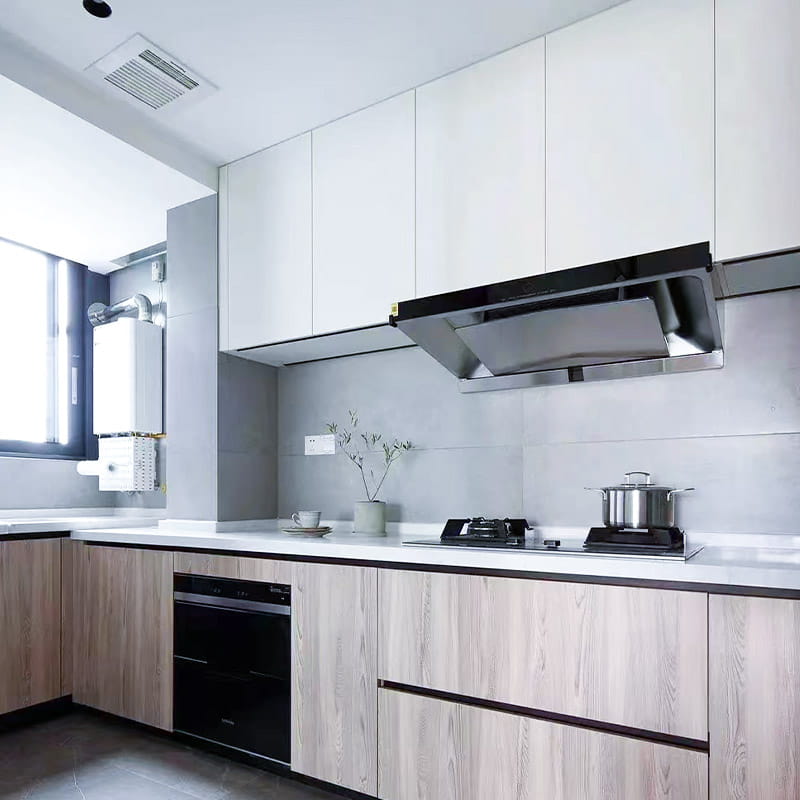 LM501W Anti-Penetration PVC Vacuum thermoforming AdhesiveProduct ApplicationPVC vacuum thermoforming adhesive, is primarily used for PVC film bonding with substrates like MDF in the production of non-painted cabinets, cabine...View Product →
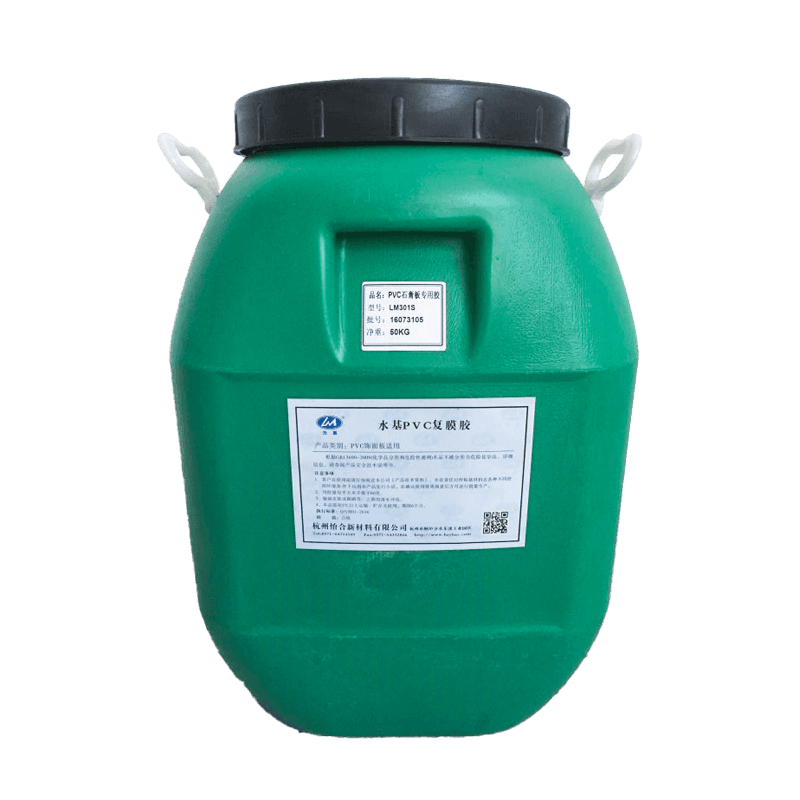
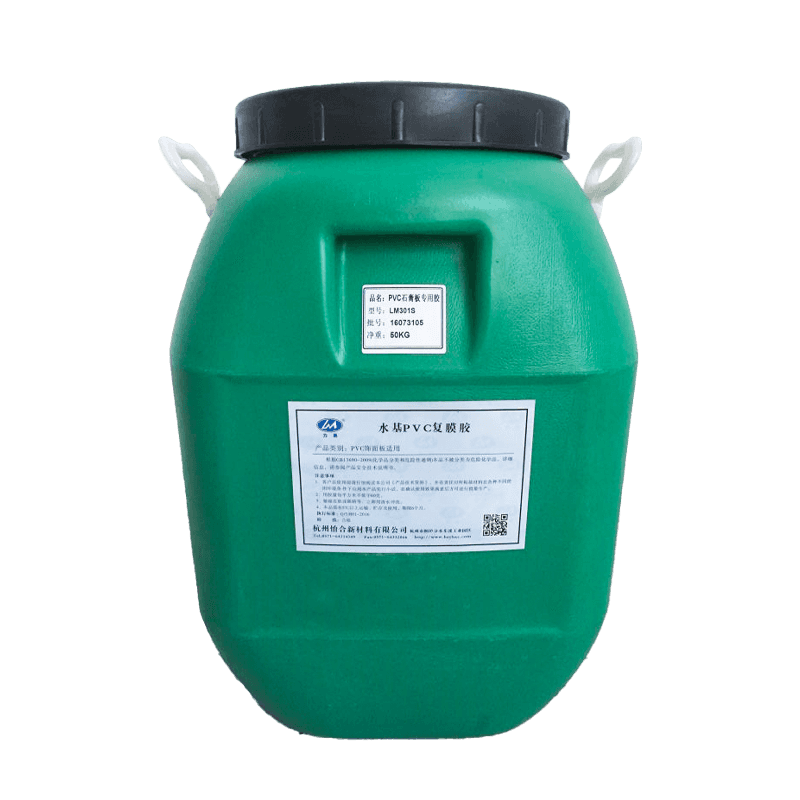
The same logic applies on flat surfaces. A lamination adhesive formulated for PVC decorative film on MDF has to wet out evenly, resist heat in service and still allow the board to be machined and edged afterwards without the bond failing at the edge.
PUR and EVA Hot Melts: Solvent-Free Strength
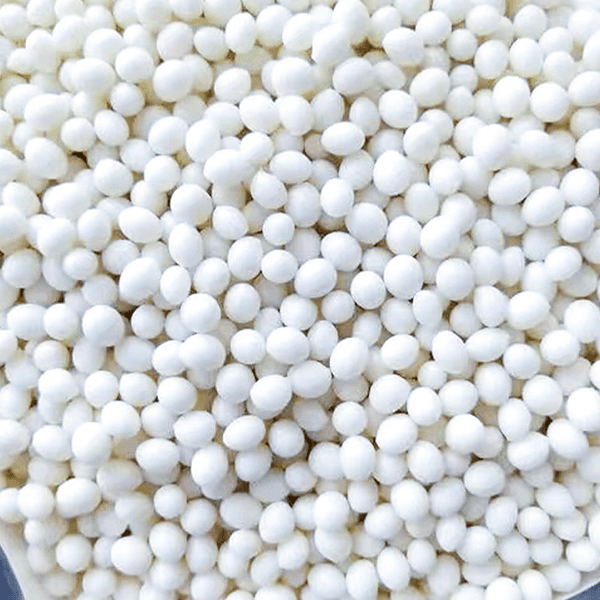
Hot melts take a different route to the same goal. They are applied as a 100 percent solid material and form a bond either as they cool, in the case of EVA, or as they cure with ambient moisture, in the case of PUR. Because nothing has to evaporate, there is no solvent to vent, no water to dry off and no long drying tunnel in the line. Coat weights are low, joints reach handling strength quickly, and the finished bond resists heat and moisture well enough for edge banding, flat lamination and profile wrapping.
PUR is usually the choice where a bond must survive heat, humidity and mechanical stress over years of use, such as kitchen doors, bathroom panels and furniture edges. EVA remains the workhorse for fast, economical edge banding and for veneer or CPL wrapping where cycle time rules the line.
 LM6016 PUR Moisture-Curing Hot Melt AdhesiveProduct FeaturesLM6016 is a moisture-curing hot-melt adhesive with 100% solid content. With pressure-sensitive properties, it provides high initial strength after bond...View Product →
One practical note from the workshop: lower coat weight is not only a cost saving. Less adhesive means less moisture or reactive material inside the joint, which reduces swelling, telegraphing and the risk of a starved or over-glued bond.
How to Match an Eco Friendly Adhesive to Your Line
Switching to a greener adhesive is a process question before it is a purchasing question. Working through the points below in order usually prevents the most expensive mistakes.
- Identify the exact substrate pair, including surface treatment, film type and whether the face is glossy, matte or textured.
- Map the process conditions: application method, press temperature, press time, line speed and the cooling or curing window available.
- Test the bond under real conditions, not only in a laboratory clamp, with peel, heat resistance and water resistance checks on production samples.
- Confirm compliance and documentation, including VOC data, safety data sheets and any customer specification the end product must meet.
- Plan the transition, cleaning the line, recalibrating spray or roller settings and training operators on the new open time.
Eco Friendly Adhesive Beyond the Woodshop
Furniture and interior panels are not the only places where water-based and hot melt systems have replaced solvent-borne products. Automotive interiors are a good example. A trim panel has to cope with summer heat, winter cold, vibration and humidity while staying visually flawless, and the adhesive has to bond decorative skins to substrates without releasing odour into the cabin.
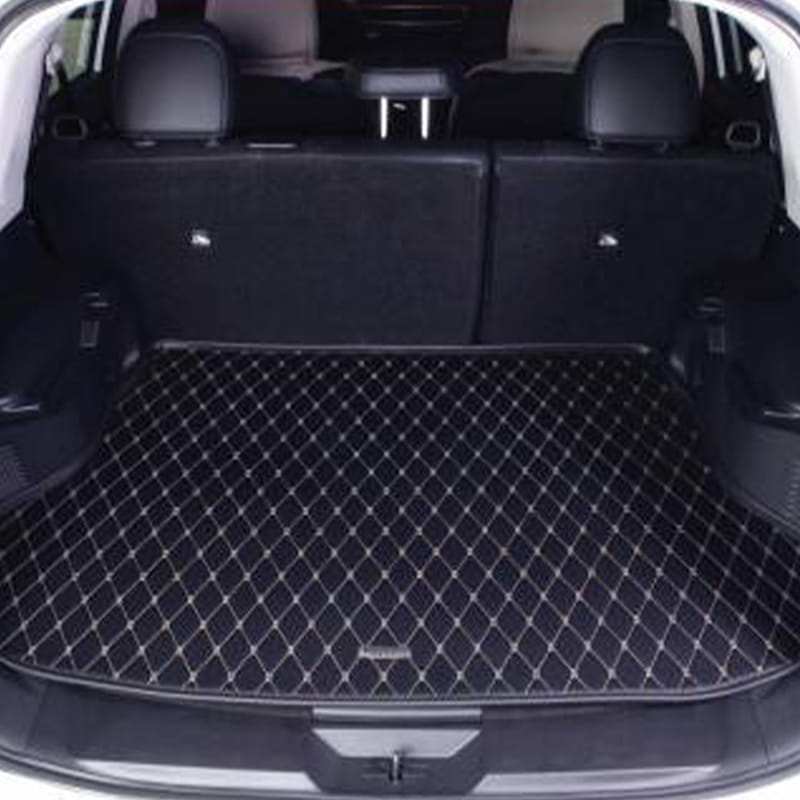 LM3817 Automotive Trunk Panel Wrapping AdhesiveApplication: PVC, leather, PU paper, and other materials and XPE (IXPE), PU honeycomb board, felt board (fiberboard), and other substrates, especially recommended for ...View Product →
Packaging, flooring and paper converting follow a similar path. Carton sealing moves toward water-based and starch systems, PVC flooring lines rely on low-emission bonding, and printed board production uses adhesives chosen as much for worker safety as for bond strength. In each case the pattern is the same: the carrier changes, the reliability does not.
Common Misconceptions About Green Adhesives
Water-based means weak
Not any more. Modern dispersions pass the same heat, water and peel tests that solvent-based products were specified against twenty years ago, provided the process is set up correctly.
Green adhesives always cost more per kilogram
Unit price is a poor measure. Lower coat weights, faster curing, less ventilation and fewer rework losses often reduce the cost per finished panel.
One green adhesive fits every line
Adhesive selection depends on substrate, film, press and climate. The right answer for a high-gloss wardrobe door is rarely the right answer for a wood-plastic composite door.
Working With a Supplier Who Understands Bonding
Hangzhou Yihe New Materials has been making adhesives since 1997, when the company operated as a specialty adhesive factory beside the Fuchun River in Tonglu. Today we produce water-based PVC vacuum thermoforming and lamination adhesives, premium woodworking glues, PUR and EVA hot melts, automotive interior adhesives and specialty products for flooring, packaging and board converting. Our laboratory facilities and development team exist for a practical reason: every new substrate, film and press condition needs its own test, and we would rather run that test before a customer commits a production line to it.
If you are evaluating a switch, it helps to start from your own process data. Detailed substrate and line information lets us recommend a specific grade instead of a general category, and it also shows where an eco friendly adhesive can simplify a line rather than complicate it. You can browse our eco friendly adhesive range by application to see the systems that match your industry.
Choosing an eco friendly adhesive is ultimately a technical decision with an environmental dividend. Get the chemistry, the process window and the supplier support right, and lower emissions, better workshop air and a cleaner end-of-life story come as part of the package rather than as a compromise. Send us your substrate pair, press parameters and performance target, and we will tell you honestly which chemistry fits.
Recommended Products

Our Global
Business Partners
Business Partners



About Us
Products
- Water Based PVC Vacuum Thermoforming Adhesive Series
- Water-Based PVC Lamination Adhesive Series
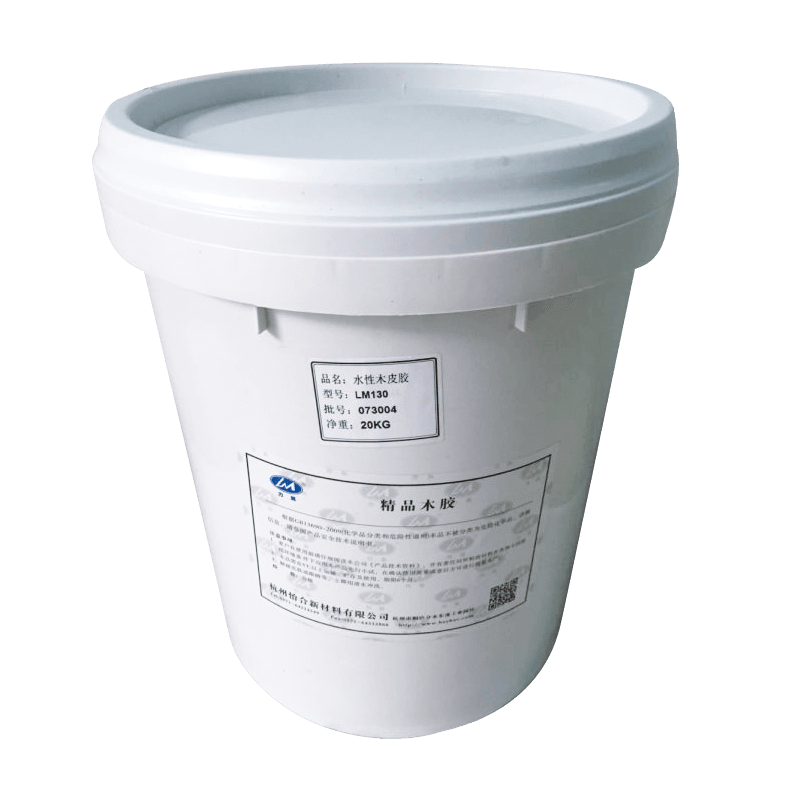
- Premium Woodworking Adhesive Series
- PUR Hot Melt Adhesive Series
- EVA Hot Melt Adhesive Series
- Automotive Interior Adhesive
- Adhesive For Other Applications
- Environmentally Friendly Adhesives
- Profile Wrapping Adhesives
Contact Us
- Add: Dongxi Industrial Park, Fenshui Town, Tonglu County, Hangzhou, China
- Tel: +86 178 5710 2305
- E-mail: [email protected]
- whatsapp: +852 9215 7996
We'd love to
hear from you!
Copyright © Hangzhou Yihe New Materials Co., Ltd. Rights Reserved.
Eco Friendly Glue Suppliers
