English
 中文简体
中文简体 русский
 عربى
عربىNews
Home / News / Industry News / Car Upholstery Glue: How to Choose the Right Adhesive for Auto Interiors
 Search
 +86 178 5710 2305


Last week, a van interior shop called with a familiar problem: the headliner fabric they had bonded twenty-four hours earlier was sagging at the rear edge. The adhesive was a leftover can of all-purpose contact cement. It grabbed well for the first hour, then softened in the afternoon heat. That sequence is common whenever car upholstery glue is chosen by habit instead of by requirement. The first conclusion to keep in mind: for an automotive interior, the glue must tolerate heat, humidity, flexing, and chemically different substrates all at the same time. A general-purpose can from the hardware shelf is rarely designed for that combination.
Before you buy your next batch, evaluate car upholstery glue on three grounds: the specific substrate combination in your part, the production or repair process you use, and the environmental loads the finished part will see. Price and brand familiarity belong near the end of the list.
Content
Automotive interiors are a mixed-material environment. A single door panel can bring together a PVC skin, a PP carrier, a foam pad, and a fabric wrap. An adhesive that bonds PVC to ABS may fail immediately on PP. A solvent system that wets plastic quickly may dissolve a polyurethane foam backing before the two parts even touch. You are not looking for an all-purpose glue; you are looking for a formulated adhesive that can wet each surface without destroying the layer underneath.
Use the table below as a quick checklist of the risk points for common combinations.
| Substrate combination | Typical interior part | Main bonding risk |
|---|---|---|
| PVC skin to ABS/PC frame | Door trim, center console | Low surface energy; needs good wetting |
| Fabric-backed PU foam to PP substrate | Headliner, pillar trim | Aggressive solvents can collapse the foam |
| Carpet to HDPE molded panel | Trunk floor, wheel arch trim | Heat and peel stress can cause creep |
Once the base materials are defined, narrow your adhesive options to those designed for automotive interior assembly. These formulas typically include additives that improve heat creep resistance, and they avoid the most aggressive solvents. That is why a floor-covering adhesive or a packaging hot-melt should not automatically be used on headliners.
Another practical point is that substrate compatibility is not a static property. The same PVC film from one supplier may contain plasticizers that migrate into the adhesive, while another supplier's film is more stable. The same polypropylene carrier can be compounded with fillers that reduce surface energy. Always test the actual production substrates, including primers or mold-release residues, rather than relying on a past experience with a similar-looking product.
Car upholstery glue is a process material, so the equipment in your shop determines which product is appropriate. The two dominant processes in interior trim are wrapping and heat pressing.
In a typical trunk panel line, vinyl is wrapped around a pre-formed board. The operator applies adhesive to the board, lets the film become touch-dry, then positions the vinyl and folds it over the edges. The glue has to hold the vinyl immediately after wrapping and continue to hold it when the panel is later exposed to sunlight in a closed trunk. This is a classic wrapping application, and it needs an adhesive with high initial grab and good heat resistance. For example, our LM3817 trunk panel wrapping adhesive is made for this type of line.
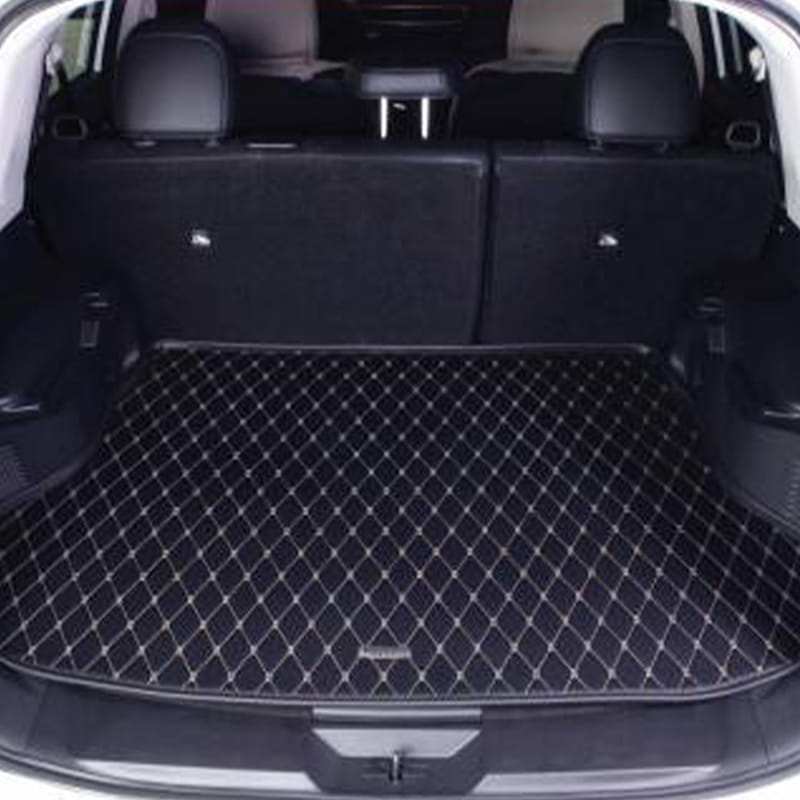 LM3817 Water-Based Automotive Trunk Panel Wrapping AdhesiveThis adhesive is designed for wrapping vinyl around trunk panels, offering high initial grab and heat resistance. Its water-based formula supports easy application and complies with EU environmental standards, making it suitable for demanding automotive interior assembly.View Product →
In a heat-press lamination line, the sequence is different. The adhesive is spread on a carrier board, the fabric and foam layers are stacked on top, and the assembly goes into a hot press. The glue must be dry enough to handle without blocking, yet active enough to form a strong bond when the press closes. A product like LM578 automotive interior heat-press adhesive is formulated to cure under those conditions.
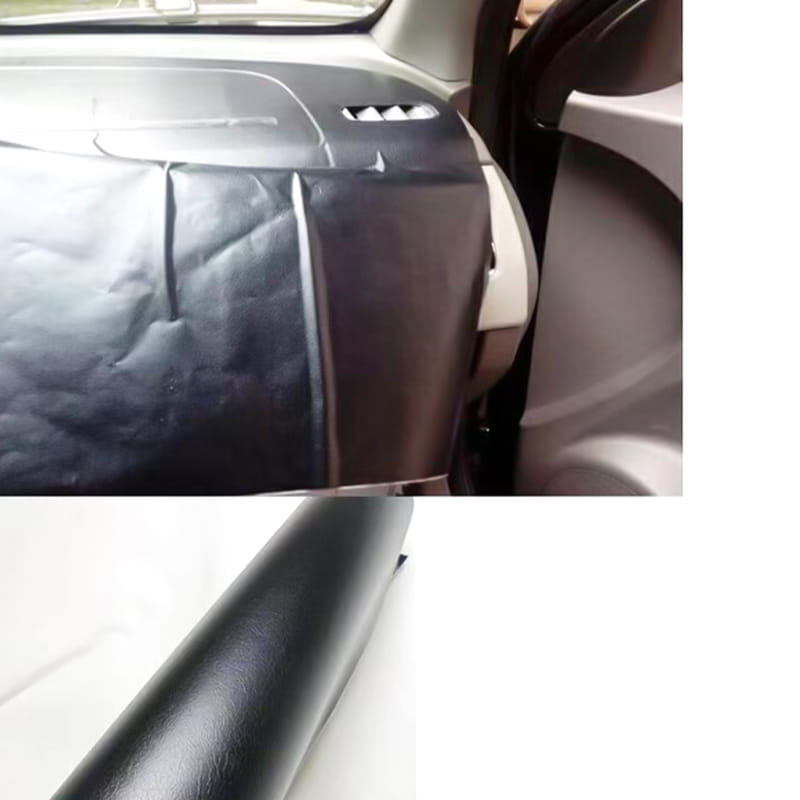 LM578 Automotive Interior Heat Press AdhesiveFormulated for heat-press lamination lines, this adhesive activates at lower temperatures and provides longer open time. With heat resistance above 80°C when hardener is added, it is suitable for bonding leather, PVC, foam, and plastic in automotive interiors.View Product →
Substrate preparation cannot be skipped either. Mold release agents left on a plastic carrier, dust from die-cutting, and hand oils from handling all lower the bond. Some assemblies need a light wipe with an isopropyl alcohol mixture or a corona treatment before adhesive application. Confirm this step when you run the trial, because a glue that performs well on a clean panel may still fail on a production part.
The process mismatch is a hidden cost. Using a contact adhesive designed for wrapping in a hot-press process often traps air and leaves low-bond spots. Using a heat-press adhesive in a wrapping line gives you long open times but weak immediate hold, so the vinyl creeps open at the corners.
Before choosing between these two routes, confirm which step controls the line speed: the spray booth, the drying tunnel, or the press. The glue supplier should be able to recommend a product based on that answer, not on a product catalogue.
Initial tack is what people feel when they touch a glue film, but it can be misleading. The performance numbers that matter are heat resistance, open time, initial peel strength, final peel strength, and VOC level. Use the table below to frame the conversation with your supplier.
| Property | Why it matters | What to ask the supplier |
|---|---|---|
| Heat resistance | Interior surfaces can see 80 to 90°C in sun | What is the softening temperature of the final bond? |
| Open time | Workers need enough time to position large panels | How long after application does the film stay active? |
| Initial tack | Heavy fabric or thick vinyl can slip before curing | What is the peel strength at 10 minutes? |
| Final peel strength | Trim edges are stressed by clips and handling | What is the peel strength after full cure? |
| VOC and odor | Plant air quality and environmental compliance | Does it meet your target VOC limit in an emissions test? |
Heat resistance is the most commonly missed item. A parked car's roof panel can reach 85°C in summer, and a trunk floor sees nearly the same. If the adhesive film softens at 70°C, the fabric will creep and blister even though the bond felt unbreakable at room temperature. Ask for a heat-soak test, not just a datasheet.
Humidity resistance is a close second. A door panel cross-section can see temperature swings and condensation, especially in regions with high summer humidity. If the adhesive film is water-sensitive, the trim edge can lift after the vehicle spends a few nights in the open. Ask your supplier whether the product has been tested on wet aged samples, not just at 23°C and 50% relative humidity.
Open time is just as practical. Some adhesives are very strong for the first two minutes but form a skin before the whole part is positioned. For large panels like a van headliner, you need enough open time to set the fabric without wrinkles. The right product gives you a workable window, not a race.
Shop-floor risk is part of the buying decision. Car upholstery glue is applied indoors, often in a spray booth with limited ventilation. A low-priced adhesive may dry fast, but its solvent package can overpower your ventilation and affect workers. Environmental regulations for volatile organic compounds in adhesives are tightening in several major markets. Suppliers to vehicle manufacturers are being asked to provide data on VOC content and to move to more controlled formulations.
Also check how the adhesive behaves in the glue line. A high-VOC solvent can attack plastic substrates, create surface blush, or cause foam to collapse. On the safety side, the shop's ventilation and extraction system must be sized for the solvent load. If you are in a confined spray booth, a water-based formulation may solve most of those problems.
After you narrow the candidate list, ask for a small batch trial on the exact materials you use. Test at your actual press temperature, your actual open time, and your actual humidity. The difference between a good and a bad car upholstery glue may only show up after fifty production cycles.
For a more systematic walk through the whole selection process, the complete professional guide on car upholstery glue explains each test method and the numbers to request from a supplier.
The practical takeaway is simple: match the glue to the part, the process, and the thermal load before you order. Run a realistic trial and ask the supplier for documented tolerances for heat, open time, and humidity. The right car upholstery glue will not be the cheapest product in the catalogue, but it will prevent sagging headliners, lifted edges, and costly rework. That is the real cost saving.











Copyright © Hangzhou Yihe New Materials Co., Ltd. Rights Reserved.
Eco Friendly Glue Suppliers