English
 中文简体
中文简体 русский
 عربى
عربىNews
Home / News / Industry News / Eco Friendly Glue: How to Choose Sustainable Adhesives for Manufacturing
 Search
 +86 178 5710 2305

Walk through almost any furniture, door, or panel plant today and you will hear one phrase far more often than a decade ago: eco friendly glue. Buyers ask for it, production managers worry about whether it will hold, and process engineers want to know whether switching will slow the line down. That caution is reasonable, because "eco friendly" now covers everything from starch paste to reactive polyurethane hot melt, and not every product behind that label behaves the same way on a press.
Lima Bond has been formulating adhesives since 1997, mostly for manufacturers who bond wood, PVC film, veneer, gypsum board, and automotive interior panels at industrial speed. That background shapes how we talk about green adhesives: not as a philosophy, but as a set of chemistry choices that still has to survive real press cycles, real humidity, and real quality checks.
This guide covers what actually makes a glue eco friendly, which adhesive families are on the market, how to test a claim before you sign a purchase order, and where these products already run in production every day.
Content
There is no single green molecule. An adhesive earns the description through a combination of formulation choices, and most products score well on some points and less well on others.
Biodegradability is the claim printed largest on the label, yet for industrial bonding it is rarely the most useful property. A wardrobe door that decomposes in a landfill has failed at its first job, which is to stay shut for fifteen years. In furniture, door, and automotive work, the real environmental gains come from solvent-free chemistry, lower emissions, and safer working conditions.
Almost every product marketed as eco friendly glue belongs to one of five chemistry families. They differ in how they build strength, which substrates they tolerate, and what equipment the line needs.
| Family | How it sets | Typical substrates | Common processes |
|---|---|---|---|
| Water-based dispersion | Water evaporates and polymer particles coalesce into a film | PVC film, veneer, MDF, gypsum board, paper | Vacuum thermoforming, flat lamination, wrapping |
| PUR hot melt | Applied as a melt, then crosslinks with ambient moisture | HPL, PET, veneer, CPL, edge banding tape | Flat lamination, edge banding, wrapping |
| EVA hot melt | Thermoplastic, bonds as it cools | Edge banding tape, veneer, CPL | Edge banding, wrapping |
| Starch and dextrin | Water carrier dries, starch film remains | Paper, carton board, labels | Packaging, carton sealing, labelling |
| Bio-based and protein types | Varies, often water-borne | Panels, paper, light interior use | Emerging applications |
Water-based and hot melt systems together cover the overwhelming majority of industrial wood, panel, and film bonding. Starch adhesives remain dominant in paper and packaging, while bio-based formulations are the fastest moving area of research, particularly for panel and interior work.
Switching away from a solvent-borne adhesive changes three things on the shop floor: drying or curing behaviour, the substrates you can bond reliably, and the cost per square metre of finished panel. Solvent adhesives dry quickly and tolerate a wide range of surfaces, which is why they held their ground for decades. Water-based systems need heat, airflow, or dwell time to remove the water carrier, and they can struggle with non-porous films if the formulation is not matched to the film.
Reactive PUR hot melts behave differently again. They are applied as a melt and then crosslink with ambient moisture, delivering heat and water resistance that many conventional products cannot match. Strength is rarely the deciding factor in a successful switch; the friction usually comes from adjusting press settings, glue spread, and line speed. Our earlier article on eco friendly glue and regular glue walks through those differences in detail.
Before approving a sample for a full production trial, ask the supplier to answer these questions in writing.
A supplier who can answer all six without hesitation is usually the one worth trialling. A supplier who answers only the fourth question is selling a colour scheme, not a chemistry.
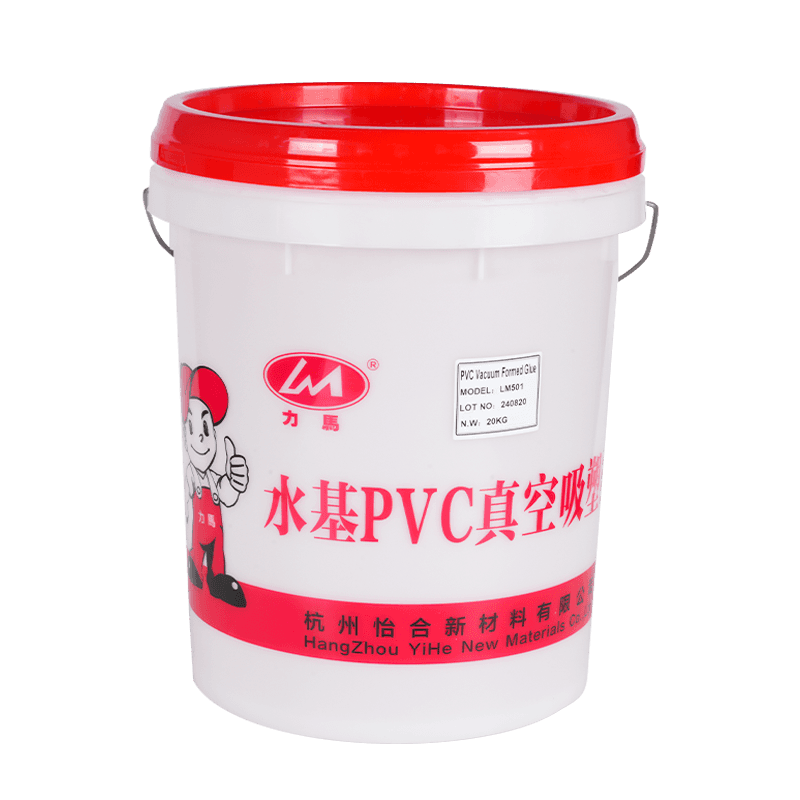
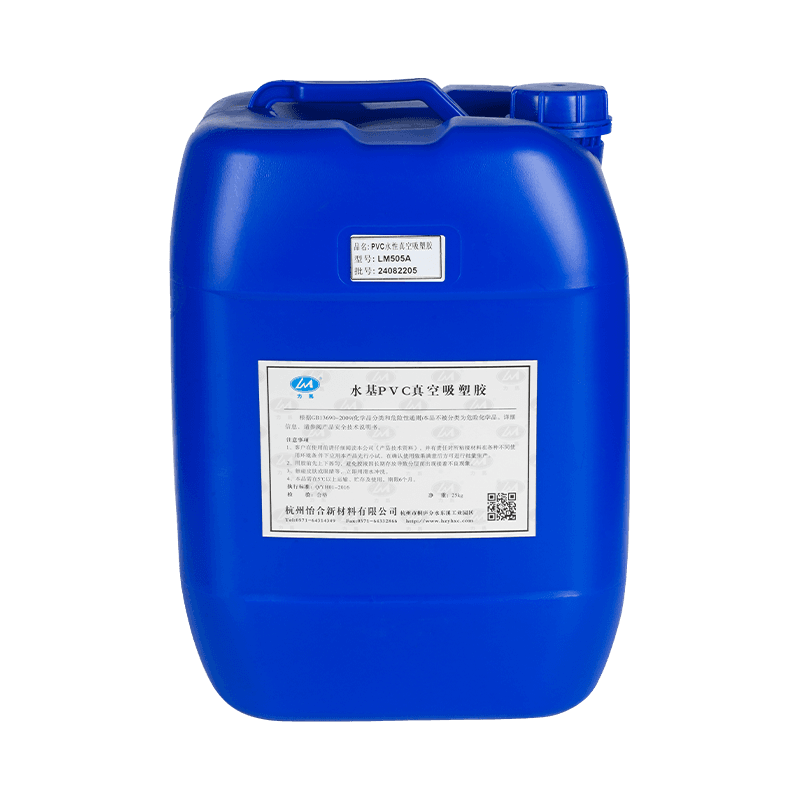
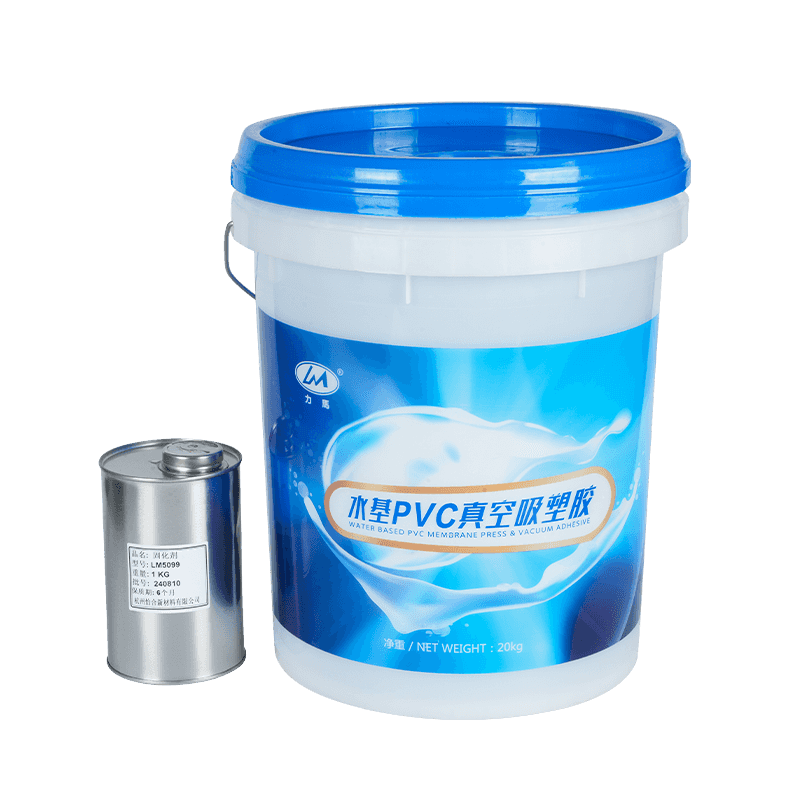
In cabinet and wardrobe production, the biggest green shift has been the move from solvent-based contact adhesives to water-based PVC vacuum thermoforming adhesives. Modern dispersions handle demanding decorative films, including high gloss, super matte, and skin-feel surfaces, without the solvent smell that used to hang over a forming shop at the end of a shift.
The main technical risk is penetration. A water-based adhesive can bleed into a thin film and leave a visible mark on a glossy door, so particle-free and anti-penetration grades were developed for exactly this problem. They are what most high-end door plants specify today, and the scrap rate difference on a glossy line convinces a production manager faster than any certificate.
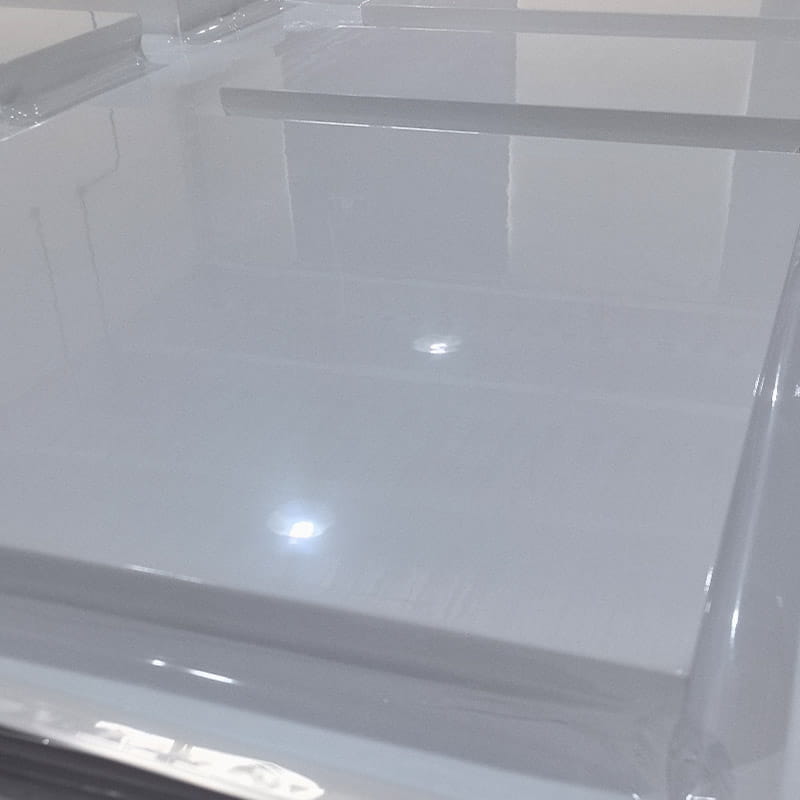 LM507 High-Gloss And Skin-Feel Film Specialty Particle-Free Vacuum Thermoforming AdhesiveLM507 is made of emulsion, acrylic emulsion with self-crosslinking function synthesized VAE emulsion and special formula, and modified with many kinds of additives, wh...View Product →
Wooden doors put an adhesive through a harder life than almost any other furniture component: temperature swings, humidity, door closers slamming, and years of direct sunlight. Water-based vacuum press adhesives combined with EVA or PUR edge banding hot melts are the standard answer.
EVA hot melt is the workhorse of edge banding, being solvent-free, fast, and forgiving on standard ABS and PVC tapes. Where heat resistance matters more, a PUR edgebanding hot melt takes over at a higher cost per kilogram but with a lower failure rate in warm climates and near heat sources.
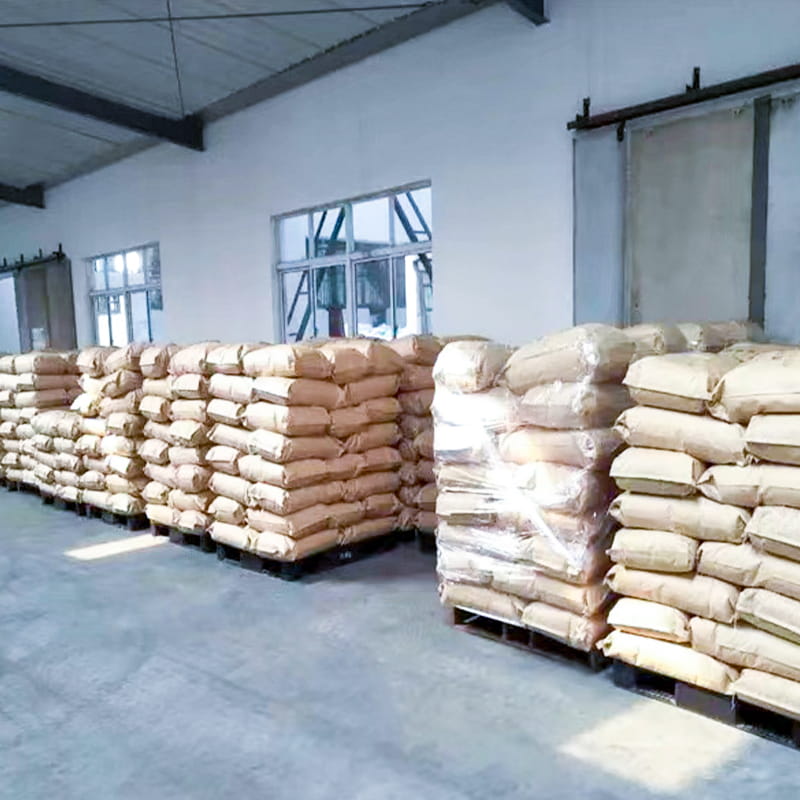 LM8701 Universal Edgebanding Adhesive For Wooden Doors And FurnitureUsage Characteristics:This product has the advantages of good versatility, no glue line after bonding, long open time, etc. It is suitable for bonding and laminating P...View Product →
Flat lamination is where reactive hot melts have made the strongest environmental case. A moisture-curing PUR hot melt contains no solvent and no water, so there is nothing to evaporate: the adhesive is applied as a thin melt, the panel is pressed, and crosslinking finishes the job over the following days.
That gives producers of MDF panels, decorative surfaces, and gypsum board a bond with good heat resistance, good water resistance, and a very small footprint per square metre. Water-based systems remain the better choice for thin PVC film on MDF and for PVC-faced gypsum board, where film thickness is low and cost pressure is high.
 LM6016 PUR Moisture-Curing Hot Melt AdhesiveProduct FeaturesLM6016 is a moisture-curing hot-melt adhesive with 100% solid content. With pressure-sensitive properties, it provides high initial strength after bond...View Product →
Chemistry alone does not decide whether a switch will work on your line. These variables usually matter more than the marketing category.
A supplier who asks about your press before recommending a product is usually the one whose sample will pass.
Eco friendly glue is not one product, and it is not a compromise. In most manufacturing settings it is a formulation decision: choose the chemistry that matches your substrate and your press, confirm the emission and safety data in writing, and then judge the result on scrap rate, line speed, and how the finished component behaves two years later.
That is the approach our team at Lima Bond has taken since 1997, working with door makers, cabinet plants, panel producers, and automotive interior suppliers. We would rather send three trial samples and a process recommendation than one glossy certificate.




Copyright © Hangzhou Yihe New Materials Co., Ltd. Rights Reserved.
Eco Friendly Glue Suppliers