English
 中文简体
中文简体 русский
 عربى
عربىNews
Home / News / Industry News / Ecological Glue: A Practical Guide to Green Adhesives for Industrial Bonding
 Search
 +86 178 5710 2305


If you work in furniture, wood door, panel or automotive interior manufacturing, the phrase "ecological glue" has probably crossed your desk more than once this year — on a customer specification sheet, in a tender document, or in an internal discussion after another round of complaints about solvent fumes on the line.
The good news is that ecological adhesives are no longer a compromise. In many bonding jobs they match the solvent-based products they replace while producing far less odour, far fewer volatile organic compounds (VOCs) and a much more comfortable workplace. The less convenient news is that "eco-friendly" is a broad label. Two adhesives can both carry it and still behave completely differently under your press.
This guide covers what ecological glue actually is, the three families you are most likely to meet in industrial production, how to match them with your substrate and process, and where the practical pitfalls tend to hide.
Content
An ecological adhesive is one designed to lower its environmental and health impact across its whole life — raw materials, application, curing, waste and disposal — without giving up bond performance. Manufacturers signal that in a few recognisable ways:
One clarification is worth making early, because it comes up in almost every technical conversation: ecological does not mean "light duty". A water-based PVC vacuum forming adhesive still has to survive a membrane press, a heated film and years of kitchen cabinet use. A moisture-curing PUR edge banding hot melt still has to hold an edge through humidity, heat and daily knocks. The chemistry is different; the performance standard is not.
If the formulation side interests you, we have written a plain-language explanation of how ecological glue is made, from raw material selection to the way a water-based polymer dispersion is built.
Water-based (waterborne) adhesives use polymer particles dispersed in water rather than dissolved in solvent. They are applied cold and bond once the water has been driven off, usually through a combination of open time, press time, heat and air movement. In woodworking they dominate PVC vacuum forming, flat lamination on MDF, profile wrapping and gypsum board lamination.
PUR (polyurethane reactive) hot melts are 100% solids. They are applied molten and then crosslink with ambient moisture to form a thermoset bond that will not re-melt. That is why they are a popular choice for edge banding, flat lamination and wrapping where heat and humidity resistance matter. The trade-off is that final cure takes time and needs a small amount of moisture.
EVA (ethylene-vinyl acetate) hot melts are thermoplastic: solid at room temperature, molten when applied, and re-softenable with heat. They set in seconds, require no drying tunnel and remain the workhorse of edge banding, veneer and CPL wrapping, and general furniture assembly. They are not the right answer for permanent heat or structural loading, but on a high-speed line they are hard to beat.
| Family | How it bonds | Typical jobs | Main strengths | What to watch |
|---|---|---|---|---|
| Water-based | Water evaporates, then the bond forms under heat and pressure | PVC vacuum forming, MDF lamination, profile wrapping, gypsum board | Very low VOC and odour; good heat resistance once fully dried; non-flammable | Needs drying and press capacity; some substrates are sensitive to water |
| PUR hot melt | Molten application, then crosslinking with ambient moisture | Edge banding, flat lamination, wrapping, panel and door assembly | Strong and durable; resists heat, moisture and ageing; thin glue lines | Needs moisture and time for full cure; stricter equipment care |
| EVA hot melt | Sets physically as it cools; can re-melt | Edge banding, veneer and CPL wrapping, furniture assembly | Sets in seconds; simple, low-energy equipment; easy to run | Lower heat resistance; not for wet or heavy structural service |
Vacuum forming and membrane pressing are the classic water-based application. The film is heated, drawn over the shaped door and held while the adhesive develops its bond. Because the adhesive sits under a decorative film that may be high gloss, matt or a soft-touch skin, any particle, bubble or penetration mark shows immediately. That is why formulations are tuned to specific surfaces instead of being sold as one universal product.
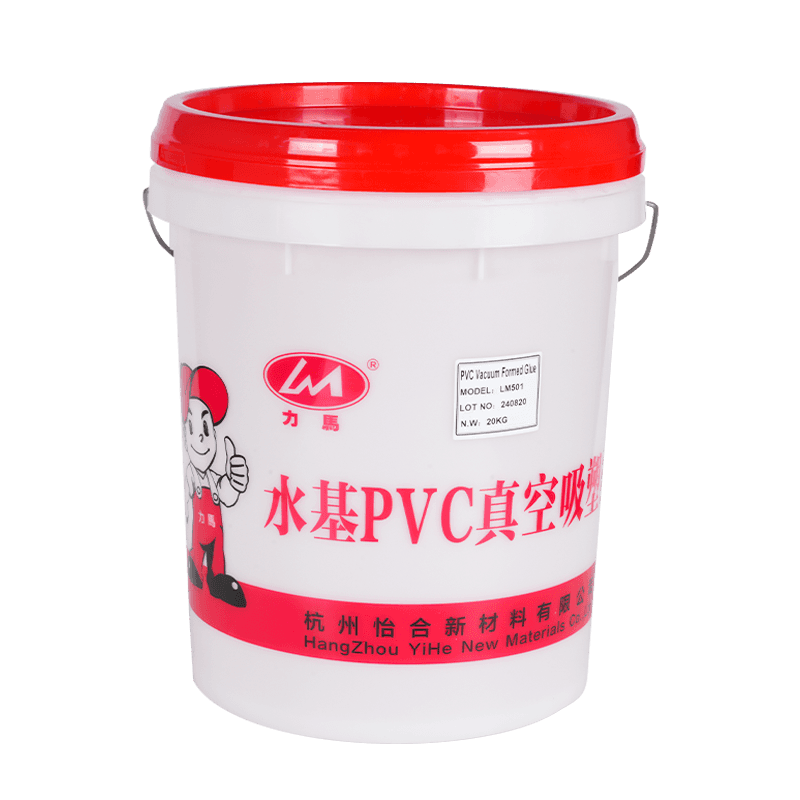
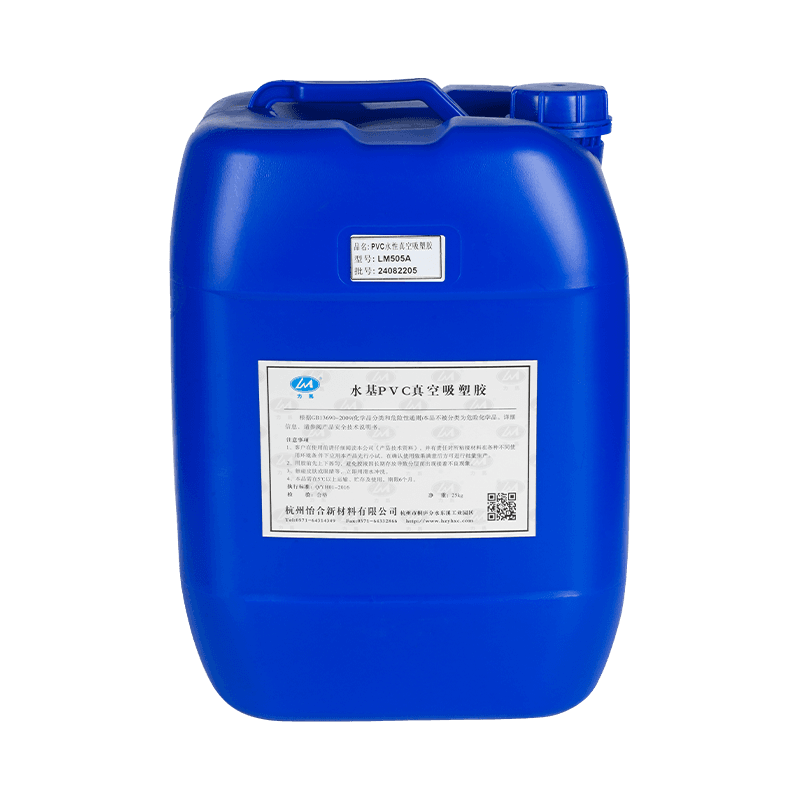
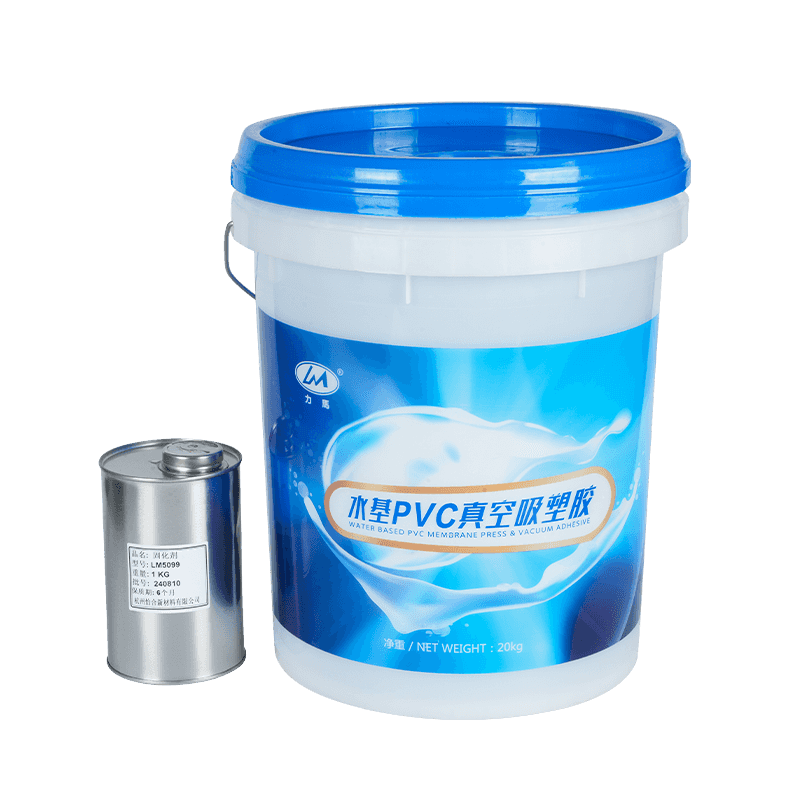
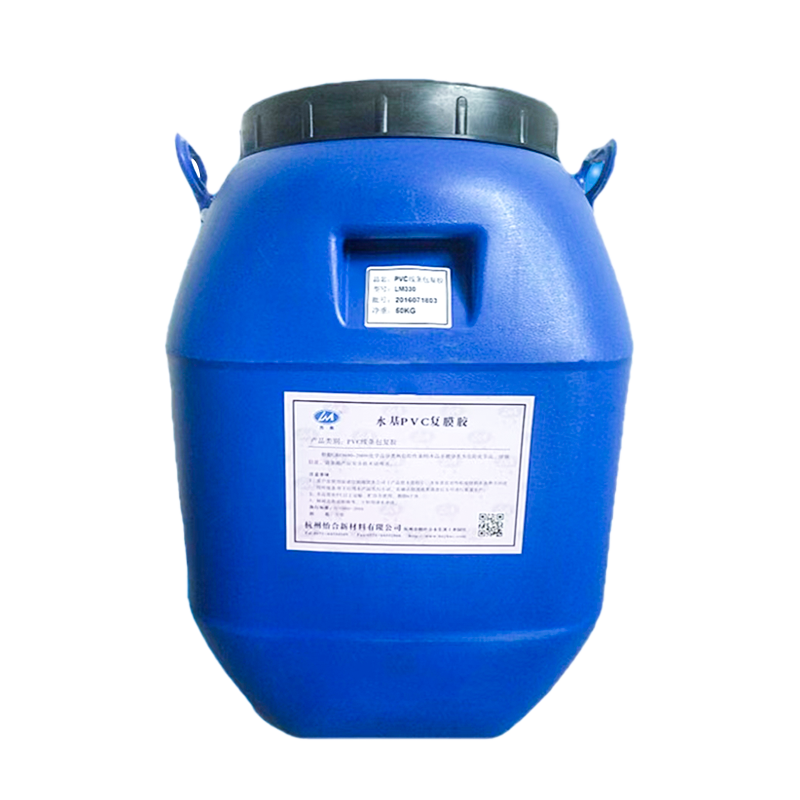
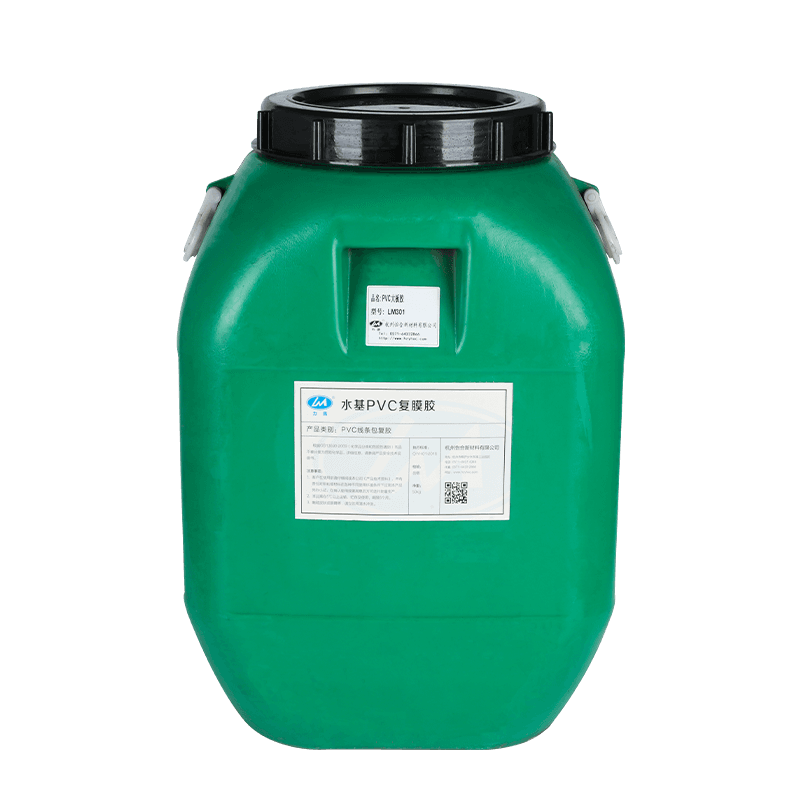
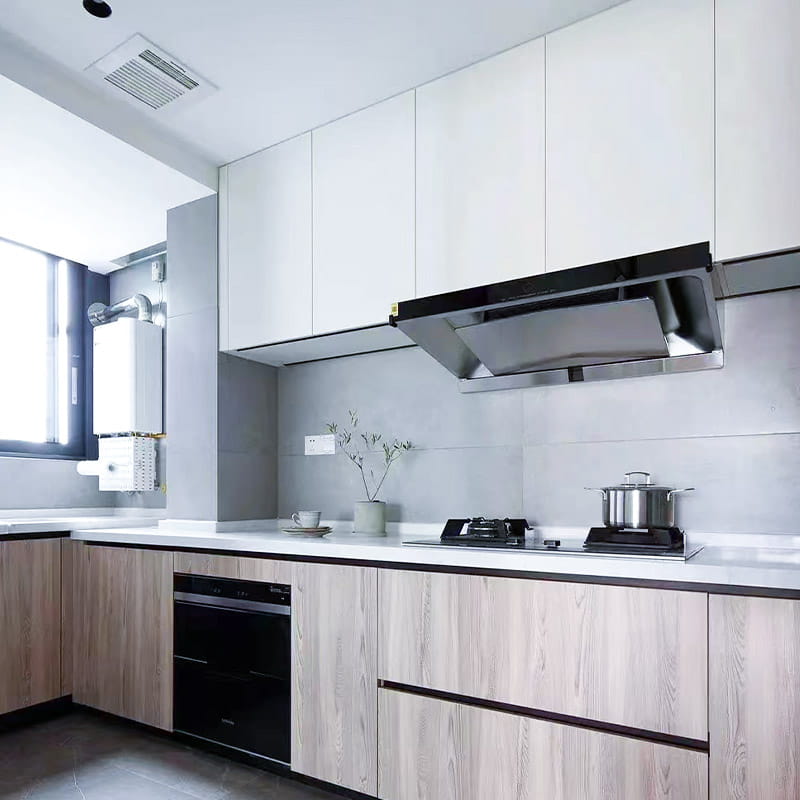 LM501W Water-Based PVC Vacuum Thermoforming Adhesive for CabinetsWater-based adhesive for bonding PVC film to MDF in non-painted cabinets, cabinet doors and computer desks, with anti-penetration and edge-sealing properties.View Product →
Flat lamination on MDF, engineered board and gypsum board asks different things of an adhesive: even spread, no telegraphing through thin decorative foils, and enough heat resistance to survive downstream machining. Water-based systems handle PVC, PET and paper facing well, provided the press parameters are set for the film and not only for the glue.
Edge banding with a reactive PUR hot melt produces a joint that will not creep in a warm room or open up in a humid bathroom. Wrapping, by contrast, is often served better by a fast EVA hot melt that sets before the profile reaches the next station. Wood doors sit somewhere between the two: veneer and CPL coating reward quick tack, while lamination and assembly reward a slower, stronger bond.
 LM6019 Reactive PUR Edgebanding Hot Melt AdhesiveMoisture-curing PUR hot melt for PVC edgebanding, wood lamination and wrapping, with high heat and water resistance and excellent initial strength.View Product →
 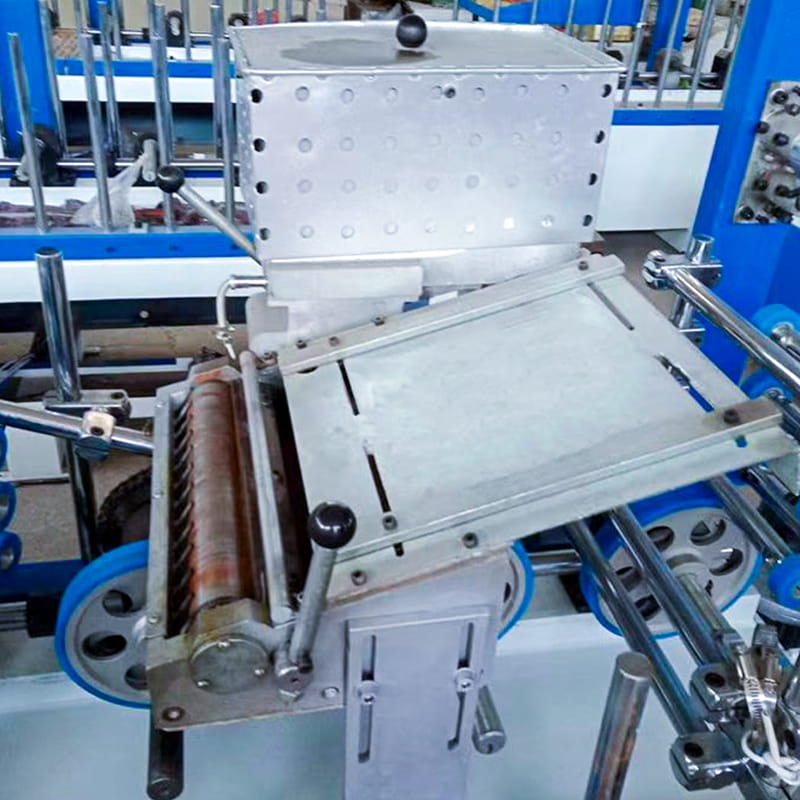 LM8705 EVA Hot Melt Adhesive for Veneer and CPL WrappingEVA wrapping hot melt for veneer, CPL and paper lamination on MDF, particle board and solid wood, suitable for wrapping machines with high adhesive strength.View Product →
A changeover is not only a chemistry swap; it changes what happens around the press as well. The table below summarises the differences our customers notice most in the first weeks after switching.
| Aspect | Solvent-based adhesive | Ecological alternative |
|---|---|---|
| VOC and odour | Noticeable solvent release; extraction and PPE are normally required | Minimal or no solvent release; much lower ventilation demand |
| Curing | Solvent must be evaporated and safely exhausted | Water evaporates under controlled heat, or a hot melt sets and cures without solvent |
| Storage and fire risk | Flammable solvents bring dedicated storage and transport rules | Water-based products and hot melts are generally non-flammable or far less flammable |
| Bond durability | Well proven, but sensitive to solvent retention if under-dried | Comparable or better when the process window is respected |
| Line changes | Usually none | New drying or press settings, revised glue quantity, sometimes equipment adjustments |
| Regulatory direction | Increasingly restricted in many markets | Aligned with tightening VOC and indoor air quality requirements |
Choosing well comes down to matching four things: the two surfaces being bonded, the machine that bonds them, the conditions the finished part will live in, and the rules it has to satisfy. A simple sequence works for almost any project:
It also helps to understand where ecological formulations genuinely differ from the older products they replace, which we set out in this comparison of eco-friendly glue and regular glue.
Three forces are pushing the change at the same time. Regulations on solvent emissions and indoor air quality continue to tighten, and buyers increasingly ask for documentation before they place an order. Workers themselves are less willing to spend shifts beside an open glue pot in a poorly ventilated hall. And end customers have learned to ask what is inside the furniture, the door or the car trim they buy.
None of that means every job should switch overnight. It means the conversation is now about which line to convert first and how to convert it without losing output.
We have been making adhesives since 1997, from a plant on the banks of the Fuchun River in Tonglu, Hangzhou. Over that time the product range has grown from general woodworking adhesives into water-based PVC vacuum forming and lamination systems, PUR and EVA hot melts, and adhesives for automotive interior parts and other industrial applications. We run our own laboratory and development team, which means a bonding question usually ends with a formulation discussion rather than a catalogue page.
That matters most at the beginning of a project, when the substrate is new, the film is unfamiliar or the press behaves differently from the last one. It also matters after the trial, when the parameters need to be reproduced on a second line in a second factory.
If you are evaluating an ecological adhesive for a cabinet, door, panel, wrapping or automotive interior application, send us the details of your substrate pair, your equipment and your service conditions. In most cases we can suggest a starting formulation and a sample for trial, and we will tell you honestly if the job is better served by a different chemistry. That conversation costs you nothing and usually saves a great deal of trial and error.





Copyright © Hangzhou Yihe New Materials Co., Ltd. Rights Reserved.
Eco Friendly Glue Suppliers