

 English
 中文简体
中文简体 русский
 عربى
عربىNews
Professional supplier of environmentally friendly adhesives
 Search
 +86 178 5710 2305

Search
+86 178 5710 2305

EVA Hot Melt Adhesive: What It Is, How It Works, and Where It's Used
Content
- 1 What Is EVA Hot Melt Adhesive and How Does It Work?
- 2 Key Properties of EVA Hot Melt Adhesive
- 3 Forms and Formats of EVA Hot Melt Adhesive
- 4 EVA Hot Melt Adhesive vs. Other Hot Melt Types
- 5 Major Industrial Applications of EVA Hot Melt Adhesive
- 6 How to Choose the Right EVA Hot Melt Grade for Your Application
- 7 Common Processing Problems with EVA Hot Melt Adhesive and How to Fix Them
- 8 Safety and Storage Guidelines for EVA Hot Melt Adhesive
What Is EVA Hot Melt Adhesive and How Does It Work?
EVA hot melt adhesive is a thermoplastic bonding material based on ethylene-vinyl acetate (EVA) copolymer — one of the most widely used polymer systems in the global adhesive industry. The "hot melt" part of the name describes its mechanism: EVA adhesive is solid at room temperature, melts when heated to its application temperature (typically 150–180°C), flows onto the substrate as a liquid, and then solidifies rapidly as it cools to form a strong, flexible bond. No solvents, water, or chemical curing reactions are involved — the bond forms purely through physical cooling and solidification.
The ethylene-vinyl acetate polymer backbone gives EVA hot melt its characteristic combination of flexibility, toughness, and good adhesion to a wide range of substrates including paper, cardboard, wood, plastics, textiles, and some metals. The vinyl acetate content of the EVA copolymer — which can range from roughly 12% to 40% by weight — is one of the key formulation variables. Higher vinyl acetate content makes the EVA more flexible, tackier, and better at bonding polar surfaces like paper and coated paperboard. Lower vinyl acetate content produces a stiffer, harder adhesive with better heat resistance and more resistance to creep under load.
Beyond the base EVA polymer, commercial EVA hot melt adhesives contain several other components that are carefully balanced to achieve the desired performance profile: tackifying resins (which improve initial adhesion and tack), waxes (which control viscosity, open time, and set speed), antioxidants (which protect the adhesive from thermal degradation during processing), and sometimes fillers or pigments. This multi-component formulation is what differentiates a high-performance industrial EVA hot melt from basic glue gun sticks, even though both are technically EVA-based products.
Key Properties of EVA Hot Melt Adhesive
Understanding the physical and performance properties of EVA hot melt adhesive is essential for selecting the right grade for a given application. These properties are controlled through formulation and can vary significantly between grades — which is why generic descriptions of "hot melt adhesive" can be misleading without knowing the specific values.
Open Time
Open time is the window between when the molten adhesive is applied and when it begins to solidify enough to lose effective tack. EVA hot melts are available in short open time grades (1–3 seconds) for high-speed automated packaging lines where rapid set speed is needed to maintain production rates, and long open time grades (30–90 seconds or more) for manual assembly operations — furniture edge banding, bookbinding, and craft applications — where the operator needs time to position and align parts before the adhesive sets. Using a short open time adhesive in a slow manual process leads to cold bonds and poor adhesion; using a long open time grade in a high-speed automated application results in bond failures from inadequate set before the next process step.
Viscosity
Viscosity determines how the adhesive flows at application temperature and is measured in millipascal-seconds (mPa·s) or centipoise (cP) using a Brookfield viscometer. Low-viscosity EVA hot melts (500–3,000 cP at application temperature) flow easily and penetrate porous substrates well — suitable for paper, foam, and textile bonding. High-viscosity grades (5,000–50,000 cP) stay where they are applied, resist running on vertical surfaces, and are used for gap-filling applications and woodworking. The application equipment — nozzle type, pump capacity, gear pump or piston pump — must be matched to the adhesive's viscosity range to ensure consistent and uniform bead or spray application.
Softening Point and Heat Resistance
The softening point (measured by the ring and ball method, ASTM E28) is the temperature at which the solidified adhesive begins to flow under load. For standard EVA hot melt adhesives, softening points typically range from 70°C to 110°C. This parameter directly determines the upper service temperature of the bond — a bond made with a 75°C softening point adhesive will fail if the bonded assembly is exposed to temperatures above that level. For applications where heat resistance is critical — automotive interiors, electronics, hot-fill packaging — either a higher softening point EVA grade or a different hot melt polymer (polyolefin or polyamide) may be required.
Flexibility and Low-Temperature Performance
EVA hot melt adhesive retains good flexibility at low temperatures, which is one of its key advantages over wax-based and some polyolefin hot melts. Most EVA grades remain flexible and maintain bond integrity down to -20°C to -30°C, making them suitable for cold storage packaging, frozen food carton sealing, and outdoor applications in cold climates. The low-temperature flexibility comes primarily from the ethylene component of the copolymer and can be further enhanced by selection of tackifiers and plasticizers in the formulation.
Adhesion to Different Substrates
EVA hot melts offer broad substrate adhesion, particularly to porous and semi-porous materials. Their adhesion to paper, cardboard, and kraft substrates is excellent, which is why they dominate the packaging and bookbinding sectors. Wood adhesion is also strong, and EVA is widely used for furniture edge banding and woodworking assembly. Adhesion to polyethylene (PE) and polypropylene (PP) surfaces — which are very common in packaging films and containers — is more limited without surface treatment, because these non-polar plastics have low surface energy that resists wetting by the adhesive. For bonding to PE/PP, specialized polyolefin-based hot melts often perform better than standard EVA.
Forms and Formats of EVA Hot Melt Adhesive
EVA hot melt adhesive is supplied in several physical forms designed for compatibility with different application equipment and production environments. Selecting the right format is important for processability, storage, and cost efficiency.
- Glue sticks: The most familiar consumer format — cylindrical rods of EVA hot melt typically 7mm, 11mm, or 12mm in diameter and 100–300mm in length, designed for use in hot glue guns. Used in crafts, light packaging, and low-volume assembly tasks. The formulations used in consumer glue sticks are typically lower performance than industrial grades but are sufficient for light-duty applications.
- Pillows and slugs: Oval or cylindrical pre-formed chunks of hot melt adhesive, roughly the size of a large marshmallow or small hockey puck, designed for feeding into tank-based hot melt systems. Pillows melt quickly in the tank and are the standard industrial supply format for medium to high-volume manufacturing operations in packaging, furniture, and converting.
- Blocks and slabs: Larger rectangular blocks (typically 1–2 kg each) of hot melt adhesive designed for high-volume industrial systems with large-capacity melt tanks. Blocks are more economical per kilogram than pillows for very high consumption applications and are the standard supply format in many large-scale packaging and industrial operations.
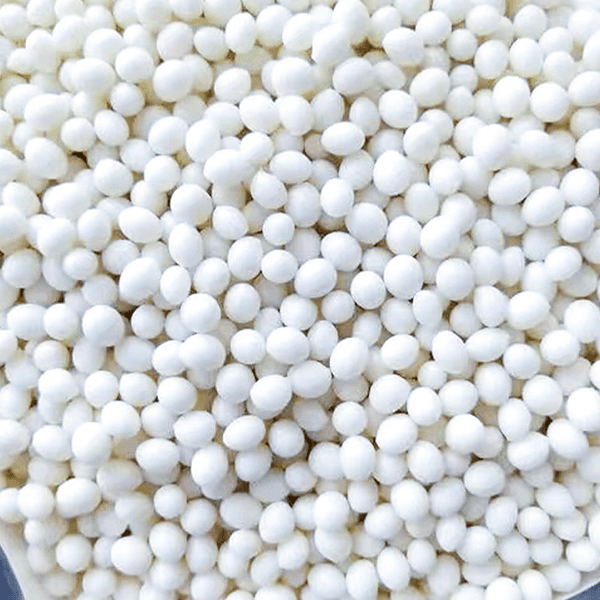
- Granules and pellets: Small uniform pellets or granules of hot melt adhesive, similar in appearance to plastic resin pellets, suitable for precision dosing systems, extrusion coating, and spray systems that require consistent feed rates. Granules are also used in drum unloaders and heated hose systems for bulk handling.
- Film and web: EVA hot melt adhesive supplied in thin film or web form, used for lamination applications in textiles, nonwovens, and composites where a precisely uniform adhesive layer is required. The film is placed between substrates and bonded by heat and pressure in a press or calendar.
- Coated release paper (hot melt tape): EVA hot melt pre-applied to a silicone release liner and supplied in roll form. Used in garment manufacturing, shoe construction, and technical textiles where a clean, precise adhesive layer needs to be transferred to a substrate by heat and pressure without the need for a melt tank or application gun.
EVA Hot Melt Adhesive vs. Other Hot Melt Types
EVA is the dominant hot melt adhesive polymer globally, but it is not the only option. Several other polymer systems are used as hot melt adhesive bases, each with different property profiles suited to different applications. Understanding how EVA compares helps buyers make informed decisions when standard EVA grades don't meet their requirements.
| Adhesive Type | Base Polymer | Key Advantages | Key Limitations | Typical Applications |
| EVA hot melt | Ethylene-vinyl acetate | Low cost, broad substrate adhesion, flexible, good cold performance | Limited heat resistance (<110°C), limited PE/PP adhesion | Packaging, bookbinding, woodworking, nonwovens |
| Polyolefin (APAO/APO) | Amorphous polyolefin | Better heat resistance, excellent PE/PP adhesion, low odor | Higher cost, slower set speed | Hygiene products, automotive, film lamination |
| Polyamide (PA) | Polyamide (nylon) | High heat resistance (up to 150°C+), chemical resistance, excellent metal adhesion | High cost, brittle at low temperature | Electronics, automotive, footwear |
| Polyurethane reactive (PUR) | Moisture-curing PU | Very high heat and creep resistance after cure, excellent bond strength | Higher cost, requires moisture cure time, sensitive processing | Woodworking, furniture, automotive panels |
| Styrenic block copolymer (SBC) | SIS / SBS / SEBS | Very high tack, excellent PSA performance, good elasticity | UV sensitivity, limited heat resistance | Pressure-sensitive labels, tapes, hygiene products |
EVA hot melt adhesive holds its dominant market position because it offers the best balance of cost, processability, and performance for the most common bonding applications. When an application demands higher heat resistance, chemical resistance, or bonding to difficult substrates like untreated polyolefin films, buyers should evaluate polyolefin or polyamide hot melts. When maximum bond strength and creep resistance are critical, PUR hot melt is often the better choice despite its higher cost and more demanding processing requirements.

Major Industrial Applications of EVA Hot Melt Adhesive
EVA-based hot melt adhesive is used across a remarkable breadth of industries and applications. Here are the most significant end-use sectors, with specific details on how and why EVA hot melt is used in each.
Packaging and Case Sealing
Packaging is by far the largest application for EVA hot melt adhesive globally. Carton sealing, tray forming, case erecting, and flap sealing on corrugated boxes, folding cartons, and retail packaging all rely on EVA hot melt applied by automated slot-die nozzles or bead-application heads on high-speed packaging lines running at 50–300 packages per minute. The short open time grades used in this application — typically 1–5 seconds — allow the adhesive to set before the next process station. Cold storage packaging for frozen foods uses specially formulated low-temperature EVA grades that maintain adhesion and flexibility at -30°C, ensuring carton integrity through the cold chain.
Bookbinding and Paper Converting
Perfect binding — the process used to bind paperback books, catalogs, manuals, and magazines — is one of the most technically demanding applications for EVA hot melt adhesive. The adhesive must penetrate the roughened spine of the collated text block, bond to each individual page, adhere strongly to the paper cover, and then remain flexible enough to allow the book to open and close thousands of times without the spine cracking. Bookbinding EVA grades are typically formulated with higher vinyl acetate content for flexibility and superior paper adhesion, and with carefully balanced open times to accommodate the process speed of the binding line. Thermal stability at the high operating temperatures used (160–180°C) over extended production runs is also critical — EVA that degrades thermally in the melt tank causes stringing, charring, and bond failures.
Woodworking and Furniture Manufacturing
EVA hot melt adhesive is extensively used in woodworking for edge banding — bonding decorative PVC, ABS, melamine, or wood veneer edging tape to the exposed edges of MDF, particleboard, and plywood panels used in furniture manufacturing. Edge banding machines apply a thin bead of EVA hot melt at high temperature to the panel edge, then press the banding tape against it. The adhesive must wet the panel substrate and the back of the banding material, set quickly as the tape exits the pressure rollers, and form a bond that resists the mechanical stresses of everyday furniture use. EVA is also used for frame assembly, subassembly gluing, and profile wrapping in furniture and cabinetry production.
Nonwoven Fabrics and Hygiene Products
The disposable hygiene products industry — diapers, adult incontinence products, feminine hygiene pads, and surgical drapes — is one of the largest consumers of EVA hot melt adhesive. In diaper manufacturing, hot melt adhesive applied by spiral spray or slot-die coating bonds the nonwoven cover sheet to the absorbent core, attaches the elastic waistband and leg cuff elastics, and laminates multiple nonwoven layers together. The adhesive must bond reliably to polyethylene backsheet films and polypropylene nonwovens at very high line speeds (up to 1,000 units per minute), must not penetrate through thin nonwoven layers, must be skin-safe and low-odor, and must remain flexible during product use. Specialized EVA hot melt grades for hygiene applications are formulated to meet these demanding requirements.
Footwear Manufacturing
EVA hot melt adhesive is used extensively in shoe manufacturing for lasting — attaching the upper of the shoe to the insole board — and for attaching trims, linings, and reinforcing elements. The adhesive must bond to a wide variety of upper materials including leather, synthetic leather, canvas, and mesh fabrics, as well as to thermoplastic insole boards and counters. In athletic footwear, where production efficiency is critical, hot melt lasting offers significant speed advantages over solvent-based cement systems, and the elimination of solvent fumes improves factory working conditions. EVA midsoles in athletic shoes are a separate application — here EVA foam is used as the cushioning material rather than as an adhesive.
Product Assembly and Labeling
A wide range of light manufacturing and product assembly operations use EVA hot melt adhesive applied by bench-top hot glue guns, automated dispensing systems, or robotic applicators. Attaching labels, nameplates, and decorative elements to products; bonding foam padding to rigid substrates in automotive interiors and consumer electronics; assembling electronic components in low-heat applications; and packaging irregular or high-value items that require precise, controlled adhesive placement are all common EVA hot melt assembly applications.
How to Choose the Right EVA Hot Melt Grade for Your Application
With hundreds of EVA hot melt adhesive grades available from multiple suppliers, selecting the right one requires a systematic approach based on the specific demands of your application. Working through the following decision points will narrow the field significantly.
- Define the substrates to be bonded: Identify both materials being joined. Paper-to-paper or paper-to-board bonds are easy for standard EVA. Bonding to polyethylene or polypropylene, silicone-coated surfaces, or powder-coated metals is more challenging and may require a specialized EVA formulation or a different hot melt type entirely.
- Determine the required open time: Match open time to your assembly process speed. Automated high-speed lines need 1–5 second grades. Manual assembly operations need 30–90 seconds. Edge banding machines typically use 3–8 second grades. If you're unsure, start with a medium open time grade and adjust based on production trials.
- Establish the service temperature range: What temperatures will the bonded assembly experience in use? If the bond will see temperatures above 60–70°C — inside a car parked in the sun, near a heat source, or in hot-fill packaging — you need a high-softening-point EVA (100°C+) or a move to PUR or polyamide hot melt. For cold storage applications, confirm the grade maintains flexibility and adhesion at the lowest expected temperature.
- Check viscosity compatibility with your equipment: Review the technical data sheet for viscosity at your equipment's operating temperature and confirm it falls within the operating range of your pump, hose, and nozzle system. Running an adhesive that's too viscous for your pump will cause pressure problems and inconsistent application; too thin and it will drip and string excessively.
- Evaluate thermal stability: If you run long production shifts with adhesive sitting in a heated tank for hours, thermal stability matters enormously. Request data on char time and viscosity stability at your operating temperature. A thermally unstable EVA will darken, increase in viscosity, form char particles, and clog nozzles during extended production runs.
- Request samples and run application trials: No amount of technical data replaces a real production trial. Obtain samples of shortlisted grades, run them through your actual equipment and process, and evaluate bond strength, set speed, stringing behavior, nozzle cleanability, and appearance before committing to a grade.
Common Processing Problems with EVA Hot Melt Adhesive and How to Fix Them
Even well-chosen EVA hot melt grades can develop processing issues in production. Most problems have identifiable root causes and practical solutions once you understand what's happening chemically and mechanically.
Stringing and angel hair
Stringing — fine threads of adhesive that trail from the nozzle after application — is one of the most common complaints in hot melt processing. It is typically caused by application temperature being too low (adhesive too viscous), nozzle retract speed being too slow, or an adhesive formulation with high tack that resists clean cutoff. Solutions include raising the application temperature by 5–10°C, increasing nozzle retract speed if the equipment allows, or switching to an adhesive grade formulated for cleaner cutoff behavior. On automated systems, a controlled air purge at the nozzle retract point can also sever the adhesive string cleanly.
Charring and nozzle clogging
Char — dark solid particles that form in the melt tank and clog nozzles — is caused by thermal degradation of the adhesive over time at elevated temperature. It is accelerated by running the tank temperature too high, leaving adhesive in the tank for extended periods without flowing it through the system, or using an EVA grade with poor thermal stability. To address charring: reduce tank temperature to the minimum needed for adequate viscosity, implement a purge cycle at the end of each shift to flow fresh adhesive through the system, ensure the tank lid is closed when not in use to minimize oxidation, and consider switching to a higher thermal stability EVA grade if the problem persists.
Cold bonds and poor adhesion
A cold bond occurs when the adhesive has already begun to solidify before adequate contact pressure is applied, or before it has fully wetted the substrate surface. Cold bonds appear as weak, easily peeled joints where the adhesive transfers cleanly from one surface rather than forming a cohesive bond. Causes include open time that is too short for the assembly process, application temperature too low, substrate temperature too cold, or excessive distance between the adhesive application point and the bonding press/assembly point. Solutions include switching to a longer open time grade, increasing application temperature, preheating cold substrates (common in winter production in unheated facilities), or reconfiguring the process to reduce travel distance.
Safety and Storage Guidelines for EVA Hot Melt Adhesive
EVA hot melt adhesive is a relatively safe material to handle compared to solvent-based adhesives, but proper precautions during storage, handling, and processing are still important for worker safety and product quality.
- Burn risk from molten adhesive: At application temperatures of 150–180°C, molten EVA hot melt can cause serious burns on skin contact. Operators handling hot melt equipment should wear heat-resistant gloves and long sleeves. Keep a first aid kit with burn treatment materials accessible in any area where hot melt is processed.
- Fume and vapor exposure: At normal application temperatures, EVA hot melt generates low levels of fumes from the volatilization of tackifiers and wax components. Ensure adequate ventilation in application areas — local exhaust ventilation positioned close to the melt tank and application heads is the most effective approach. If the adhesive is overheated significantly above its recommended temperature, more significant fume generation can occur from thermal decomposition of the EVA polymer.
- Storage conditions: Store EVA hot melt adhesive in a cool, dry location away from direct sunlight and heat sources. Exposure to elevated temperatures during storage can cause adhesive blocks or pillows to soften, deform, and stick together, making them difficult to feed into equipment. Most grades have a shelf life of 12–24 months under proper storage conditions; check the manufacturer's specification and use older stock first (FIFO rotation).
- Moisture sensitivity: Standard EVA hot melt is not moisture-curing and is relatively insensitive to humidity compared to PUR hot melt. However, adhesive that has absorbed moisture during storage (from damaged packaging or high-humidity environments) may bubble or foam during melting, causing application inconsistencies. Always store adhesive in its original sealed packaging until use.
- Disposal: Solid EVA hot melt waste and char residue from tank cleanouts are typically disposed of as general industrial solid waste in most jurisdictions. Check local regulations and the product SDS (Safety Data Sheet) for any specific disposal requirements. Molten adhesive should never be disposed of in drains or water systems.
Recommended Products

Our Global
Business Partners
Business Partners











About Us
Products
- Water Based PVC Vacuum Thermoforming Adhesive Series
- Water-Based PVC Lamination Adhesive Series
- Premium Woodworking Adhesive Series
- PUR Hot Melt Adhesive Series
- EVA Hot Melt Adhesive Series
- Automotive Interior Adhesive
- Adhesive For Other Applications
- Environmentally Friendly Adhesives
- Profile Wrapping Adhesives
Contact Us
- Add: Dongxi Industrial Park, Fenshui Town, Tonglu County, Hangzhou, China
- Tel: +86 178 5710 2305
- E-mail: [email protected]
- whatsapp: +852 9215 7996
We'd love to
hear from you!
Copyright © Hangzhou Yihe New Materials Co., Ltd. Rights Reserved.
Eco Friendly Glue Suppliers
