English
 中文简体
中文简体 русский
 عربى
عربىNews
Home / News / Industry News / Everything You Need to Know About Vacuum Thermoforming Adhesive for Doors
 Search
 +86 178 5710 2305


Content
Vacuum thermoforming adhesive for doors is a specialized bonding agent used in the membrane press process to laminate decorative films, PVC foils, or veneers onto door substrates — most commonly MDF (medium-density fiberboard) door panels and cabinet fronts. The adhesive is applied to the substrate surface before a thermoplastic film is placed over it and pressed down using heat and vacuum pressure. As the film heats up, it becomes pliable and conforms tightly to every routed profile, contour, and edge detail of the door panel, while the adhesive simultaneously activates and creates a permanent bond between the film and the substrate.
The process is sometimes referred to as membrane pressing, vacuum membrane lamination, or thermoforming lamination, and it is the dominant manufacturing method for producing profiled cabinet doors, interior door skins, furniture fronts, and decorative panels that have a smooth, seamless surface appearance. The adhesive plays a central role in this process — it is not simply a glue, but a precisely engineered bonding system that must activate within a specific temperature window, maintain flexibility during forming, and then cure to a durable, heat-resistant bond that holds the film in place permanently under real-world conditions.
Not all thermoforming adhesives for doors are the same. The choice of adhesive chemistry affects processing temperature, open time, bond strength, heat resistance, and compatibility with different film and substrate combinations. Understanding the main adhesive types helps manufacturers select the right product for their specific process and end-use requirements.
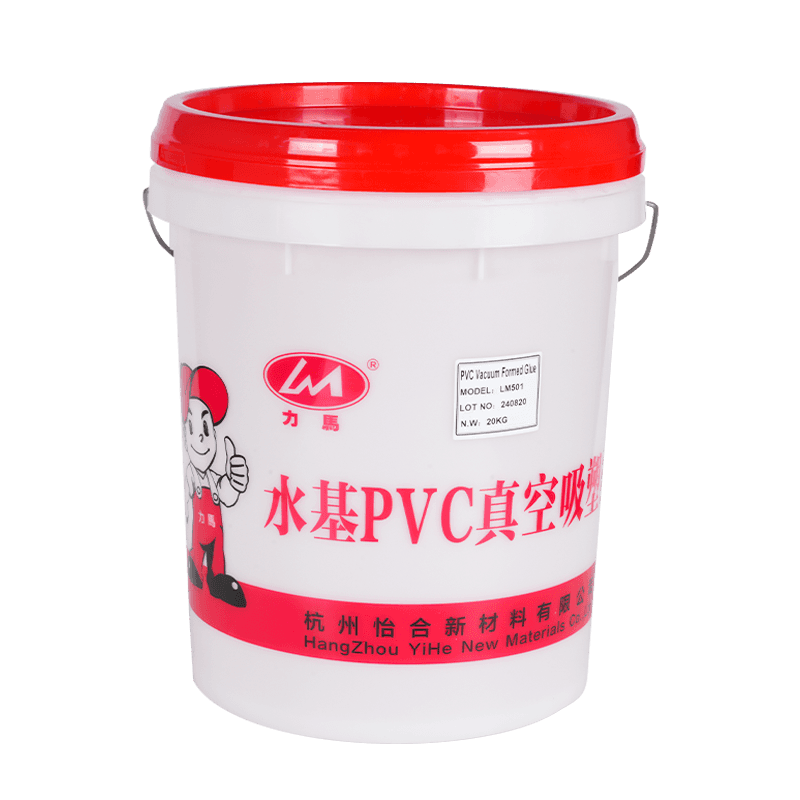
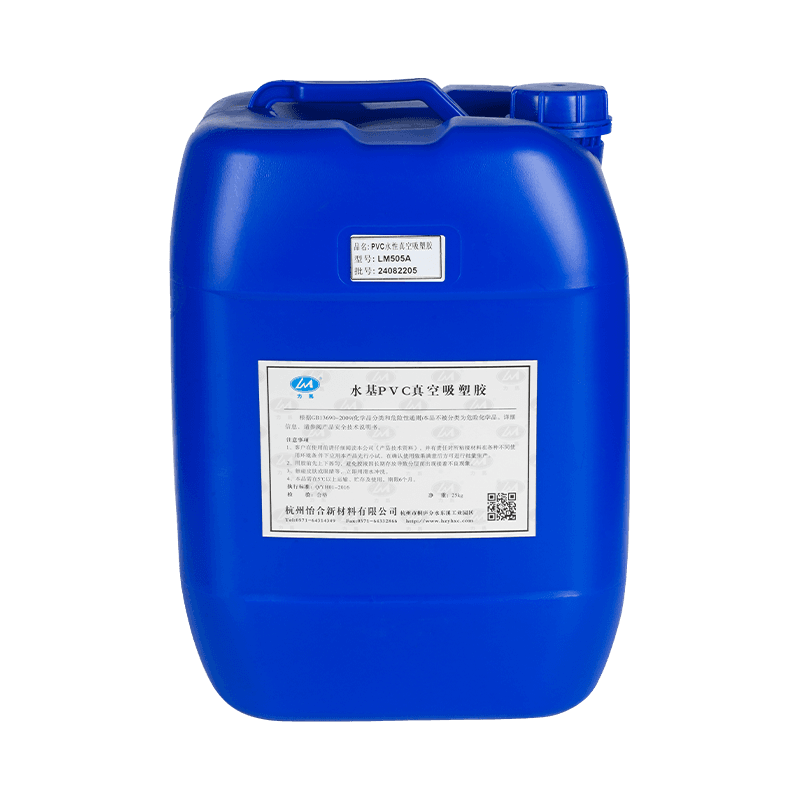
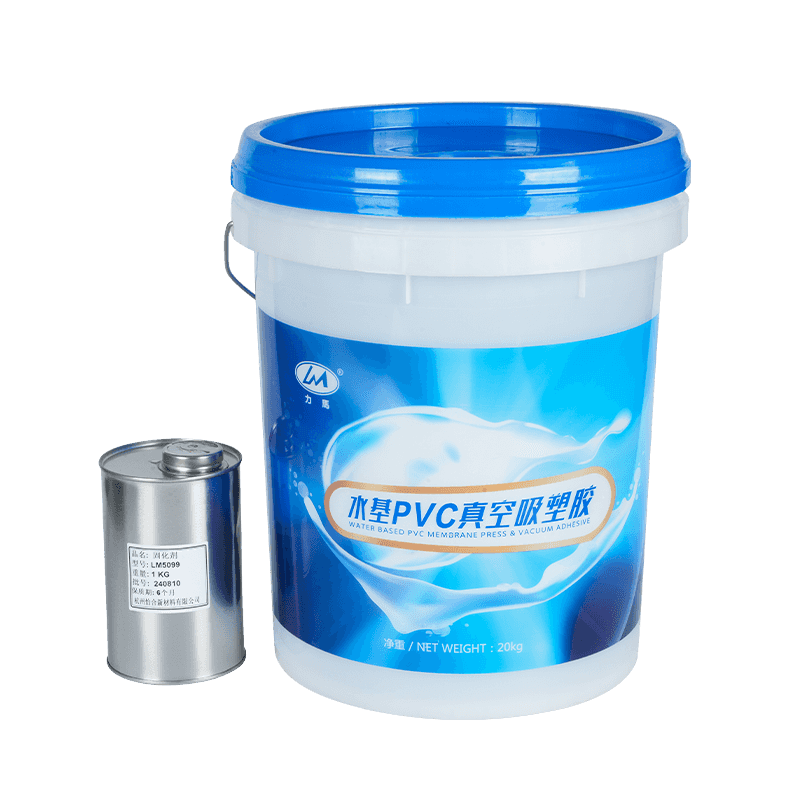
Water-based adhesives — including PVA (polyvinyl acetate) and acrylic dispersion types — are among the most widely used in vacuum thermoforming for doors, particularly in mid-range furniture and cabinet manufacturing. These adhesives are applied to the MDF substrate by roller coating or spray, allowed to dry to a tack-free film, and then reactivated by the heat of the membrane press (typically 90–120°C) to create the bond with the overlying film. Water-based thermoforming adhesives offer good initial bond strength, low VOC emissions, and ease of cleanup, making them a practical choice for high-volume production environments. Their main limitation is relatively modest heat resistance in the cured state — typically up to around 60–70°C — which can be a concern for applications in warm climates or near heat sources.
Solvent-based contact adhesives for thermoforming deliver higher immediate bond strength and better heat resistance compared to standard water-based systems. They are applied to the substrate, allowed to flash off briefly, and then bonded under heat and pressure. Solvent-based systems are particularly useful when working with heavier or more rigid PVC films, or when the finished door will be exposed to elevated temperatures or high humidity environments. The trade-off is higher VOC content, which requires adequate ventilation, solvent recovery systems, and compliance with relevant emissions regulations. Some manufacturers use solvent-based adhesives specifically for door edges and corners where film adhesion is most critical and where water-based systems may show lifting over time.
Hot melt thermoforming adhesives are applied to the MDF substrate in molten form — either by roller, slot die coater, or spray — and solidify on contact with the cooler substrate surface to form a dry adhesive layer. During membrane pressing, the press heat remelts the adhesive to create the bond with the film. Hot melt systems offer very fast processing, no drying time, and no solvent emissions, making them attractive for high-throughput production lines. EVA (ethylene-vinyl acetate) and polyolefin-based hot melts are common in this category. The primary consideration with hot melt adhesives for door lamination is ensuring that the adhesive layer re-activates evenly across the entire panel surface during pressing, including in deeper routed profiles where heat penetration may be slower.
Polyurethane reactive adhesives — including both solvent-based PU and reactive hot melt PU (PUR) formulations — represent the premium tier of vacuum thermoforming adhesives for demanding door applications. PU adhesives form a crosslinked bond structure after curing that delivers excellent heat resistance (typically 80–100°C or higher), strong resistance to moisture and humidity, and superior long-term bond durability. PUR hot melt adhesives in particular have gained significant traction in high-end door and furniture production because they combine the processing convenience of hot melts with the performance benefits of reactive chemistry. These adhesives are the preferred choice for exterior-facing doors, kitchen cabinet fronts in high-humidity environments, and any application where thermal cycling or moisture exposure is a concern.
Correct adhesive application is as important as choosing the right adhesive product. Poor application technique is one of the most common root causes of film lifting, bubbling, and delamination failures in thermoformed door production. The following steps and considerations apply primarily to water-based and hot melt roller-applied systems, which are the most common in volume production.
The MDF or substrate surface must be clean, dry, and free from dust, oils, wax, release agents, or any contamination that could interfere with adhesive wetting and bonding. After machining and routing, MDF panels should be sanded smooth and all dust removed — ideally using a brush and vacuum system rather than compressed air, which can drive fine particles into the surface. The moisture content of the MDF is also critical: moisture content above 8–10% can cause water-based adhesives to behave inconsistently and may lead to surface bubbling during pressing as moisture vaporizes under heat. Freshly produced MDF should be conditioned to ambient humidity before adhesive application.
For flat panel surfaces, roller coating provides the most consistent and controllable adhesive application. The roller gap and nip pressure should be set to deliver an even, uniform adhesive film across the entire panel surface. For profiled panels with routed grooves and shaped edges — typical of raised-panel or recessed-panel door styles — spray application or a combination of roller and spray ensures that adhesive reaches all contoured surfaces that will be contacted by the thermoforming film. Typical application rates for water-based thermoforming adhesives range from 80 to 150 g/m², depending on the adhesive formulation, substrate porosity, and film type. Applying too little adhesive leads to bond failure; applying too much can cause adhesive squeeze-out that shows through the film or creates surface irregularities.
After application, water-based thermoforming adhesives must be dried to a specific moisture level before pressing. Most systems require drying to a tack-free or near-tack-free state, typically achieved by passing panels through a drying tunnel at 40–60°C for 3 to 8 minutes, or by allowing air drying at ambient temperature for 15 to 30 minutes depending on shop conditions. Insufficient drying leaves residual moisture in the adhesive that generates steam during pressing, causing bubbles or blisters under the film. Over-drying can reduce the adhesive's ability to reactivate and flow during pressing, weakening the final bond. Following the adhesive manufacturer's recommended drying parameters for each specific product is essential.
The membrane press parameters must be matched to both the adhesive activation requirements and the thermoforming characteristics of the film being used. Most vacuum thermoforming processes for PVC-laminated doors operate with platen temperatures between 100°C and 140°C, vacuum dwell times of 45 to 90 seconds, and vacuum levels of 0.7 to 0.95 bar. The adhesive must fully reactivate within this temperature and time window to achieve complete bonding across the entire panel surface, including deep-profile areas where the film stretches most. If the press temperature is too low, the adhesive won't activate fully; if it's too high, the film may overstretch, distort, or the adhesive may degrade. Always conduct test pressing with any new adhesive or film combination before committing to full production runs.
Choosing the right vacuum membrane press adhesive involves balancing performance requirements against processing considerations and cost. The table below summarizes the key trade-offs across the main adhesive types used in door lamination:
| Adhesive Type | Activation Temp | Heat Resistance | Moisture Resistance | VOC Level | Relative Cost | Best For |
| Water-Based PVA/Acrylic | 90–120°C | Moderate (60–70°C) | Moderate | Low | Low–Medium | Standard interior doors, cabinet fronts |
| Solvent-Based Contact | 80–110°C | Good (70–80°C) | Good | High | Medium | Heavy films, edge bonding, warm climates |
| EVA Hot Melt | 100–130°C | Moderate (60–65°C) | Moderate | Very Low | Medium | High-speed production lines |
| PUR Reactive Hot Melt | 100–140°C | Excellent (90–110°C) | Excellent | Very Low | High | Kitchen doors, humid environments, premium furniture |
| Solvent-Based PU | 80–120°C | Very Good (80–100°C) | Very Good | High | Medium–High | Demanding profiles, exterior applications |
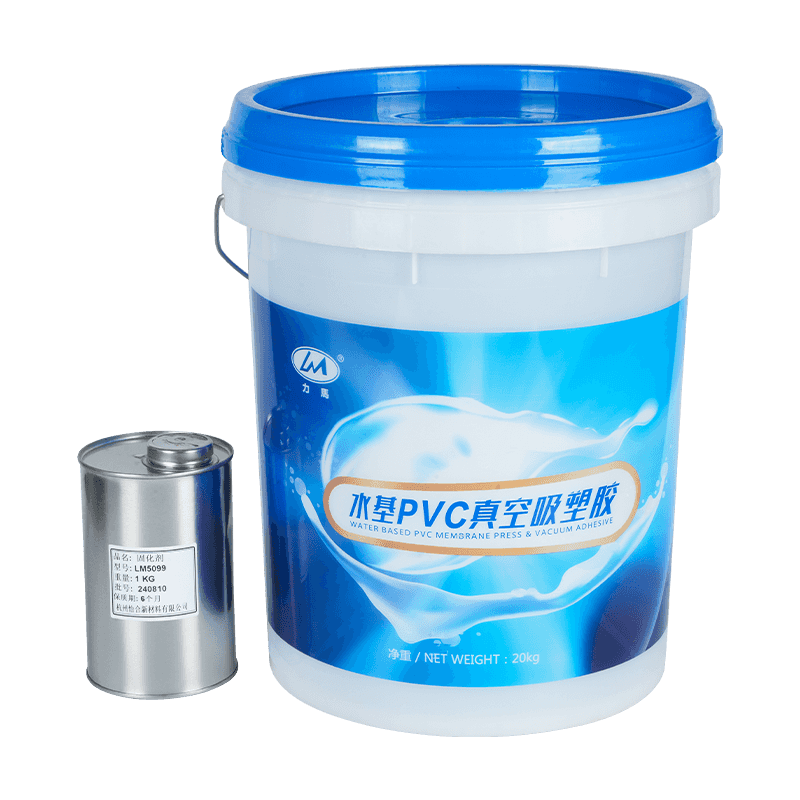
Even experienced manufacturers encounter adhesion-related defects in thermoformed door production. Most problems trace back to a manageable set of root causes, and identifying the specific defect pattern is the fastest way to find the right corrective action.
Lifting at door edges and corners is one of the most common and visible defects in thermoformed door panels. It typically indicates insufficient adhesive coverage at the edges during application, inadequate adhesive reactivation in those areas during pressing, or use of a film that has excessive internal stress after forming and is trying to spring back. Corrective actions include increasing adhesive application at edges (a secondary brush or spray application at edges before pressing is common practice), checking that press temperature is sufficient to fully reactivate the adhesive at the panel perimeter, and verifying that the film grade being used is appropriate for the depth of profile and degree of stretch required at corners.
Bubbles or blisters visible under the laminated film after pressing almost always indicate the presence of trapped gas — either moisture vapor from the adhesive or substrate, or air that was not fully evacuated during the vacuum phase. If the bubbles appear immediately after pressing, insufficient drying of the water-based adhesive is the most likely cause — check drying tunnel temperature and belt speed settings. If bubbles appear hours or days after pressing, the problem is more likely related to residual moisture in the MDF substrate or adhesive layer continuing to off-gas at ambient temperature. Increasing substrate pre-drying time and ensuring the adhesive is fully dried before pressing will address most cases.
When thermoformed door films delaminate after weeks or months of service rather than immediately after production, the failure mode points toward adhesive durability rather than application problems. Common causes include use of an adhesive with insufficient heat resistance for the installation environment (e.g., a standard water-based adhesive used on a door adjacent to a heat source), inadequate moisture resistance in a high-humidity application such as a bathroom or commercial kitchen, or use of a film and adhesive combination that is not chemically compatible. Reviewing the application environment requirements and upgrading to a PUR or high-performance PU adhesive system resolves most long-term delamination issues.
On heavily routed door profiles with deep grooves or sharp inside corners, the film must stretch significantly to conform to the substrate, and the adhesive in these areas must activate fully despite the film's reduced contact pressure. Poor adhesion in deep profiles typically results from insufficient adhesive coverage in routed areas (spray application into profiles before pressing helps significantly), inadequate press dwell time for heat to penetrate to deep areas, or use of a film that is too thick or stiff to fully conform. Increasing press dwell time by 10–20 seconds and using a more flexible film grade with appropriate elongation characteristics usually resolves this issue.
The adhesive is only one part of the thermoforming system — it must be chemically and physically compatible with both the substrate and the decorative film to deliver reliable performance. Mismatches in this system are a frequent source of problems that don't become apparent until after production.
For furniture manufacturers, door producers, and cabinet makers sourcing vacuum membrane press adhesive for ongoing production, evaluating suppliers and products requires looking beyond the basic product datasheet. The following criteria help ensure you're selecting a product and supplier that will deliver consistent performance at production scale.











Copyright © Hangzhou Yihe New Materials Co., Ltd. Rights Reserved.
Eco Friendly Glue Suppliers