English
 中文简体
中文简体 русский
 عربى
عربىNews
Home / News / Industry News / PVC Lamination Adhesive: How to Choose and Use the Right Glue for Long-Lasting Bonds
 Search
 +86 178 5710 2305


Content
PVC lamination adhesive is the bonding agent that holds PVC film firmly to a substrate — whether that's MDF, particleboard, plywood, metal, or an existing surface. It sounds straightforward, but the adhesive is actually the most technically critical component in the entire lamination system. The film and substrate can both be perfectly specified, but if the adhesive between them fails, the whole assembly fails. Delamination, bubbling, edge lifting, and surface wrinkling are almost always traced back to an adhesive that wasn't matched correctly to the materials, process conditions, or end-use environment.
The challenge is that PVC film is inherently a difficult substrate to bond. Its low surface energy means most adhesives don't wet out across the film surface effectively without surface treatment or a specifically formulated adhesive chemistry. At the same time, the substrate on the other side of the bond — often a wood-based panel — has its own demands around moisture content, surface porosity, and temperature response. A PVC bonding adhesive has to bridge these two very different surfaces reliably across the full service life of the finished product, which in furniture applications can be ten years or more.
Several distinct adhesive chemistries are used for PVC surface lamination, each suited to different substrates, production processes, and performance requirements. Understanding what each type offers — and where it falls short — is the foundation for making a sound adhesive selection.
Solvent-based contact adhesives have been used in PVC lamination for decades and are still widely employed in workshop and batch production settings. The adhesive is applied to both the PVC film and the substrate, allowed to flash off until touch-dry, and then the two surfaces are brought together under pressure to form an immediate, strong bond. The solvent carrier evaporates quickly, which allows fast handling and repositioning. Solvent-based PVC bonding adhesive offers excellent initial tack and good bond strength to a wide range of substrates, including difficult-to-bond plastics and metals.
The main limitations are the environmental and health implications of solvent emissions, which require adequate ventilation and personal protective equipment during application. Many production facilities have moved away from solvent-based systems due to increasingly strict VOC regulations in Europe, North America, and parts of Asia. For smaller operations or applications where waterborne adhesives don't deliver adequate performance, however, solvent-based contact adhesive remains a practical and effective option.
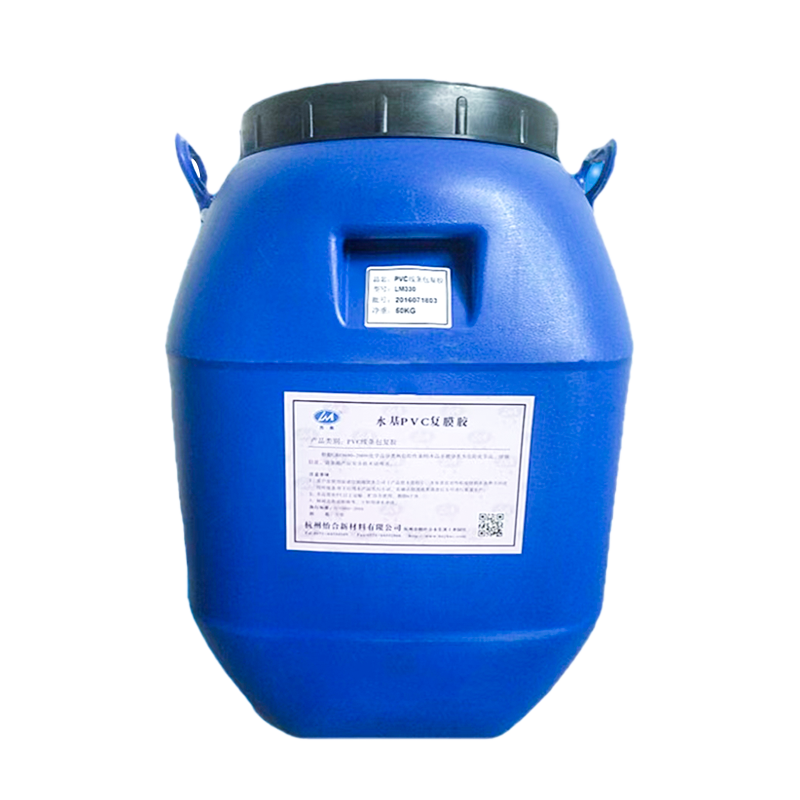
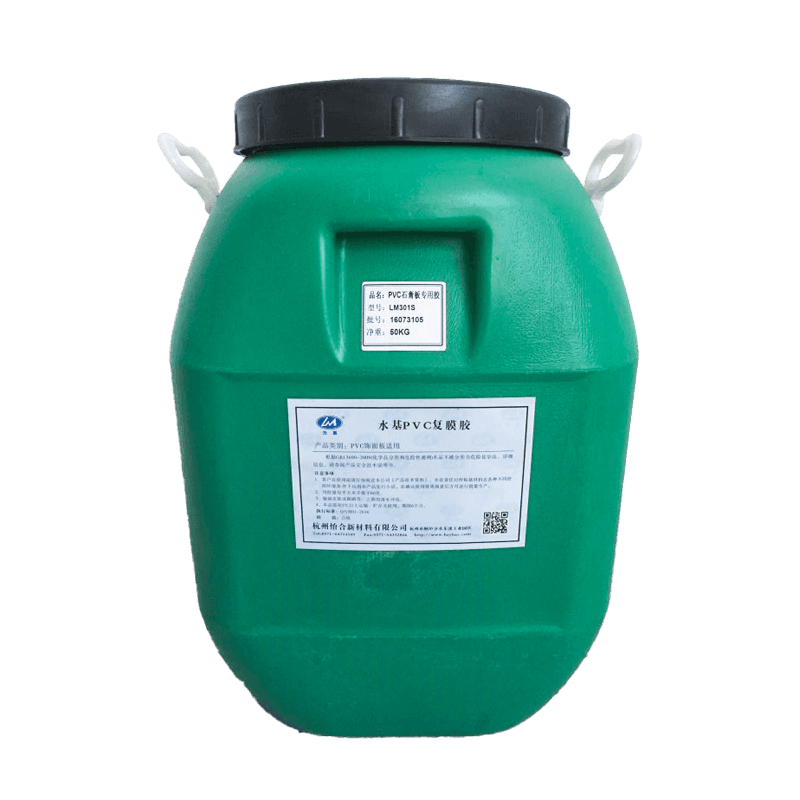
Waterborne PVC lamination adhesives — typically based on polyurethane dispersion (PUD), polyvinyl acetate (PVAc), or acrylic emulsion chemistries — have become the dominant choice in furniture manufacturing and construction lamination. They offer low VOC content, easier handling without special ventilation requirements, and good compatibility with automated roller coating or curtain coating application systems. Water-based adhesive for PVC film is applied to the substrate, dried to the correct activation state, and then laminated under heat and pressure.
The critical parameter with waterborne adhesives is the drying and activation window. The adhesive must be dry enough that residual water doesn't cause blistering or delamination, but still at the right temperature and tack level to bond effectively when the film is pressed. Modern waterborne PVC furniture lamination adhesives are formulated with heat-reactivatable systems — meaning the dried adhesive film is reactivated by the heat of the lamination press and bonds under pressure — which gives a much wider processing window than simple wet-contact systems.
PUR hot melt adhesive for PVC lamination represents the highest-performance end of the adhesive spectrum for flat and profile lamination applications. PUR adhesive is applied as a hot melt in a molten state, but unlike conventional hot melts that simply re-solidify on cooling, PUR systems undergo a chemical cross-linking reaction with moisture from the substrate and the atmosphere. This cross-linking produces a thermoset bond that is far stronger, more heat-resistant, and more moisture-resistant than any thermoplastic adhesive.
PUR-laminated PVC film panels can withstand temperatures that would cause delamination in waterborne or EVA hot melt systems, making PUR the preferred adhesive for kitchen cabinet doors, bathroom furniture, and any application where heat or steam exposure is likely. The trade-off is equipment cost — PUR adhesive requires heated application equipment with moisture protection, and open time must be managed carefully. PUR systems also demand more precise process control than simpler adhesive types, but the bond quality they deliver justifies the investment in demanding applications.
Ethylene-vinyl acetate (EVA) hot melt adhesives are thermoplastic systems applied in molten form and bonding on cooling. They are fast, clean, and inexpensive to apply, making them popular for high-speed profile wrapping and edge banding applications where output volume is the priority. However, EVA hot melts are thermoplastic — they re-soften when heated — so their bond strength degrades at elevated temperatures. In hot environments like vehicles, direct sunlight exposure, or near kitchen appliances, EVA-bonded PVC film can delaminate progressively. For applications without significant heat exposure, EVA hot melt remains a cost-effective and widely used option.
The substrate onto which PVC film is laminated has as much influence on adhesive selection as the film itself. Different substrates present different surface characteristics, porosity levels, and dimensional stability behaviors that the lamination glue for PVC must accommodate.
| Substrate | Key Characteristics | Recommended Adhesive Type |
| MDF | Smooth, consistent, slightly porous | Waterborne PUD or PUR hot melt |
| Particleboard | Variable porosity, rougher surface | Waterborne PVAc or PUD with primer |
| Plywood | Grain variation, dimensional movement | Flexible waterborne or solvent-based contact |
| Steel / Aluminum | Non-porous, smooth, requires adhesion promotion | Solvent-based contact or PUR with metal primer |
| ABS / PS Profiles | Plastic substrate, low surface energy | EVA hot melt or PUR for profile wrapping |
| Foam / Soft Substrates | Compressible, sensitive to solvents | Water-based acrylic or pressure-sensitive adhesive |
| Existing Laminate Surface | Non-porous, requires mechanical or chemical prep | Solvent-based contact with surface abrasion |
When evaluating PVC surface lamination glue, the technical data sheet from the supplier tells only part of the story. Several performance properties need to be assessed against the specific demands of the application before committing to a product.
Initial tack is the adhesive's ability to grab and hold the PVC film immediately on contact before full cure is achieved. High initial tack is essential in manual lamination operations where the operator positions the film and presses it down without a mechanical press to maintain contact pressure during cure. Open time — the window between adhesive application and the point where it can no longer form a good bond — needs to match the production process. Short open times suit high-speed automated lines; longer open times are necessary for manual or complex-shape lamination where positioning takes time.
Heat resistance of the cured bond is one of the most important differentiators between adhesive types. For kitchen furniture, automotive interior panels, and any application near heat sources, the adhesive must maintain its bond strength at temperatures well above ambient. PUR systems typically maintain bond integrity up to 120°C or higher after full moisture cure. Waterborne PUD adhesives generally resist up to 70–80°C. EVA hot melts soften progressively above 50–60°C. Always check the heat resistance specification against the worst-case temperature the laminated component will encounter in service, not just in normal use.
Moisture resistance matters enormously in bathroom furniture, kitchen surfaces, and exterior or semi-exterior applications. Standard PVAc-based waterborne adhesives have relatively poor water resistance — the bond softens when wet and may fail permanently after prolonged moisture exposure. Cross-linked waterborne PUD adhesives and PUR systems offer much better moisture resistance because the polymer network cannot be dissolved or plasticized by water. For any application that involves regular cleaning, condensation, or humidity variation, specifying a cross-linked or PUR adhesive is not optional — it's necessary for acceptable service life.
PVC film contains plasticizers — typically phthalates or newer alternatives — that give the film its flexibility. Over time, these plasticizers can migrate from the film into the adhesive layer, progressively softening and weakening the bond. This is a particular problem with adhesives that are chemically compatible with plasticizers, such as some EVA and acrylic formulations. A good PVC furniture lamination adhesive must be resistant to plasticizer migration — this property should be explicitly confirmed with the adhesive supplier, especially for flexible PVC films with high plasticizer content. PUR and cross-linked PUD adhesives are generally more resistant to plasticizer migration than non-cross-linked thermoplastic systems.
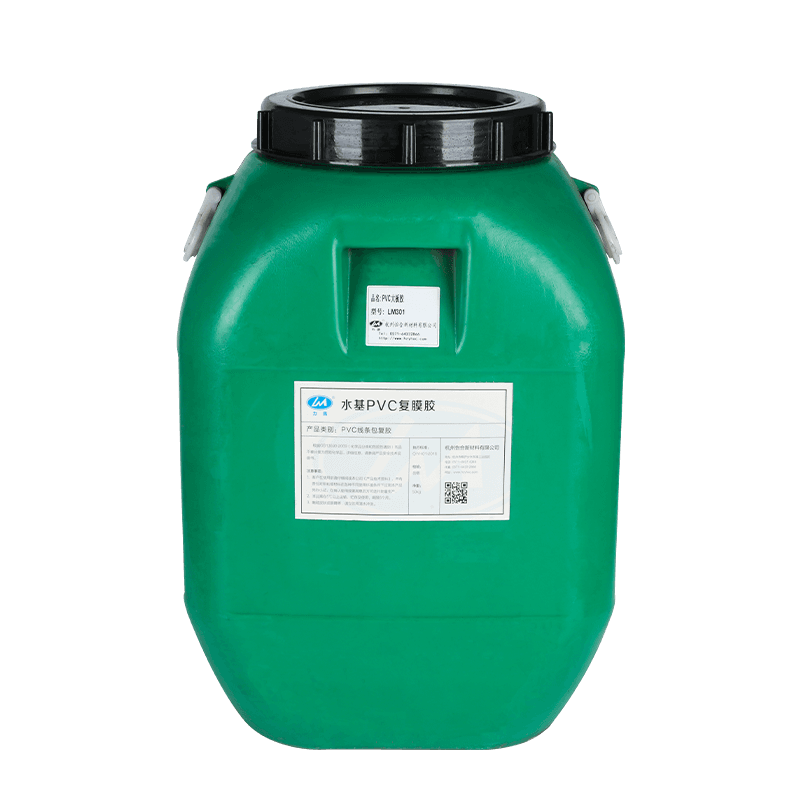
The application method has a direct impact on bond quality, regardless of how good the adhesive is. Incorrect application — wrong coat weight, uneven coverage, wrong drying conditions, or improper press parameters — will produce poor results even with a premium adhesive product.
Some substrate and film combinations require additional surface preparation or a primer coat to achieve adequate adhesion, particularly where the substrate is non-porous, contaminated, or where the adhesive chemistry needs a bonding bridge to the substrate surface chemistry.
Metal substrates present one of the most challenging cases for PVC lamination adhesive. Steel and aluminum surfaces naturally form oxide layers that can be weak boundary layers for adhesive bonding. Before applying PVC film adhesive to metal, the surface should be degreased with isopropyl alcohol or a specialist metal cleaner, lightly abraded with fine abrasive paper or a Scotch-Brite pad to create mechanical anchor points, and then primed with an adhesion promoter or metal bonding primer compatible with the chosen adhesive system. Without this preparation sequence, bond failure at the adhesive-metal interface is likely within months of service.
For PVC-to-PVC lamination — such as applying a decorative PVC film over an existing PVC surface — the low surface energy of the substrate PVC is a significant barrier to adhesion. Corona treatment, flame treatment, or solvent wiping with methyl ethyl ketone (MEK) can raise the surface energy sufficiently for waterborne or solvent-based adhesives to wet out properly. Alternatively, a tie coat primer specifically designed for plastic bonding can be applied before the main lamination adhesive to bridge the surface energy gap.
New MDF or particleboard from some suppliers contains surface release agents or high resin concentrations at the panel face that can inhibit adhesive wetting. A light sanding to remove the surface skin and expose the more absorbent core material often resolves adhesion problems on these substrates without the need for a primer. Always run a peel adhesion test on a sample panel from each new material batch before committing to full production runs.
Even experienced laminators encounter problems. Most failures follow recognizable patterns, and understanding the root cause is necessary to apply the right corrective action rather than just treating the symptom.
The regulatory landscape around adhesives used in PVC lamination has evolved significantly over the past decade, driven by tightening restrictions on VOC emissions, hazardous substances in finished products, and workplace chemical exposure limits. Understanding the current regulatory environment is increasingly important for manufacturers who sell into European, North American, or Japanese markets.
VOC content in adhesives is regulated in many jurisdictions under indoor air quality and emissions standards. In Europe, the Decopaint Directive and national regulations set limits on VOC content in adhesive products. In the United States, the EPA and individual state regulations — particularly California's CARB and SCAQMD rules — set strict VOC limits for adhesive products sold and used commercially. Waterborne and reactive adhesive systems like PUR have much lower VOC content than traditional solvent-based contact adhesives and are generally compliant with current regulations. However, formulators must also account for residual solvent content, reactive diluents, and crosslinker emissions when calculating total VOC contribution.
For finished furniture and panel products sold into the EU market, the REACH regulation and specific product standards like EN 717-1 for formaldehyde emissions from wood-based panels create requirements that extend to the adhesive used in lamination. While the PVC lamination adhesive itself contributes less to formaldehyde emissions than the substrate board, manufacturers should request full REACH compliance documentation and safety data sheets from adhesive suppliers to support product declarations and customer information requirements. As supply chain transparency requirements increase under extended producer responsibility frameworks, having complete chemical disclosure from adhesive suppliers is moving from a best practice to a regulatory necessity.








Copyright © Hangzhou Yihe New Materials Co., Ltd. Rights Reserved.
Eco Friendly Glue Suppliers