

 English
 中文简体
中文简体 русский
 عربى
عربىNews
Professional supplier of environmentally friendly adhesives
 Search
 +86 178 5710 2305

Search
+86 178 5710 2305

The Sticky Science Behind PVC Vacuum Forming
Content
What is PVC Vacuum Forming?
Polyvinyl Chloride (PVC) is one of the most widely produced plastics in the world. It’s incredibly versatile, showing up in everything from plumbing pipes and window frames to medical devices and credit cards. One common way to shape PVC into complex, useful forms is through a manufacturing process called vacuum forming.
Vacuum forming is essentially a simplified version of thermoforming. Here’s how it generally works:
The Process
- Clamping: A sheet of plastic (in this case, PVC) is clamped securely over a mold.
- Heating: The sheet is uniformly heated until it becomes soft and pliable—like a thick, slightly melted piece of taffy.
- Vacuum Application: A vacuum is applied, which sucks the air out of the space between the heated plastic sheet and the mold. The atmospheric pressure then forces the softened plastic to stretch and conform tightly to the shape of the mold.
- Cooling and Trimming: Once the plastic has cooled and solidified into the desired shape, it is removed from the mold and excess material is trimmed away.
This technique is valued for its low tooling cost and fast production cycle, making it ideal for large parts or short-run manufacturing.
The Crucial Role of Adhesives
While vacuum forming is great for shaping a single sheet of plastic, many final products require joining multiple formed PVC parts together, or perhaps adhering a vacuum-formed piece of PVC to a different material, like wood or metal. This is where specialized bonding solutions come into play, and where the term PVC Vacuum Forming Adhesive becomes crucial.
Why Standard Glues Won’t Do
You can’t just grab any household superglue or wood glue for this job. PVC is a tough plastic that often resists bonding, and the unique demands of the vacuum-forming process and its subsequent applications require an adhesive with very specific characteristics:
- Strong PVC-to-PVC Bond: The adhesive must chemically interact with the PVC surface to create a bond that is stronger than the PVC material itself.
- Flexibility: Many vacuum-formed parts aren’t completely rigid. The adhesive joint must be able to withstand some degree of bending, thermal expansion, and contraction without cracking or failing.
- Resistance to Chemicals/Environment: Depending on the product, the bond might need to resist moisture, UV light, household cleaners, or other chemicals.
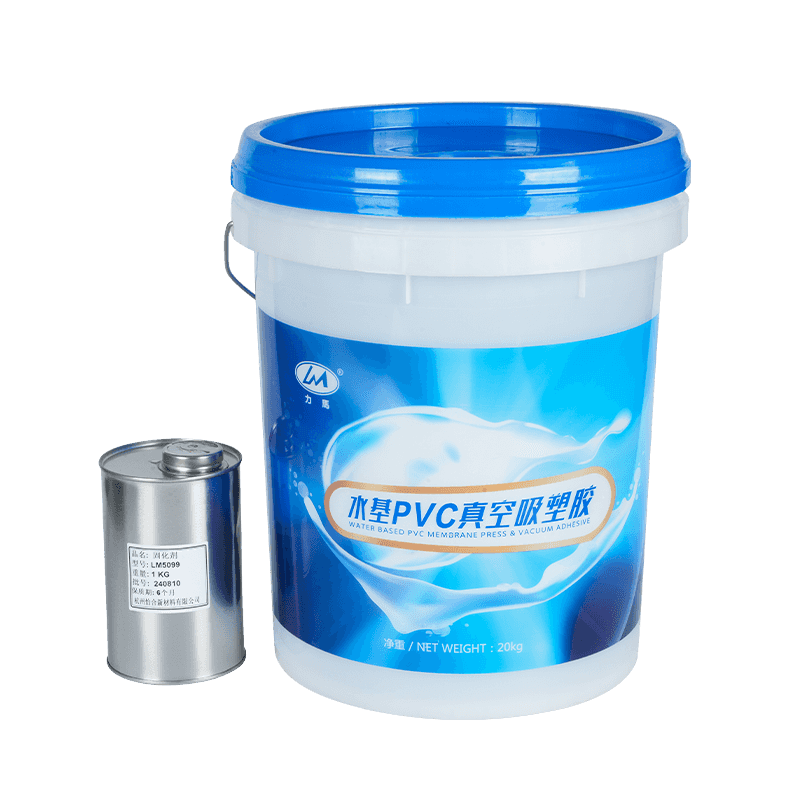
PVC Vacuum Forming Adhesive: The Chemical Solution
The most effective and common types of PVC Vacuum Forming Adhesive are often solvent cements or highly specialized polyurethane and epoxy formulations.
Solvent Cements: Welding with Glue
Solvent cements don’t actually act like traditional sticky glues. Instead, they work by temporarily dissolving the surface layer of the PVC.
- Application: The cement, which is a blend of solvents and sometimes PVC resin, is applied to both surfaces to be joined.
- Softening: The solvents cause the PVC molecules on both surfaces to soften and become momentarily fluid.
- Fusion: The two softened surfaces are pressed together. The liquid PVC molecules from both sides intermingle and fuse.
- Curing: As the solvents evaporate (the “drying” process), the material solidifies into a single, homogeneous piece of plastic. The joint is literally a “chemical weld,” offering an incredibly strong and seamless bond.
These solvent-based adhesives are incredibly effective for joining rigid PVC parts and are the backbone of many manufacturing processes involving vacuum-formed components. They are formulated to be fast-setting to keep up with high-volume production lines, yet provide a robust, long-lasting connection for the final product.
Ultimately, whether assembling a custom enclosure, a signage display, or a protective cover, the right PVC Vacuum Forming Adhesive is the unsung hero that ensures the complex shapes created by vacuum forming hold together for years of use.
Recommended Products


Our Global
Business Partners
Business Partners





About Us
Products
- Water Based PVC Vacuum Thermoforming Adhesive Series
- Water-Based PVC Lamination Adhesive Series
- Premium Woodworking Adhesive Series
- PUR Hot Melt Adhesive Series
- EVA Hot Melt Adhesive Series
- Automotive Interior Adhesive
- Adhesive For Other Applications
- Environmentally Friendly Adhesives
- Profile Wrapping Adhesives
Contact Us
- Add: Dongxi Industrial Park, Fenshui Town, Tonglu County, Hangzhou, China
- Tel: +86 178 5710 2305
- E-mail: [email protected]
- whatsapp: +852 9215 7996
We'd love to
hear from you!
Copyright © Hangzhou Yihe New Materials Co., Ltd. Rights Reserved.
Eco Friendly Glue Suppliers
