English
 中文简体
中文简体 русский
 عربى
عربىNews
Home / News / Industry News / Water-Based PVC Lamination Adhesive: What It Is, How It Works, and How to Use It Right
 Search
 +86 178 5710 2305


Content
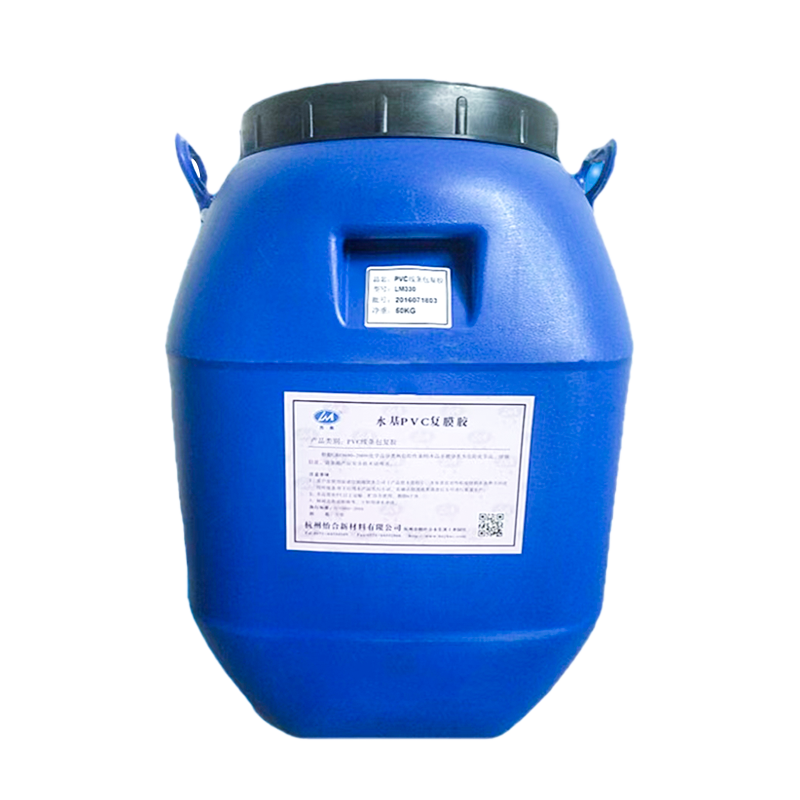
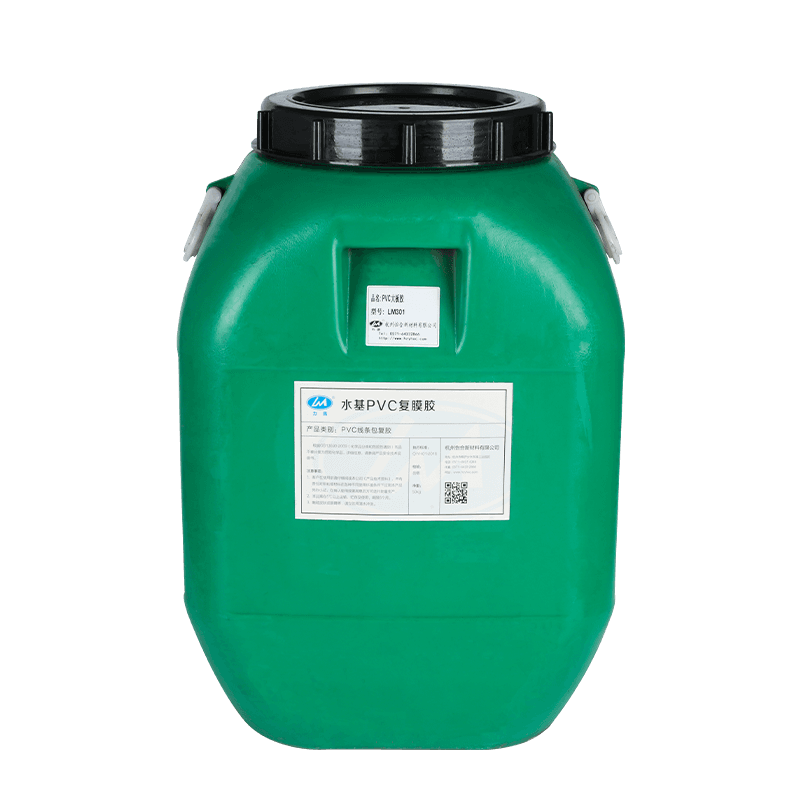
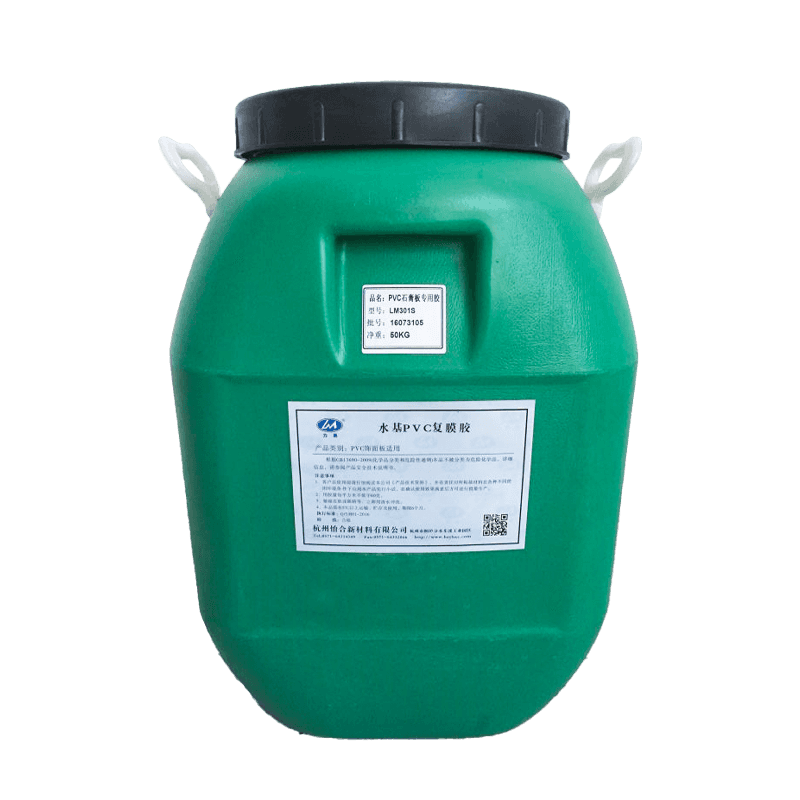
Water-based PVC lamination adhesive is a type of bonding agent that uses water as its carrier solvent instead of organic chemical solvents, formulated specifically to bond PVC films to a wide range of substrates including paper, paperboard, wood, fabric, foam, and other plastic films. The adhesive is applied as a liquid emulsion or dispersion, and bonding occurs as the water evaporates — either through heat, air drying, or a combination of both — leaving behind a flexible, durable adhesive layer that holds the laminate firmly to the substrate.
The shift toward water-based PVC laminating adhesive from traditional solvent-based systems has been driven by tightening environmental regulations, workplace safety requirements, and growing demand from brand owners and converters for low-VOC (volatile organic compound) manufacturing processes. Solvent-based adhesives release harmful chemicals such as toluene, ethyl acetate, and MEK during processing — substances that require expensive ventilation infrastructure, create fire hazards, and pose long-term health risks to workers. Water-based systems eliminate most of these concerns while delivering bond strength and laminate clarity that increasingly match or exceed their solvent-based counterparts.
Understanding the chemistry and film formation mechanism of aqueous PVC lamination adhesive helps you get better results in production and troubleshoot problems when they arise. Most water-based PVC laminating adhesives are formulated as polymer dispersions or emulsions — typically based on polyurethane (PU), polyacrylate, or vinyl acetate-ethylene (VAE) copolymers — modified with additives that improve adhesion to the low-surface-energy PVC film.
When the adhesive is coated onto the substrate and heat or airflow is applied, water evaporates and the dispersed polymer particles come into contact, coalesce, and form a continuous, flexible film. This film formation process is called coalescence, and it is temperature-dependent — there is a minimum film formation temperature (MFFT) below which the polymer particles cannot coalesce properly, resulting in a brittle, powdery layer with poor adhesion. This is why water-based PVC lamination adhesive should never be applied or dried in environments below its specified MFFT, typically 5–15°C depending on the formulation.
Water-based PVC laminating adhesives are available in both single-component (1K) and two-component (2K) formulations. Single-component adhesives are ready to use straight from the container — no mixing required — and are ideal for high-speed lamination lines where simplicity and fast processing are priorities. Two-component systems consist of a base adhesive and a crosslinker (typically a water-dispersible isocyanate or aziridine), which are mixed in a specified ratio before use. The crosslinker reacts with functional groups in the polymer backbone to create a three-dimensional network that significantly improves heat resistance, water resistance, and bond durability. Two-component water-based PVC lamination adhesives are the preferred choice for demanding applications such as furniture foil lamination, automotive interior trim, and flooring where long-term performance under stress and humidity is required.
Water-based PVC film lamination adhesive is used across a broad range of manufacturing sectors. In each case, the adhesive provides the critical interface between the decorative or functional PVC film and the structural substrate beneath it.
Not every water-based PVC laminating adhesive performs equally across all substrates and end uses. Evaluating the following performance parameters against your specific application requirements is essential before committing to a product for production use.
| Performance Property | Why It Matters | Typical Test Method |
| Initial tack | Determines how quickly the laminate holds during processing before full cure | Loop tack test, probe tack |
| Peel strength | Measures force required to separate the film from the substrate | 180° or T-peel test (ASTM D1876) |
| Heat resistance | Critical for automotive, flooring, and outdoor applications | Oven aging at 70–100°C, peel after conditioning |
| Water and humidity resistance | Prevents delamination in moist or high-humidity environments | Water soak test, humidity chamber exposure |
| Plasticizer resistance | Prevents bond degradation from plasticizer migration out of PVC film | Aged peel test on plasticizer-rich PVC substrates |
| Open time | The working time after adhesive application before bonding must occur | Practical trial on production equipment |
| Optical clarity | Essential for transparent or gloss PVC film lamination on printed substrates | Visual assessment, haze measurement |
| Flexibility and crack resistance | Required for postforming, bending, and low-temperature applications | Mandrel bend test, cold flex at -10°C |
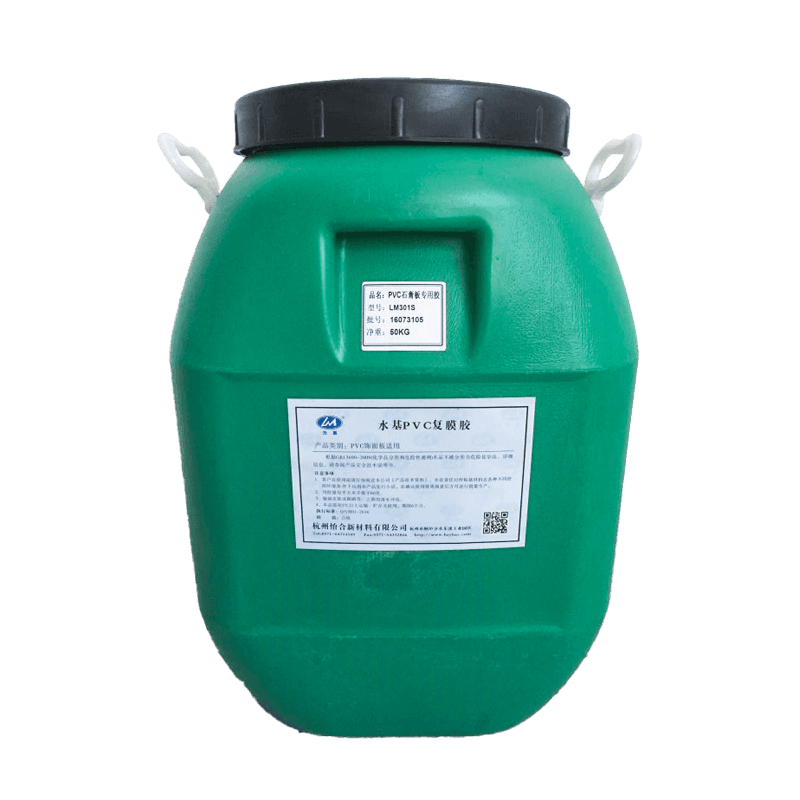
The method used to apply water-based PVC lamination adhesive significantly affects coat weight uniformity, drying efficiency, and final bond strength. The right application system depends on your substrate type, production speed, and the viscosity of the adhesive formulation.
Roll coating is the most common application method on continuous lamination lines. A rubber or chrome-plated transfer roll picks up adhesive from a pan and transfers it to the substrate at a controlled coat weight determined by nip pressure, roll speed differential, and adhesive viscosity. Reverse roll coating and gravure roll coating are variations used when more precise coat weight control is needed. Roll coating works well for flat web substrates such as paper, board, and flexible films at speeds up to several hundred meters per minute.
Slot-die coating applies adhesive through a precision-machined slot directly onto the substrate, delivering highly uniform coat weights with minimal waste. It is preferred when optical clarity is critical — such as transparent PVC film lamination on high-quality printed packaging — because slot-die coating avoids the meniscus instabilities that can cause streaking in roll coating. Curtain coating, where adhesive falls as a free-falling curtain onto the moving substrate, is used for rigid board lamination at moderate speeds.
Spray application is used for three-dimensional substrates — such as curved automotive trim panels or furniture profiles — where roll coating is impractical. Airless or air-assisted spray systems atomize the water-based PVC lamination adhesive into fine droplets that coat the irregular surface. Spray application requires careful control of adhesive viscosity and spray pattern to achieve uniform coverage without runs or dry-spray defects. Water-based adhesives are easier to clean from spray equipment than solvent-based systems, which is a meaningful operational advantage.
For small-batch or repair work, water-based PVC laminating adhesive can be applied by brush or roller. This method is common in small furniture workshops and sign-making shops. Brush application requires a well-formulated adhesive with good leveling properties to minimize brush marks, and sufficient open time to allow repositioning of the PVC film before pressing.
Drying is the most critical and often most mismanaged step in water-based PVC film lamination. Unlike solvent-based adhesives that flash off quickly even at room temperature, water requires more energy and airflow to evaporate fully. Incomplete drying is the leading cause of adhesion failure, blistering, and haze in water-based PVC laminate products.
Even with a well-formulated adhesive and properly set-up equipment, problems can arise. Recognizing the root cause quickly is the difference between a small material loss and a large production reject.
If the PVC film peels away from the substrate too easily, the most likely causes are insufficient coat weight, incomplete drying before lamination, contaminated substrate surface, or a mismatch between adhesive chemistry and substrate type. Check that the substrate surface is clean and free of release agents, dust, or oil. Measure coat weight after application and compare to the adhesive manufacturer's recommended range. If the substrate is wood-based, ensure moisture content is within specification — MDF or particleboard with high moisture content releases water vapor into the bond line during pressing, disrupting adhesion.
Blisters in a PVC laminate are almost always caused by trapped moisture or volatiles in the adhesive layer. This happens when the adhesive is not fully dried before lamination, when the pressing temperature is too high and causes water to vaporize suddenly under the film, or when the substrate itself outgasses moisture during pressing. Reduce press temperature, extend drying time, and verify substrate moisture content. On porous substrates such as MDF, a primer or barrier coat can reduce substrate outgassing.
Haze in a clear PVC laminate indicates either incomplete coalescence of the adhesive polymer (dried below MFFT), phase separation in the adhesive due to improper storage or freezing, or optical incompatibility between the adhesive and the PVC film. Check storage conditions — water-based PVC lamination adhesive should never be frozen, as freezing irreversibly destroys the emulsion. Verify that the drying temperature exceeds the adhesive's MFFT by at least 10°C.
Edge lifting occurs when internal stresses in the laminate — caused by differential expansion between the PVC film and the substrate — overcome the adhesive's peel strength at the edges. Using an adhesive with higher tack and peel strength helps, as does ensuring adequate nip pressure during lamination to achieve intimate contact right to the substrate edges. For board substrates, laminating both sides simultaneously or sequentially reduces curl from moisture differential.
Understanding the practical trade-offs between water-based and solvent-based PVC laminating adhesives helps manufacturing managers and product engineers make informed decisions when evaluating a switch or specifying a new line.
| Factor | Water-Based PVC Lamination Adhesive | Solvent-Based PVC Lamination Adhesive |
| VOC emissions | Very low (<50 g/L typical) | High (200–600 g/L) |
| Fire and explosion risk | Minimal | Significant — requires ATEX equipment |
| Drying speed | Slower — requires more energy or time | Faster flash-off at room temperature |
| Bond strength | Comparable in modern formulations | Traditionally higher, especially initially |
| Regulatory compliance | Complies with EU, US EPA, China GB standards | Increasingly restricted in many markets |
| Equipment cleaning | Easy — water cleanup | Requires solvents for cleanup |
| Cold weather sensitivity | Sensitive — must not freeze | More stable in cold storage |
| Infrastructure cost | Lower — no explosion-proof requirements | Higher — solvent recovery or abatement needed |
Proper storage and handling of water-based PVC lamination adhesive protects its performance properties and prevents costly production problems caused by degraded adhesive reaching the coating line.










Copyright © Hangzhou Yihe New Materials Co., Ltd. Rights Reserved.
Eco Friendly Glue Suppliers